
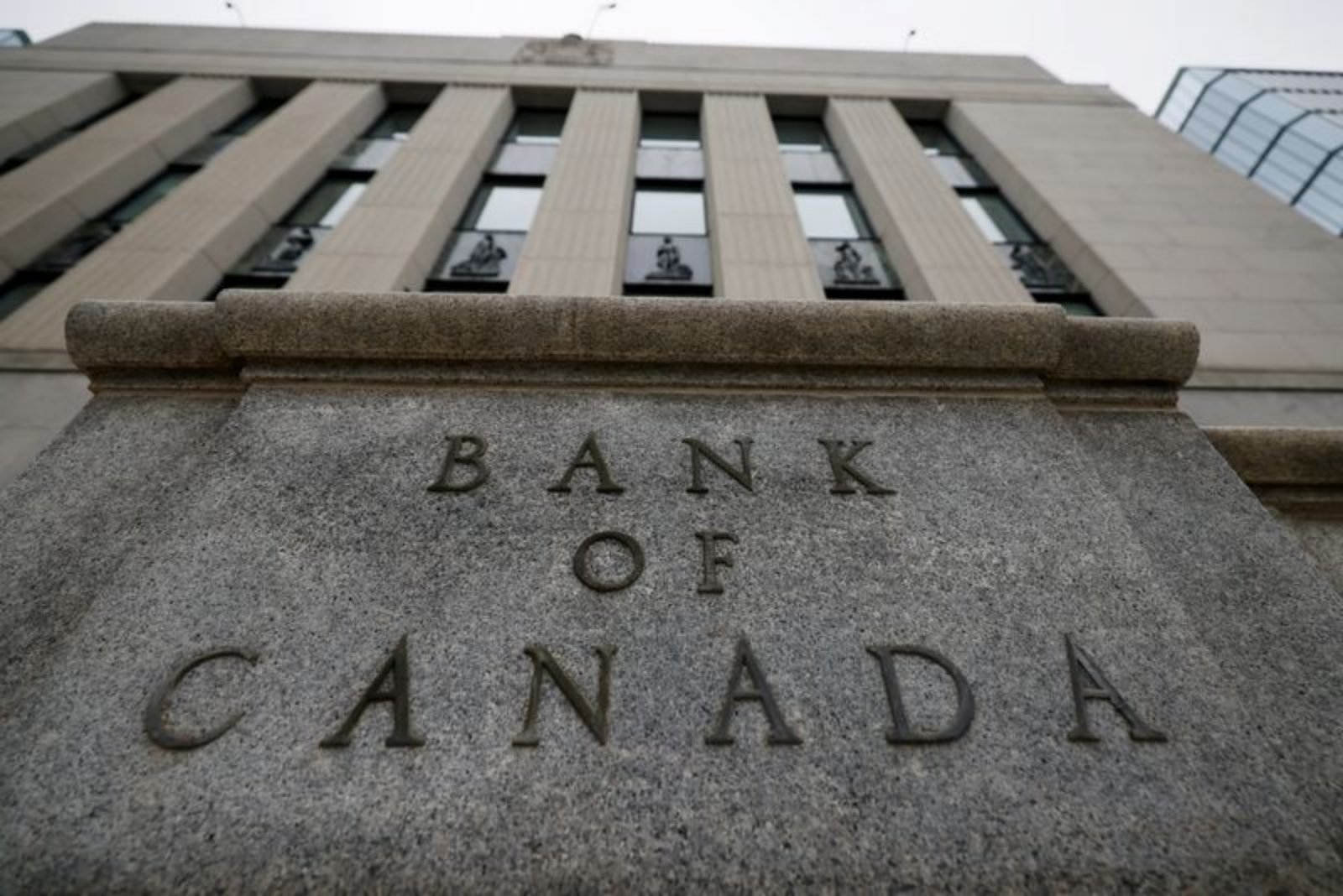
Monetary authorities at the Bank of Canada are widely anticipated to maintain the policy rate at its current setting when they announce their decision on Wednesday. The balance of risks is tilted toward inaction as a headline inflation spike in May appears to have been driven largely by gasoline and has since softened, while economic activity has shown an uneven profile.
Canada's annual headline inflation breached the central bank's 3% upper target in May for the first time in roughly two and a half years. However, the rise in the aggregate measure was concentrated in energy costs - chiefly gasoline - and those pressures have since moderated, reducing the case for an immediate policy response.
Output trends have not provided a consistent signal. The economy slipped into a technical recession at the end of March, yet posted a robust recovery in April. That split between a sharp contraction and an equally swift rebound has left policymakers without a clear mandate for either additional monetary stimulus or a tightening move.
“Even with the high oil prices that we saw earlier in the year, we haven’t seen any material evidence of pass-through into underlying inflation,” said Randall Bartlett, senior director of Canadian Economics at Desjardins Group. He added that uncertainty around trade has been a persistent downside risk to demand.
Uncertainty over trade policy and questions about the future status of North American trade arrangements remain a drag on business spending and hiring decisions. Despite the economy having withstood U.S. sectoral tariffs introduced last year, firms continue to confront unclear prospects for export growth and investment, which weighs on capacity expansion and employment.
The Bank of Canada's policy rate currently stands at 2.25%, which sits at the lower end of the institution's estimated neutral range. That level is generally viewed as modestly accommodative - enough to support demand without appearing to stoke widespread inflation pressures, based on the information available to policymakers.
Consensus among professional forecasters is strongly in favor of no change. All 36 economists surveyed expect the central bank to hold rates at this meeting, with a majority projecting no rate move through at least next July. Market pricing mirrors that view, with money markets fully factoring in a hold on Wednesday and assigning little probability to a policy shift before year-end. That represents a marked change from early last month, when trading activity had priced in a 25-basis-point increase.
The rate announcement will be released at 9:45 a.m. ET and will be accompanied by the Bank of Canada's quarterly Monetary Policy Report. The central bank is widely expected to update its forecasts for growth and inflation for the current year. A press conference will follow, to be led by Governor Tiff Macklem and Senior Deputy Governor Carolyn Rogers.
With inflation remaining above target while growth remains lacklustre, the prevailing view among economists and market participants is that maintaining the policy rate is the path of least regret for now. The quarterly report and the governor's remarks will be watched closely for any reassessment of the outlook that could alter that calculus.