
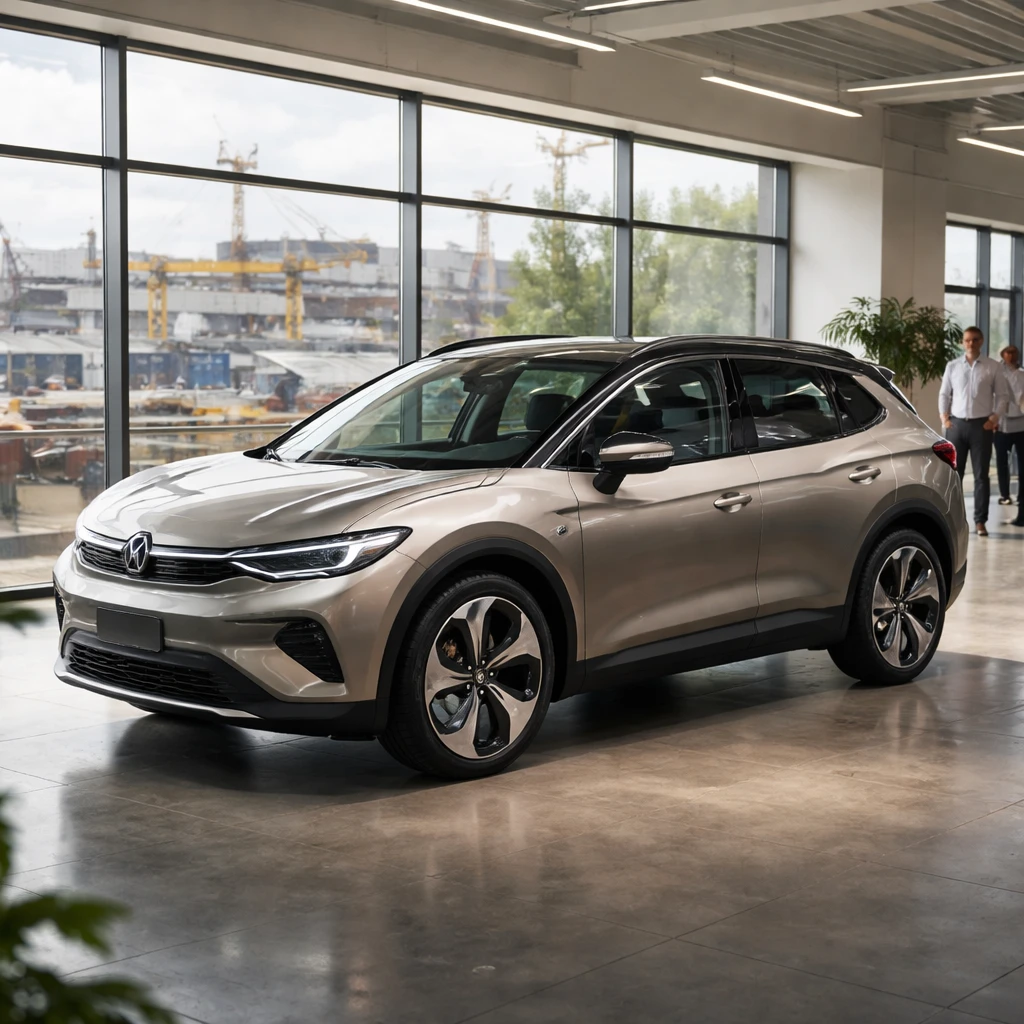
Volkswagen AG has started taking orders for a new compact electric sport-utility vehicle, the ID. Cross, which the company has priced at roughly €28,000 ($32,000). A version with a smaller battery will go on sale at a later date, the automaker said on Wednesday.
The addition of the ID. Cross enlarges Volkswagen's range of more affordable battery-electric models. The company noted that the new SUV complements other recent lower-cost offerings in its portfolio, including the new Polo, the Cupra Raval and the Skoda Epiq. Volkswagen said all of these models will be produced in Spain, citing lower production costs there compared with Germany.
European consumers have been shifting away from internal-combustion models, and that change is reflected in registration figures. Through the first five months of the year, sales of battery-electric vehicles and plug-in hybrids in Europe rose 29%, representing more than one-third of all new vehicle registrations in that period.
Authorities in Germany and France have provided subsidies for electrified vehicles, and higher fuel prices tied to the Middle East conflict have contributed to the move toward electrification, the company said. Those two factors were cited as accelerating the transition to electric vehicles.
The ID. Cross rollout occurs as Chinese automakers expand their footprint across Europe. Companies such as BYD Co. and Chery Automobile Co. collectively reached a 10% share of the European market for the first time in May. Separately, Chery's Jaecoo 7 SUV was the third-most-popular model in the UK during the first half of the year.
Volkswagen's leadership has acknowledged the speed of the change in competitive dynamics. Chief Executive Oliver Blume said last week that the company was surprised by how rapidly Chinese manufacturers gained market share. That shift has increased the strategic importance of Europe for Volkswagen as the company faces declining sales in China and challenges in boosting demand in the US.
Last week Volkswagen also discussed potential restructuring measures that could be substantial in scale. The plans under consideration reportedly include cuts of up to 100,000 jobs worldwide and the possible closure of manufacturing facilities in Germany.
Summary
Volkswagen has launched the ID. Cross, a compact electric SUV priced at about €28,000, and opened orders for the model. A smaller-battery variant will go on sale later. The model is part of Volkswagen's push into lower-cost EVs, all of which will be manufactured in Spain. The launch takes place amid accelerating EV adoption in Europe and rising market share among Chinese automakers, while Volkswagen faces strategic challenges including falling sales in China and potential large-scale restructuring.
Key points
- Volkswagen's ID. Cross is available to order at approximately €28,000; a smaller-battery version will be offered later - impacts: automotive manufacturing, consumer vehicle market.
- The new model broadens VW's lower-cost EV portfolio alongside the Polo, Cupra Raval and Skoda Epiq, with all production located in Spain due to lower production costs compared with Germany - impacts: manufacturing, supply chain, regional production economics.
- European registrations of battery-electric and plug-in hybrid vehicles rose 29% through the first five months of the year, now making up more than one-third of total registrations; Chinese automakers like BYD and Chery reached a 10% share of the European market in May - impacts: auto sector competition, market share dynamics.
Risks and uncertainties
- Rising competition from Chinese automakers, which have captured 10% of the European market and placed models among top sellers in some markets, could pressure incumbents' sales and margins - sectors affected: automotive manufacturing, retail.
- Volkswagen's strategic and operational challenges include declining sales in China and difficulties growing demand in the US; these trends create uncertainty for the company's global revenue mix - sectors affected: international automotive markets, corporate strategy.
- Potential large-scale restructuring at Volkswagen, including discussions of up to 100,000 job cuts and possible plant closures in Germany, presents uncertainty for employment, supplier networks and regional manufacturing capacity - sectors affected: manufacturing, labor markets, supply chain.