
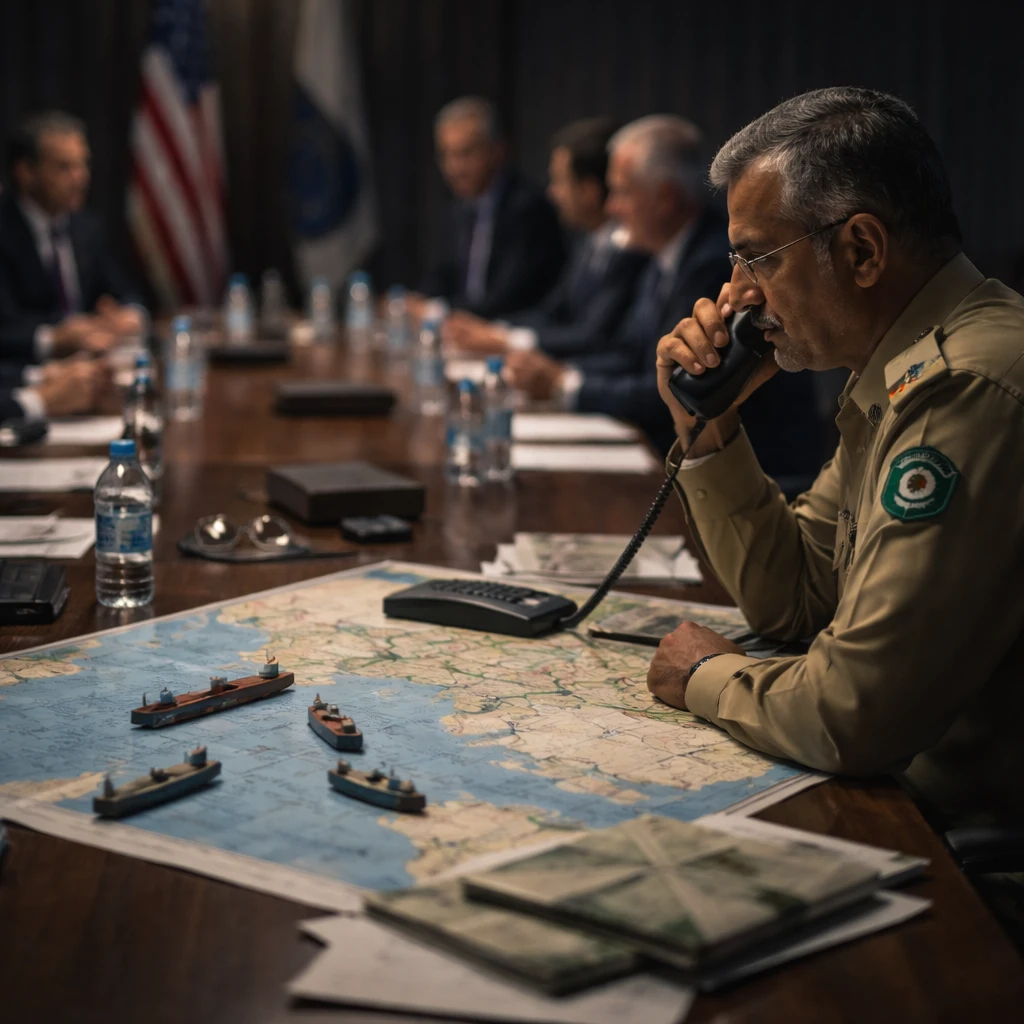
The White House engaged in clandestine negotiations with Iran using Pakistan as an intermediary, even as the president publicly ratcheted up threats aimed at Tehran. Officials pressed Islamabad for weeks to present a ceasefire proposal that would lift restrictions on passage through the Strait of Hormuz, people familiar with the talks said.
Pakistan's involvement was framed around its status as a Muslim-majority neighbor and a neutral intermediary. The Pakistani military leader Asim Munir took the lead in conveying the offer to Iranian authorities, acting in a mediating role for the back-channel effort.
Those discussions culminated in an announcement on Tuesday that the United States, Iran and Israel had agreed to a two-week ceasefire. The declaration followed hours after the president issued a public ultimatum, saying he would destroy Iran's "whole civilization" if Tehran did not comply with his terms.
People close to the situation said the president's public posture contrasted sharply with the discreet diplomatic outreach. While senior U.S. officials were encouraging Pakistan to broker the temporary pause, the president continued to deliver heightened public threats toward Iran.
Two motivations were cited by U.S. officials in urging Pakistan to act. One was a concern about climbing oil prices, which had become a headline policy worry. The other was surprise at Iran's capacity to withstand pressure, a factor that appears to have shaped the approach of the administration.
Those involved in arranging the mediation believed Iran would be more inclined to accept a ceasefire if the offer came from a Muslim-majority neighbor that had kept a neutral stance throughout the recent hostilities. That strategic calculation underpinned Pakistan's role in the back-channel engagement.
The arrangement produced a temporary pause in fighting, but the talks and the public statements that surrounded them illustrate a dual-track approach to the crisis: quiet diplomacy in parallel with a forceful public posture by the president.
Summary
- The U.S. sought a temporary ceasefire with Iran through back-channel talks run by Pakistan.
- Pakistan's military chief Asim Munir presented the proposal to Tehran; a two-week ceasefire was announced.
- The announcement came hours after the president publicly threatened to destroy Iran's "whole civilization." Officials were motivated by rising oil prices and Iran's resilience.