
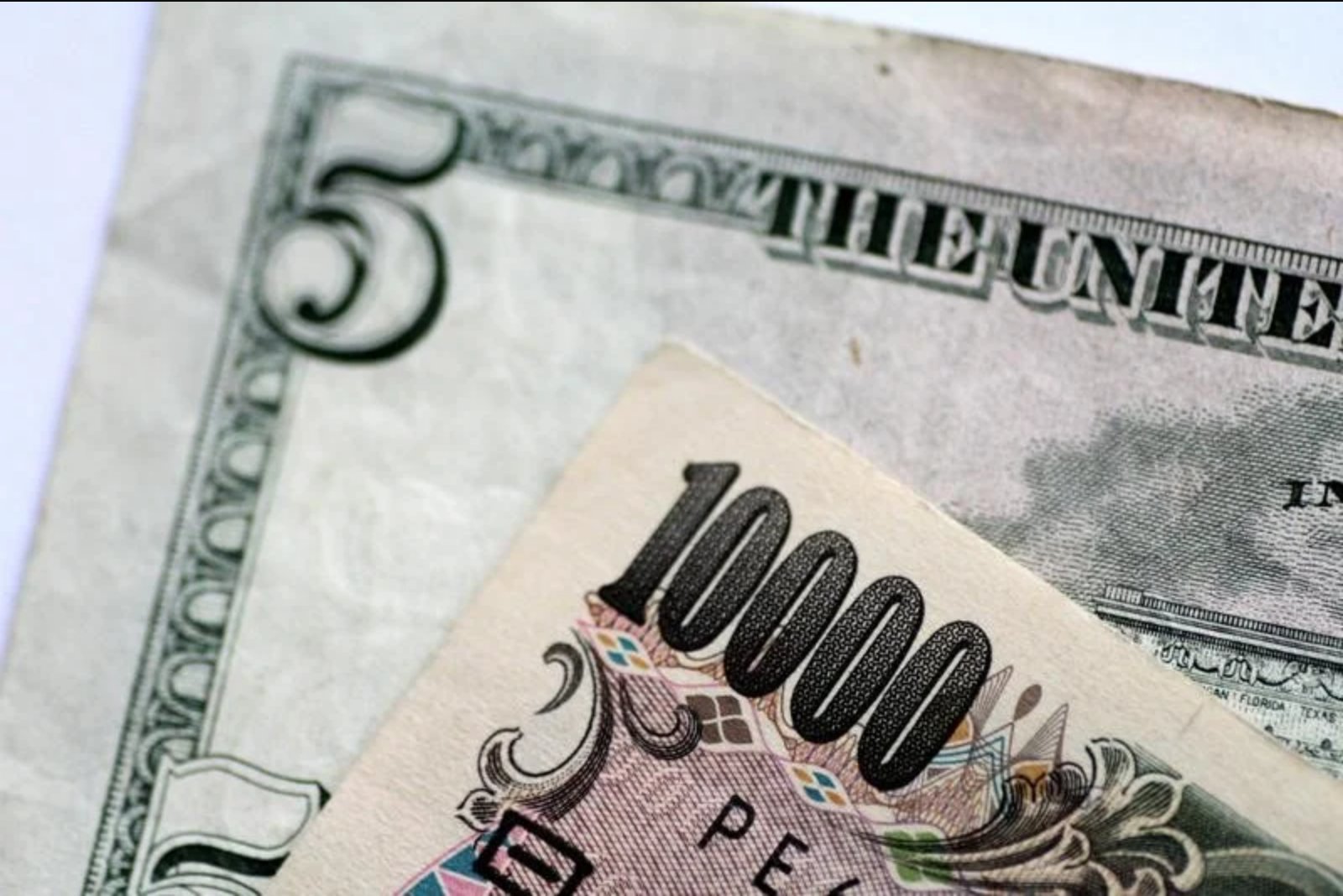
The U.S. dollar finished July with a notable retreat, sliding more than 1% over the month and recording its worst monthly performance since April. Most of the greenback’s losses occurred during the week as traders digested mixed signals on inflation and pondered the Federal Reserve’s capacity to restrain price pressures. That unease showed up clearly in a steep sell-off across parts of the bond market.
The dollar index, which measures the greenback against a basket of six major currencies, closed marginally lower at 99.83. For the month of July it declined 1.3%.
Inflation prints and oil
U.S. inflation data covering the June period released in July surprised to the downside across consumer prices, producer prices, and the personal consumption expenditures price index, the Fed’s preferred gauge. However, those softer-than-expected readings were largely driven by a fall in global oil prices in June. Oil has rebounded this month amid a collapse in Middle East diplomacy, altering the near-term inflation picture ahead of the Fed’s most recent policy decision.
Although markets broadly expected the Federal Open Market Committee (FOMC) to keep the federal funds rate on hold at its July meeting, the spike in oil had raised uncertainty ahead of the decision. That uncertainty lifted the probability of an eventual hike above recent historical norms. When the committee opted to hold the rate, there were three dissents: Cleveland Fed President Beth Hammack, Minneapolis Fed President Neel Kashkari, and Dallas Fed President Lorie Logan all voted in favor of a 25 basis point increase.
Fed commentary and market reaction
Markets had looked to Fed Chair Kevin Warsh for clearer guidance on how the Fed would respond to resurgent inflationary pressures, but traders were left wanting after the post-meeting communications. In the run-up to the meeting, U.S. Treasury yields had climbed sharply during July, a move market participants treated as effectively tightener-than-expected monetary policy.
On Friday, Hammack, Kashkari and Logan each issued statements explaining their preference for a rate increase, citing inflation as the central concern.
"The recent dissatisfaction in the fixed-income space is poised to worsen if the Federal Reserve doesn’t hike rates at its next meeting. Bond vigilantes are in a confused position with the central bank, as Chair Warsh has moved from being ranked the most hawkish member of the committee to somewhere in the middle of the pack," José Torres, senior economist at Interactive Brokers, said.
"This dynamic was evident when three dissenters voted in favor of an increase before Wednesday’s presser, while the chief seemed to want to kick the can down the road and simultaneously tried to explain that the previous group had allowed inflationary pressures to run above target for an excessive period," he said.
"The Treasury complex is yelling that it won’t allow the monetary policy institution to have its cake and eat it too, and significant consequences are set to hit the long end if rates aren’t lifted in September," Torres added.
Major currency moves outside the dollar
The euro gained 0.1% to $1.1537 on Friday and rallied roughly 1% over July. Earlier data showed eurozone headline inflation rose to 2.9% in July from 2.8% in June, largely reflecting higher oil prices. Core inflation, which excludes food and energy, ticked up to 2.5%, and services inflation rose to 3.3%.
Those inflation figures, combined with a stronger-than-expected second-quarter eurozone GDP print, reinforced expectations that the European Central Bank could opt to raise rates at its September meeting. Markets are currently pricing in more than two rate increases by early next year, although economists referenced in market commentary warned that easing labor market conditions and a slowdown in food inflation could restrain the pace of tightening.
In Britain, sterling added 0.1% to $1.3484 on Friday and recorded a 1.7% gain for the month of July.
Yen strength and suspected intervention
Asia saw the Japanese yen strengthen for a second consecutive day following a large move on Wednesday. The USD/JPY pair recorded its worst week since early August 2024. Market reports indicated that the Japanese government had intervened the previous day to buy yen and sell dollars, and that U.S. authorities had conducted a rate check - a maneuver market participants often view as a precursor to official intervention.
The Bank of Japan left its benchmark overnight call rate at 1.0% in an 8-1 vote. Board member Hajime Takata was the only dissenter, calling instead for another 25 basis point increase after a prior move in June.
The BoJ also trimmed its core consumer price index outlook and slightly raised its GDP forecast for the current year, noting that government support was expected to help sustain growth and contain price pressures.
Market implications
The combination of softer U.S. inflation metrics attributable in part to oil’s June weakness, rising Treasury yields in July, and a split among Fed officials has created a complex backdrop for currency and fixed-income markets. The dollar’s monthly slide reflects evolving market expectations about the timing and aggressiveness of policy tightening, while the yen’s gains show how potential official intervention can swiftly reshape exchange rate trajectories.
With inflation dynamics shifting alongside energy price swings and central bank rhetoric remaining mixed, currency traders and fixed-income investors are navigating heightened uncertainty about the path of interest rates and the potential for further official market actions.
Contributors
Ambar Warrick, Pranav Kashyap, and Jaiveer Shekhawat contributed to reporting on aspects of this story.