
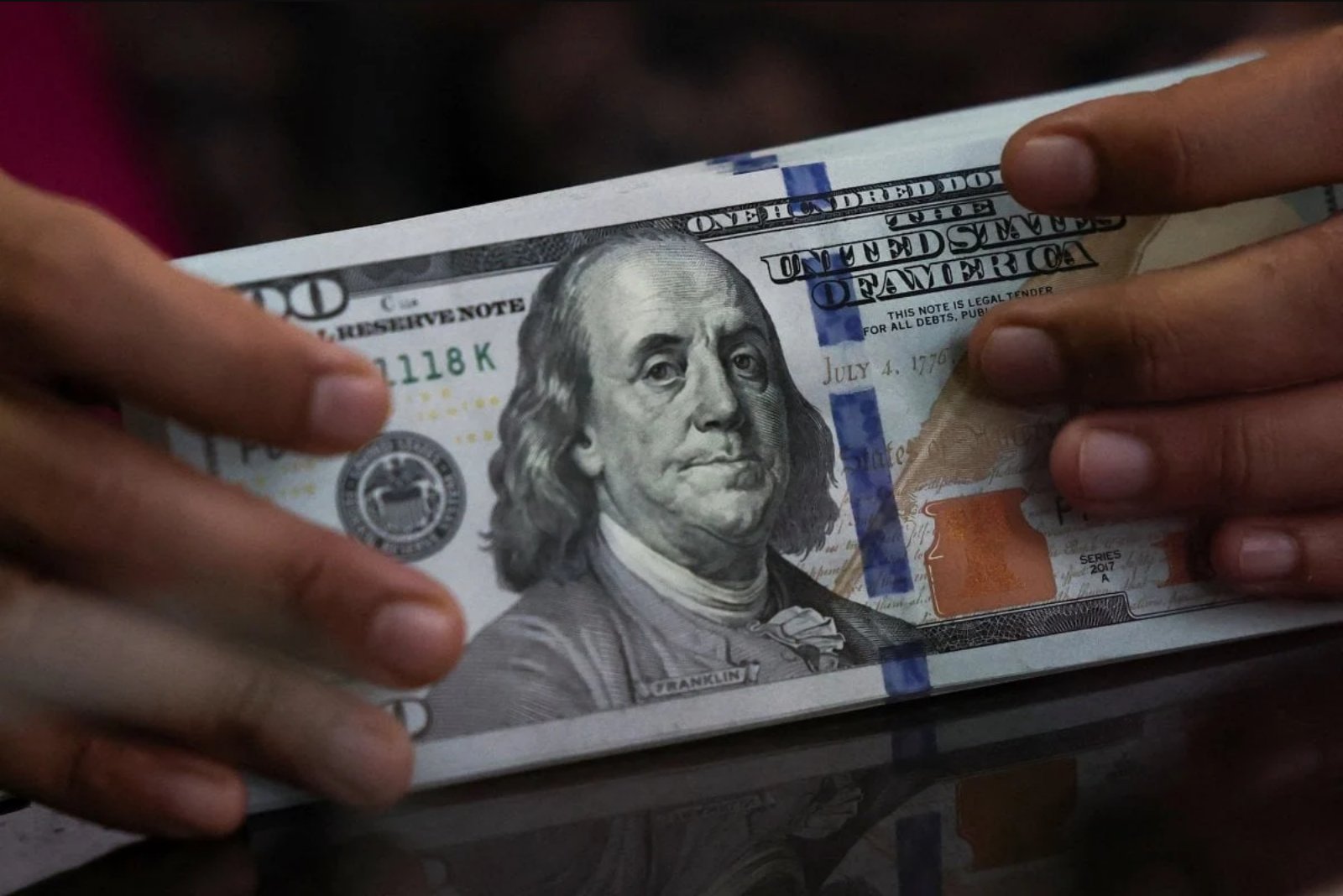
Global currency markets closed the week with the U.S. dollar displaying a blend of short-term weakness and longer-run strength. Investors sought refuge from a bruising rout on Wall Street, buying assets traditionally seen as safety plays, including U.S. Treasury bonds and the Japanese yen. The yen received additional support after the Bank of Japan (BOJ) chose to keep interest rates unchanged in a decision that contained elements market participants interpreted as relatively hawkish.
The euro also slid after data revealed a deceleration in eurozone economic growth, reinforcing doubts about the bloc's near-term momentum. Analysts described central bank messaging from the Federal Reserve and the European Central Bank (ECB) as more of an uneasy holding pattern than a move toward policy easing, particularly given elevated oil prices amid ongoing geopolitical tensions.
On the major gauges, the U.S. dollar index, which measures the greenback against six other major currencies, fell 0.2% to 101.88 in session trade.
AI, growth differences and the path of policy
Macquarie's Thierry Wizman, global FX and rates strategist, highlighted technology and, in particular, artificial intelligence as a factor that could shape which central banks eventually raise rates in December. In his remarks, Wizman emphasized that AI has provided a disproportionate benefit to U.S. growth in 2026 and carries potential productivity gains into the later 2020s. He linked that dynamic to differing central bank incentives.
"Seeing the size and composition of growth in the three main DM economies (the U.S., Euro area, Japan), it is clear that AI has benefited the U.S. most in 2026. That benefit to growth in 2026, and the promise of productivity gains in 2027-2030, is why Kevin Warsh wants to be ’dovish’, and wants AI to plow ahead. It’s why he personally won’t commit to another rate hike, yet, despite different opinions prevailing at the FOMC," Wizman said.
"For the ECB, too, AI is important, as acknowledged in the ECB statement. But Euro area growth in Q4 is not as dependent on the AI buildout as is the U.S.’s growth, and so the interest in maintaining AI-driven growth is not as great in Europe as in the US. Indeed, that’s why the ECB still latches onto energy costs as the key hinge for ECB policy. It’s also why the ECB is more likely to hike in December than the Fed, barring a problem in France," he noted.
"For Japan, the U.S.’s AI boom has been a greater growth boon than it has been for Europe. It’s why Japan still ’grows’ in 2026, despite the large oil price shock. Until public spending kick in or oil prices fall, Japan’s growth impulse is still mainly through external demand for tech hardware, and not through domestic demand. If AI stocks falter in the U.S., the Fed may desist, but the BOJ will hike so long as AI-driven investment remains strong," Wizman said.
"Indeed, we see the prospect of a BOJ hike in December being greater than the prospect of an ECB hike, which in turn is greater than a Fed hike," he added.
Dollar positioning and October performance
Over the month, the U.S. dollar was positioned for a gain. The dollar index was set to record an October rise of roughly 0.4% as market attention centered on Federal Reserve rate expectations. Several stronger-than-expected U.S. inflation readings, including consumer and producer price figures and elevated values for the personal consumption expenditures (PCE) price index - the Fed's preferred inflation measure - had kept traders cautious ahead of the recent policy meeting.
At the latest Federal Open Market Committee (FOMC) meeting, the committee held rates steady. Chairman Kevin Warsh said there remained a deluge of incoming data to process before the December decision. The FOMC had delivered a rate increase in September - the first such hike in more than three years - and market pricing still pointed to the potential for another move in December, a backdrop that typically supports dollar strength.
Broader forces have also reinforced the dollar in October: the U.S. economy's continued growth provided support to the greenback while persistently heightened geopolitical risk premia have encouraged demand for the currency and other perceived safety assets.
Euro under pressure after GDP slowdown and policy debate
The single currency weakened by about 0.1% to $1.1164 after eurozone third-quarter GDP growth was reported at 0.4%, down from a 0.6% increase in the second quarter. For the month, the euro was on track for a roughly 0.7% drop, a move influenced by wider French sovereign spreads and the headwind of higher energy import bills that have weighed on the bloc's terms of trade.
Market sentiment around the euro stabilized somewhat after ECB President Christine Lagarde said policymakers engaged in an active debate over whether an additional rate increase was necessary, before deciding to keep the benchmark deposit rate at 2.50%. Lagarde, who announced she will step down as ECB chief in February - earlier than previously expected - signaled that rising global bond yields were tightening financial conditions without the need for immediate central bank action.
Yen movement and BOJ voting split
In Asia, the Japanese yen strengthened modestly to 157.62 against the dollar after earlier touching near 157.81. Despite the intraday firming, the yen remained on course for a small monthly decline of about 0.1% against the greenback.
The BOJ maintained its policy rate at 1.25% following an 8-1 vote, but the committee's updated projections, which suggested persistent inflation, added to expectations of further tightening. One board member, Hajime Takata, dissented, calling for an immediate 25-basis-point increase to 1.50% - a hawkish break from the majority view that heightened market speculation about a potential December rate move. Derivatives pricing at the time reflected roughly an 80% probability assigned by markets to a year-end BOJ hike.
Market implications and outlook
The mix of safer asset demand, central bank vigilance and uneven growth patterns tied to the uptake of AI has produced a complex environment for currencies. Traders and portfolio managers remained focused on forthcoming data and central bank commentary ahead of the December policy meetings, as those outcomes will play a key role in shaping exchange-rate trajectories and risk premium pricing.
Roushni Nair and Pranav Kashyap contributed to reporting on the market moves described above.