
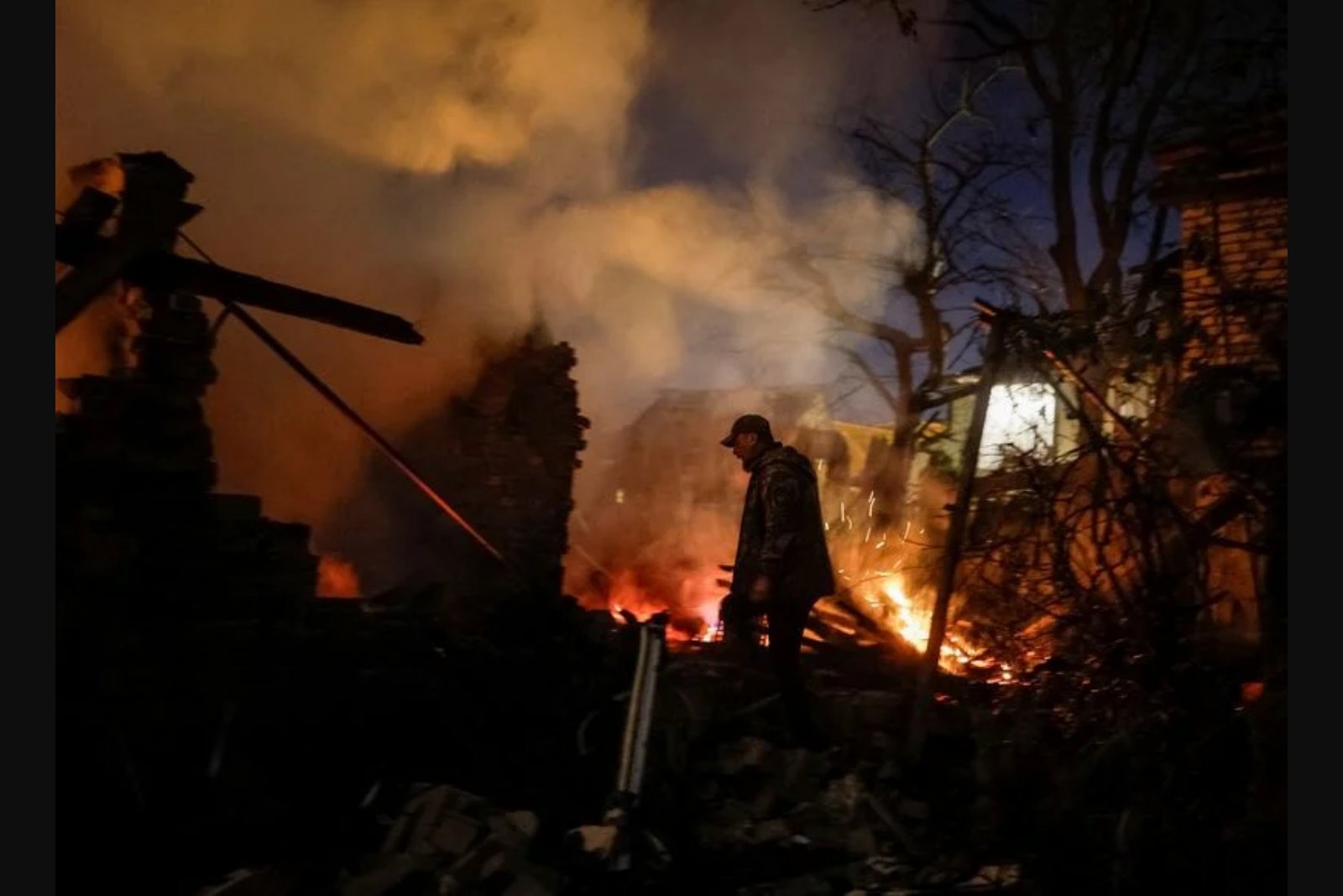
Russia launched a major assault on Ukraine's energy network on Wednesday, focusing strikes on power facilities around the capital and in other regions. Ukrainian officials said seven people were killed in the attacks, which followed days of intensified drone barrages over Kyiv.
The state electricity operator Ukrenergo announced emergency power cuts in Kyiv and three surrounding regions after the strikes, marking the first time the capital faced such measures since the spring. Authorities said some of the city's trams and trolley buses stopped running because of the outages and that the municipal water utility reduced pressure in parts of the system as people made their way home from work.
Residents of Kyiv woke to a skyline blurred by smoke from the strikes, with officials confirming damage to a significant power plant and other energy installations in the capital's vicinity. The assault was described by Prime Minister Sergii Koretskyi as an escalation in attacks on energy infrastructure. On social media he wrote that since summer there had been almost daily attacks on the energy system and that the combined scale of the recent strike had not been seen since the end of last heating season.
Air defences and munitions
Ukraine's air force reported it had intercepted 254 of 285 Russian drones deployed by early evening. Of those drones, 174 were described as high-flying, faster jet-propelled models that are more difficult to engage. Russian forces also launched a ballistic missile attack during the campaign.
President Volodymyr Zelenskiy said a child was among the seven people killed and that critical infrastructure had been targeted in five regions, with additional damage reported in a further five regions. He also visited a military command post near the eastern frontline town of Lyman, saying Ukrainian forces had recaptured 176 sq. km. (29.3 sq. miles) of territory since the start of a counteroffensive operation.
Targets and damage reported
Russian authorities said their forces struck power plants in the Kyiv region, hit an industrial complex in Odesa region, and damaged port infrastructure in Ismail in the southwest. Kyiv's mayor, Vitali Klitschko, reported debris had been found at a Western embassy but provided no further information.
The overnight assault prompted an air-raid alert that lasted more than 12 hours, and drone activity continued into the early evening. Officials noted that near-constant sirens and explosions have become routine in Kyiv, and that drone attacks over the preceding week had killed about a dozen people in the capital.
Government response and civil-defence concerns
Prime Minister Koretskyi said he had ordered local authorities to verify readiness of backup power systems at critical facilities and to accelerate installations where needed. In recent weeks, Ukrainian authorities have been constructing protective facilities and seeking to diversify energy generation ahead of an anticipated winter campaign of attacks.
Ukrainian Foreign Minister Andrii Sybiha characterized the strikes as a "deliberate" attempt to distract from the grinding battlefield offensive in eastern Ukraine and to increase pressure on civilians as winter approaches. Forecasters warned of freezing night-time temperatures in Kyiv in the coming days.
At the same time, Ukraine's human rights ombudsman, Dmytro Lubinets, said the country faces a critical shortage of urban shelters and described the civil-defence system as having "completely failed."
Cross-border incidents and wider military activity
Along Ukraine's western border, Moldova's defence ministry said three drones crossed into its airspace during the day. NATO members Romania and Poland scrambled military jets in response, and flights at the Polish airports of Lublin and Rzeszow were suspended for a time.
Separately, Ukrainian forces have intensified strikes inside Russia, targeting oil refineries and online retail infrastructure as part of efforts to undermine Russia's war effort.
Implications for infrastructure and daily life
The concentrated attack on energy infrastructure comes amid memories of the previous winter, when assaults on power and heating systems coincided with record-low temperatures and forced Ukrainians to adapt to severe disruptions. This week's strikes and the imposition of emergency power cuts underline the fragility of urban services under sustained assault and the challenge of maintaining essential utilities during extended periods of combat activity.
Authorities' orders to test backup power and accelerate protective works signal efforts to shore up critical infrastructure, but officials also acknowledge shortages in civil-defence capacity that may leave some urban areas exposed as the country heads into colder weather.
Reporting here focuses on the evolving operational and civilian impacts of the strikes as described by Ukrainian officials and does not introduce additional or speculative assessments.