
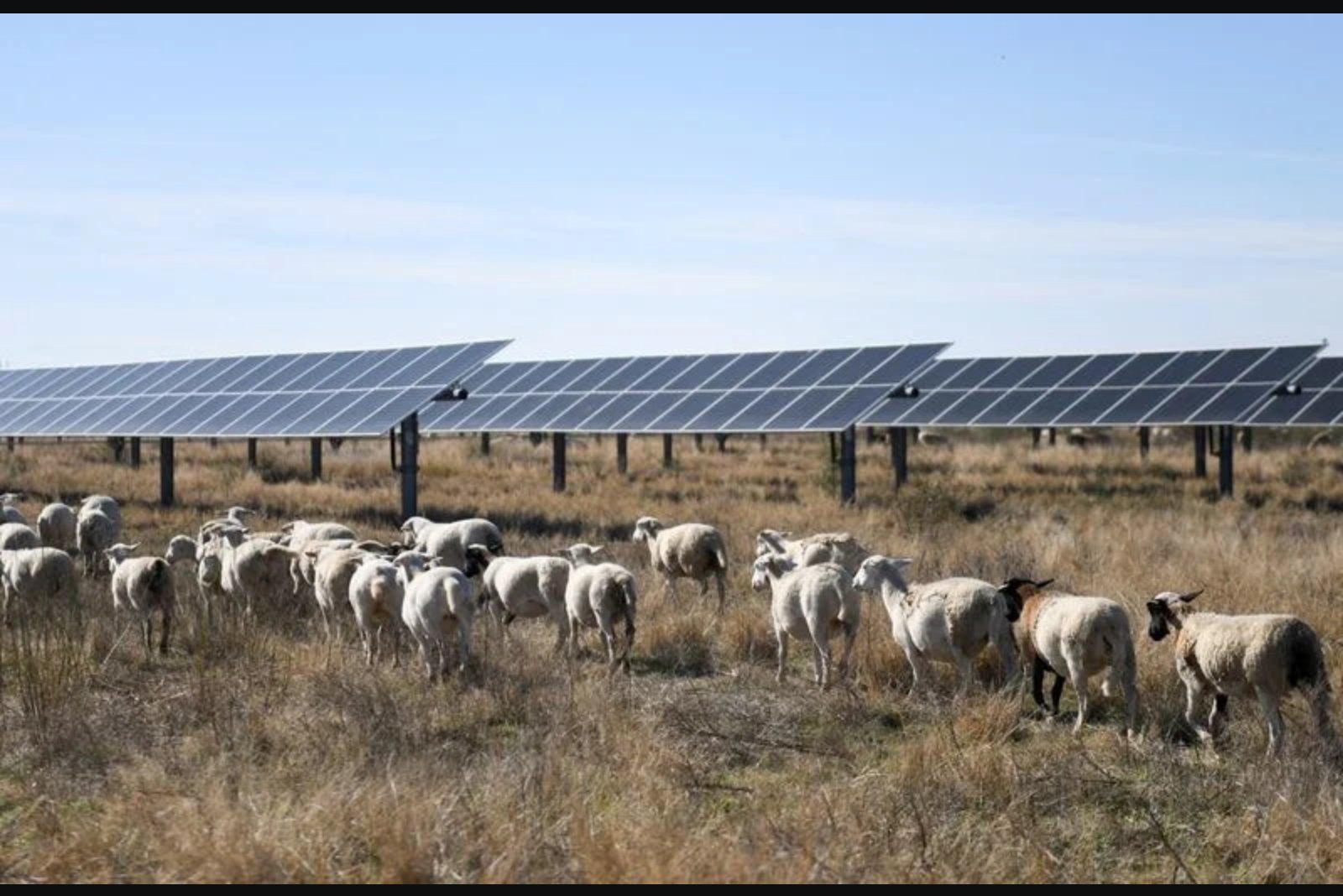
Federal changes to a long-standing rural energy grant program will make it substantially more difficult for many farmers and small rural businesses to obtain the support they have relied on to install solar panels, wind turbines, biodigesters and other efficiency measures, according to farmers, renewable energy companies and policy analysts.
The Department of Agriculture’s Rural Energy for America Program, known as REAP, has been a primary source of funding for such projects. In the past decade REAP helped finance more than 19,000 energy projects by American farmers and small business owners, the National Sustainable Agriculture Coalition reported. The program’s investments across grants and loan guarantees totaled more than $4.8 billion between 2014 and 2025, NSAC’s analysis of USDA data found.
Historically, Congress authorized REAP in 2008 with rules that permitted farmers who had not yet begun construction to apply for grants that covered up to 50% of project costs. That structure allowed many applicants to secure partial subsidies before incurring the full upfront expense of renewable installations or energy efficiency upgrades.
That framework will change under rules the administration released last week and set to take effect on October 16. Under the new regulations, applicants will no longer be able to seek REAP support until after a project is completed and the farm or business can document one full year of energy savings.
"For a lot of farmers, that just simply won’t be possible, especially with these times already being so financially uncertain," said Richa Patel, a policy specialist at the National Sustainable Agriculture Coalition, describing the practical effect of removing pre-construction grants. She noted that REAP-funded projects can range from several thousand dollars to several hundred thousand dollars in cost, and that many producers are already under financial pressure because of higher input costs and tariff-driven market stresses.
A USDA spokesperson described the revision as an effort to ensure program dollars are tied to tangible results. "The changes to REAP are intended to help the program pay for actual production and results of projects, not just projections," the spokesperson said.
The administration had paused REAP applications earlier in the year while it worked on rewriting the program’s regulations. The pause followed a prior restriction, implemented last year, that narrowed eligibility for solar projects after Agriculture Secretary Brooke Rollins said such installations were using prime farmland that could otherwise be planted.
USDA data show nearly 64% of REAP projects since 2017 were solar arrays, reflecting the popularity of on-site generation for farms and rural businesses seeking to lower utility costs. For many recipients the grants and loan guarantees enabled them to produce their own power and reduce ongoing energy expenses.
REAP has typically enjoyed bipartisan backing. Ann Mesnikoff, federal legislative director at the Environmental Law & Policy Center, said the program historically won broad support across the political spectrum. The center filed a lawsuit in September challenging the administration’s changes to REAP’s solar eligibility rules.
Analysts note that the program’s grants were distributed widely across districts of both parties. A Brookings Institution review of federal data published last year found more than two thirds of REAP grant funds went to recipients in Congressional districts represented by Republicans.
The regulatory shift has had immediate business fallout. Veronica McFadden, who in 2023 left a job at a solar company to start an Iowa business helping farmers apply for REAP grants, said the pause and subsequent rule changes dried up demand. She said that by August she had laid off all five of her employees because there was no longer sufficient application work. McFadden called the new rules "much riskier" for small and especially younger farmers who may not have the capital to pay project costs upfront and wait a year to demonstrate savings.
McFadden recently assisted Michigan dairy farmer Ron Rusk with a REAP application for an $85,000 ground-mounted solar installation intended to supply roughly 80% of his farm’s electricity. Rusk said he hoped the system would help make the operation financially viable and facilitate passing the farm to his son. That grant was never awarded.
Implications and immediate effects
- Farmers and small rural businesses seeking to use REAP support will face the added burden of financing projects entirely up front and demonstrating a full year of measured energy savings before qualifying for grant payments.
- The pause in applications while the administration revised rules, together with the restriction on solar eligibility implemented last year, has already curtailed work for companies that assist with REAP applications and for installers and vendors who rely on the pipeline of rural renewable projects.
- Though the USDA frames the rule changes as a shift toward funding verifiable results rather than projections, critics warn that the new structure will effectively lock out applicants without substantial upfront capital, at a time many farmers are coping with higher operating costs.
Quotes
"For a lot of farmers, that just simply won’t be possible, especially with these times already being so financially uncertain." - Richa Patel, National Sustainable Agriculture Coalition
"The changes to REAP are intended to help the program pay for actual production and results of projects, not just projections." - USDA spokesperson