
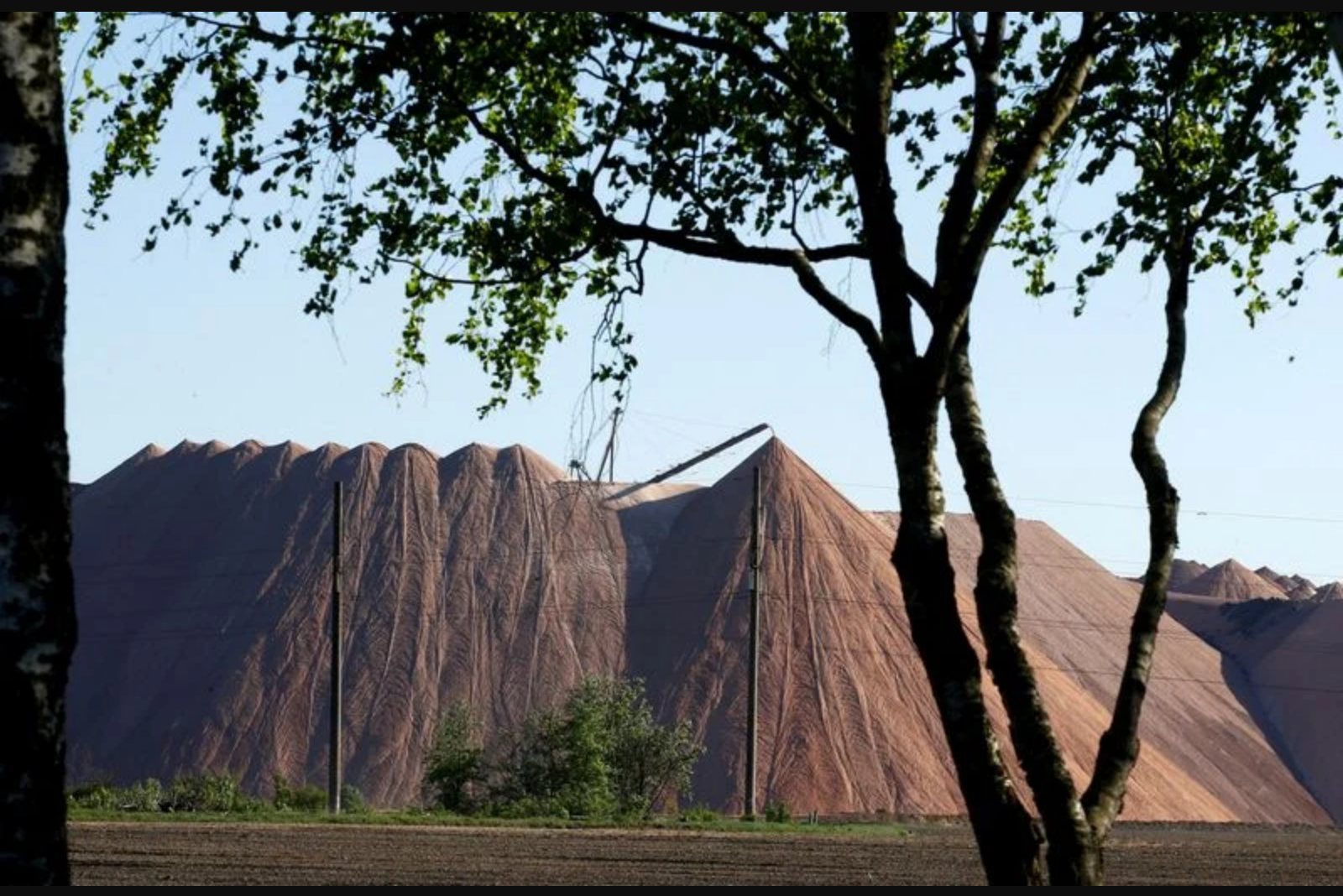
President Donald Trump said on Sept 21 that the United States is pursuing a significant purchase agreement to import potash from Belarus at a price lower than current Canadian supplies. In a post on Truth Social, he wrote: "The United States is working on a massive Deal with respect to the purchase of Potash from Belarus," and added, "The pricing would be for substantially less than we are currently paying to Canada, very good news for our Farmers and Ranchers."
Potash is an agricultural mineral used to improve plant disease resistance, enhance crop quality and raise yields. Canada currently provides the overwhelming majority of the potash imported into the United States, and the president's announcement indicates a willingness to use alternative sources in trade negotiations with Canada. It also follows a recent easing of U.S. sanctions on Belarus, a change that could open a new channel for Belarusian exports to the U.S.
Canada-U.S. Trade Minister Dominic LeBlanc and Nutrien, the Saskatchewan-based company that is the world's top potash producer, had no immediate comment on the president's statement.
Belarus perspective and frozen funds
Belarusian President Alexander Lukashenko, who is a close ally of Russia, said on Sept 11 that Belarus had resumed sales of potash to the United States after the lifting of U.S. sanctions. Lukashenko also said he wants Washington to return more than $40 million that he says is "stuck" in the U.S. banking system.
Belarus and Russia are among the world's major potash producers. However, sanctions and the closure of a key Lithuanian Baltic port have increased the cost of shipping potash via Russia's Arctic routes. The United States continues to receive some potash from Russia, but Canada remains the dominant supplier for U.S. imports.
Market reaction and analyst doubts
Industry observers questioned whether Belarusian potash would materially affect supplies or prices for U.S. farmers. Fertilizer analyst Josh Linville of StoneX said he doubts that potash from Belarus would play a major role in improving U.S. supplies or in lowering the prices currently paid.
"I'm afraid the impact would be limited. We have not struggled to find potash," Linville said, adding, "It is phosphate and nitrogen that we need help with." He also noted that even if Lithuania reopened the port of Klaipeda to Belarusian potash, the relatively low value of potash at current levels makes it difficult to justify shipping it across the Baltic and then across the Atlantic to the United States.
Linville pointed to constraints affecting other fertilizer components as well. He said the Iran war has curtailed supplies of nitrogen and phosphate fertilizer, blocking most Gulf shipments of nitrogen fertilizer, natural gas and sulfur - a key input for phosphate mining.
What this means for markets and farmers
The president's announcement positions Belarus as an alternative supplier that could be leveraged in trade discussions. At the same time, logistical challenges, the current price environment for potash and competing pressures on phosphate and nitrogen supplies temper expectations for a swift or wide-reaching change in U.S. fertilizer costs or availability.
Officials and market participants will likely watch whether formal agreements are reached and how any resumption of Belarusian exports to the United States would interact with existing supply chains centered on Canadian production.