
Saudi officials reported on Friday that three people were killed in missile strikes on Riyadh airport on Thursday, adding that several others were wounded and that a Saudia Airlines aircraft sustained damage as smoke billowed over the terminal. The attacks led airlines to cancel flights to the Saudi capital in the days before the city is scheduled to host a prominent gathering of oil ministers, company executives and officials.
Saudi forces returned fire with airstrikes on targets in the Yemeni capital Sanaa overnight, according to Houthi officials and media affiliated with the group. The Saudi-led coalition said it had destroyed three missile launch platforms used by the Houthi fighters and warned it would respond decisively to strikes that hit civilians.
The conflict in Yemen has become a focal point of a broader regional confrontation that, according to statements in the reporting, was triggered by the US and Israeli attack on Iran that started on February 28. The fighting has significant implications for energy markets because the Houthis have been firing on ships in the Red Sea and around the Bab el-Mandeb Strait while Iran is partly blocking the Strait of Hormuz, further constraining Gulf oil flows.
Houthi advances down Yemen’s Red Sea coastline last month gave them control over key stretches of the coast near the Bab el-Mandeb gateway. That advance prompted Saudi Arabia to re-engage actively in the long-dormant conflict and to back a government counteroffensive. Government forces, supported by intensive Saudi airstrikes, reclaimed territory around the Bab el-Mandeb coastline on Monday, though reporting noted that fighting was ongoing.
Saudi Arabia’s ambassador to Yemen posted on social media that Bab el-Mandeb had been cleared of Houthi forces; Reuters was not able to verify that claim. Houthi fighters remain in the port town of Mocha, and government troops have focused on combat in adjacent hills that overlook the coastal sector, according to the reporting.
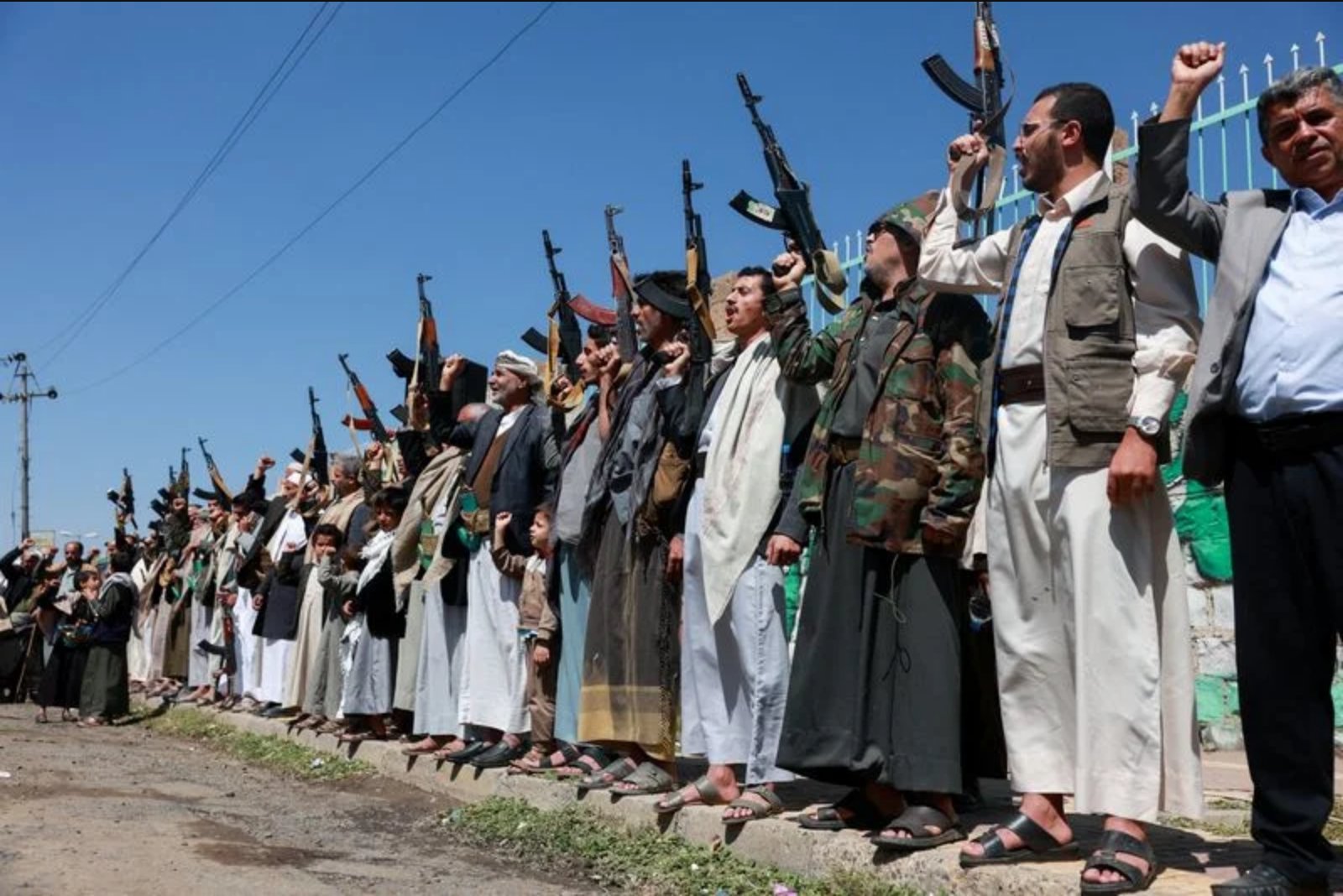
Inland, the Houthis have surrounded Yemeni government forces in Taiz, the country’s third-largest city, and have made gains in mountainous districts that cut off a major road linking Taiz to other government-held areas. The group has repeatedly launched ballistic missiles at Saudi Arabia and has publicly declared an intention to shut down Saudi airspace, while warning workers at oil facilities that they could be targeted.
The Saudi civil aviation authority said air traffic at Riyadh airport had returned to normal and the flight-tracking service flightradar24 showed a gradual resumption of flights, including services from some regional carriers. Nonetheless, many airlines continued to cancel or delay flights to the capital, and several international aviation advisory bodies cautioned carriers about operating in and over Saudi airspace.
The European Union Aviation Safety Agency expanded the area in which it advised airlines not to fly, citing the recent airport attacks and the risk to civil aviation. OPSGROUP, an aviation risk monitoring advisory body, also recommended against flying over the kingdom. The US embassy in the United Arab Emirates urged American citizens to exercise increased vigilance, noting Houthi attacks on civilian targets in Saudi Arabia and warning that hostilities could escalate rapidly.
The strikes hit Riyadh days before the World Petroleum Congress Energy Congress, a major event that the city is due to host from Sunday and which was still being promoted on official channels. Some officials and delegates have adjusted participation: the Italian energy minister said he would not attend in person but would take part by video, without stating a reason for that decision.
Saudia Airlines confirmed that one of the people killed on Thursday was an employee of the carrier. The strikes earlier in the week had already resulted in the deaths of three people in attacks on airports in the kingdom, according to the reporting, underscoring an escalation in Houthi targeting of aviation infrastructure and civilian areas.
Observers and officials note that Saudi Arabia has sought support from partners in a mutual defence pact, asking Pakistan and Turkey for assistance to counter Houthi strikes and appealing to wider allies for help in reversing the group’s gains in Yemen. The Saudi-led coalition’s reported destruction of missile launch platforms was presented as part of a campaign to blunt the Houthis’ ability to strike targets inside the kingdom.
On the ground in Yemen, the government counteroffensive aims to push Houthi forces away from key coastal approaches and to relieve pressure on garrisoned cities such as Taiz. The Houthis’ control over coastal sections and their repeated missile launches continue to represent a direct threat to maritime traffic through the Red Sea and its southern approaches, a development that has been identified as a source of additional strain on Gulf oil shipments given the concurrent partial blockade of the Strait of Hormuz.
Summary
Missile strikes by Yemen’s Houthi group on Riyadh airport on Thursday killed three people and wounded others while damaging at least one Saudia Airlines plane and triggering flight cancellations. Saudi airstrikes targeted Houthi positions in Sanaa overnight and a Saudi-led coalition reported destroying three missile launch platforms. The fighting around the Red Sea and Bab el-Mandeb Strait has raised concerns about shipping security and energy market stability, even as Riyadh prepares to host a major energy congress.
Key points
- Casualties and damage - Three people were killed in the Riyadh airport strikes and several were injured; a Saudia Airlines employee was among the dead and a plane was damaged.
- Aviation and events impact - Flights to Riyadh were cancelled or delayed and some airlines paused services; the capital is set to host a major energy conference days after the attacks.
- Energy and maritime risks - Houthi attacks on shipping in the Red Sea and control of coastal areas near Bab el-Mandeb, combined with partial restrictions in the Strait of Hormuz, are adding pressure to Gulf oil supplies and market stability.
Risks and uncertainties
- Escalation of hostilities - Continued missile strikes and airstrikes risk further civilian casualties and wider regional escalation, which could affect commodity markets and regional security-sensitive sectors.
- Aviation disruptions - Ongoing threats to Saudi airspace could force longer-term flight suspensions or rerouting, impacting airlines, travel demand and business events centred in Riyadh.
- Maritime and energy supply threats - Houthi control of coastal zones and attacks on shipping in the Red Sea pose uncertainties for maritime transit and Gulf oil flows, with implications for oil markets and logistics.
Tags: Yemen, Saudi, Houthis, Oil, Aviation