
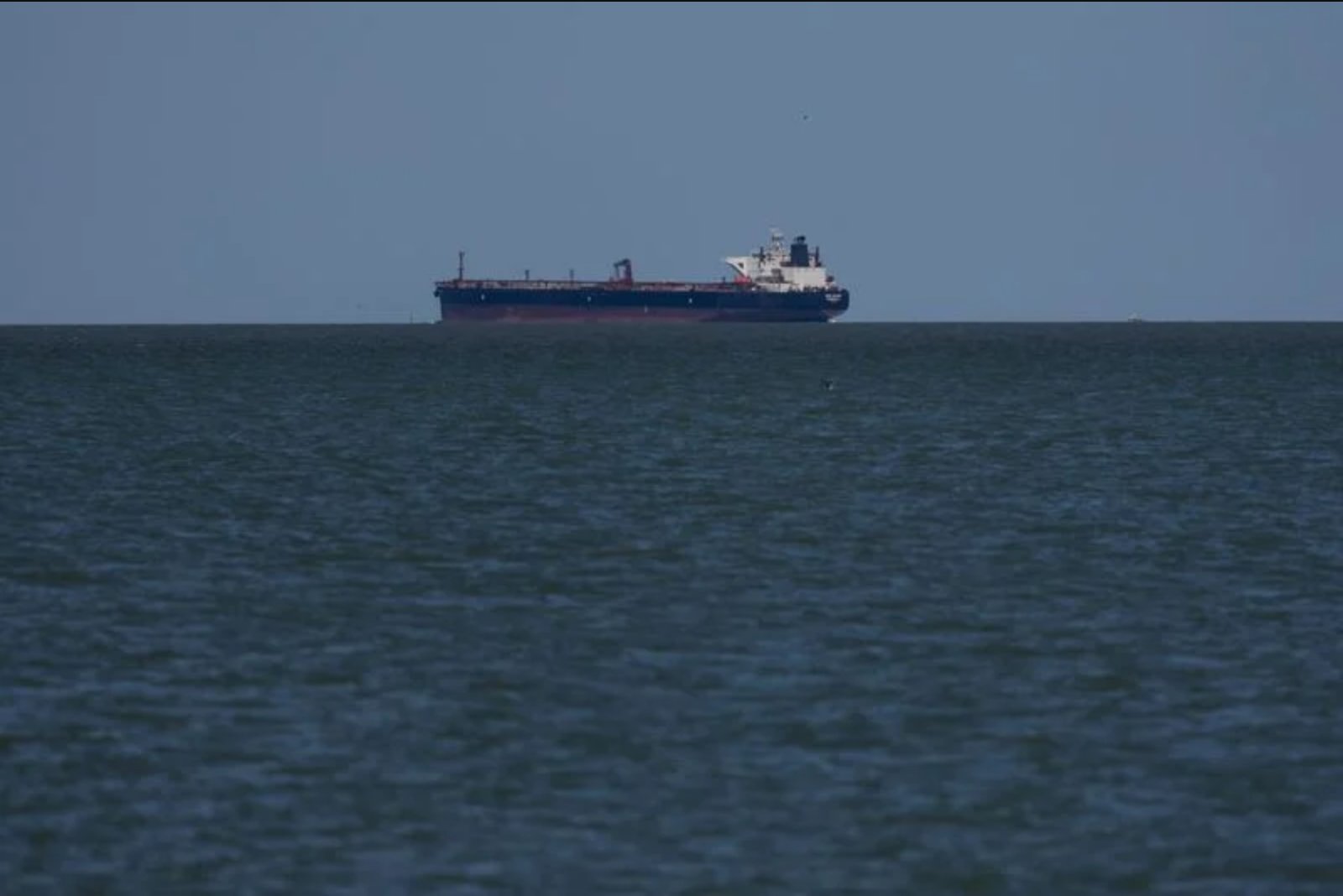
Tanker charter costs have climbed to unprecedented levels, effectively pricing US crude out of many Asian refinery supply plans, according to multiple traders and shipbrokers briefed on those trades. Data compiled by shipbrokers Simpson, Spence & Young on LSEG showed the cost to charter a VLCC to transport roughly 2 million barrels of US oil from the Gulf of Mexico to China in November reached $80 million this week. Market participants say that level of freight expense breaks the economics of the route and shuts the so-called arbitrage window that previously allowed Gulf crude to compete in Asia.
Several traders and shipbrokers who spoke on condition of anonymity said the spike in freight is redirecting Asian buying toward other crude grades, particularly Murban from the United Arab Emirates. Those shifts have already pressured Murban's market position - the grade's premium over Dubai quotes rebounded to more than $11 a barrel on Thursday.
The magnitude of the freight increase is stark. Shipowners are now able to command charter rates that, in some cases, equate to about $40 a barrel for transporting US crude on long-haul routes, compared with roughly $8.60 a barrel before the US-Israeli war on Iran began in February. At the $40 level, shipping alone represents nearly half of the current price of a West Texas Intermediate crude future contract, markedly raising delivered costs for refiners in the region while producing outsized returns for tanker owners.
Market activity illustrates the new pricing reality. Two traders and two shipping sources said Japanese refiner Cosmo Oil has provisionally chartered a VLCC for $81 million to load US oil on November 19-21. By contrast, attempts by South Korea's SK Energy and trading house Trafigura to secure VLCCs at $76 million to $77 million were unsuccessful, according to a shipbroker who was briefed on those bookings.
Faced with prohibitive VLCC rates, some market players are switching to smaller tonnage. Trafigura contracted the Aframax tanker Torm Hilde - roughly capable of carrying about 600,000 barrels - for $24 million to load US crude for Japan on November 1. A separate effort by Vitol to fix the Aframax Riverside to load US oil for South Korea in early November at about $27 million did not transact, a shipbroker said. Trafigura declined to comment, and the other companies did not immediately respond to requests for comment.
Sources tracking the route cited steady demand for tankers and expectations of additional releases from US strategic petroleum reserves as factors underpinning the firm freight market. June Goh, senior analyst at Sparta Commodities, noted that the jump in freight translates into materially higher delivery costs for refineries in Asia. She said product cracks - the margin between refined products and crude - would need to remain elevated to preserve positive overall refining margins in the face of those added shipping expenses.
Sparta Commodities data indicate that VLCC freight on the US Gulf-to-Asia and Fujairah-to-East routes have risen more than 300% since mid-August. Goh attributed the surge to a combination of operational inefficiencies and shifting flows. Specifically, she pointed to widespread ship-to-ship (STS) transfers being used as a workaround while the Strait of Hormuz remains effectively closed to certain movements, and to heavier Atlantic Basin arbitrage flows into the Far East. Those conditions, she said, have reduced the pool of open tonnage available for long-haul voyages.
Traders also expect US sellers to respond to the changed economics by cutting offers to compete in global markets. Several trading firms are reported to be adapting by switching to smaller-sized tankers where possible to manage voyage costs, according to three traders and a shipbroker.
Relative delivered cost comparisons are already influencing buyer choices. An oil analyst at a trading firm assessed that, on a delivered-to-Asia basis, Murban sits about $2 a barrel cheaper than WTI crude. That differential, coupled with the elevated freight on US routes, is encouraging some Asian refiners to consider Murban or other alternatives such as Medanito from Argentina. However, traders emphasized that a subset of buyers may still pay a premium for US barrels to secure supply diversity and reliability.
Market participants stressed that diversification considerations remain relevant while the flow through the Strait of Hormuz can still be disrupted. Sparta's Goh observed that even if the arbitrage appears closed now, ongoing geopolitical or logistical disruptions could keep Atlantic-origin crudes flowing into Asia, sustaining demand for long-haul shipping capacity.
Summary
Record-high VLCC freight rates, with estimates as high as $80 million for Gulf-to-China voyages in November, have made shipping US crude uneconomic for many Asian refiners. Buyers are shifting toward Murban and other alternatives, and some traders are moving cargoes on smaller tankers. The spike in freight has raised delivered crude costs sharply and squeezed refining margins unless product prices remain elevated.
Key points
- VLCC charter to carry 2 million barrels from the US Gulf to China hit $80 million, per Simpson, Spence & Young data on LSEG, closing the Gulf-to-Asia arbitrage.
- Asian refiners are turning to Murban and other alternatives as Murban's premium to Dubai rose to over $11 a barrel; Murban is about $2 a barrel cheaper delivered to Asia than WTI, according to an analyst.
- Shipowners have captured outsized revenue from the freight surge while refiners face sharply higher delivered feedstock costs; some trading firms are switching to smaller tankers and US sellers may cut offers to stay competitive.
Risks and uncertainties
- Freight volatility driven by STS workarounds and constrained open tonnage could continue to distort long-haul crude economics - impacting refining margins and seaborne trade flows.
- Potential further releases from US strategic petroleum reserves or changes in Atlantic Basin flows may alter tanker demand and freight levels, with knock-on effects for importer sourcing strategies.
- Geopolitical or logistical disruptions around the Strait of Hormuz could sustain alternative routing and arbitrage flows to Asia, making future freight and supply patterns uncertain.