
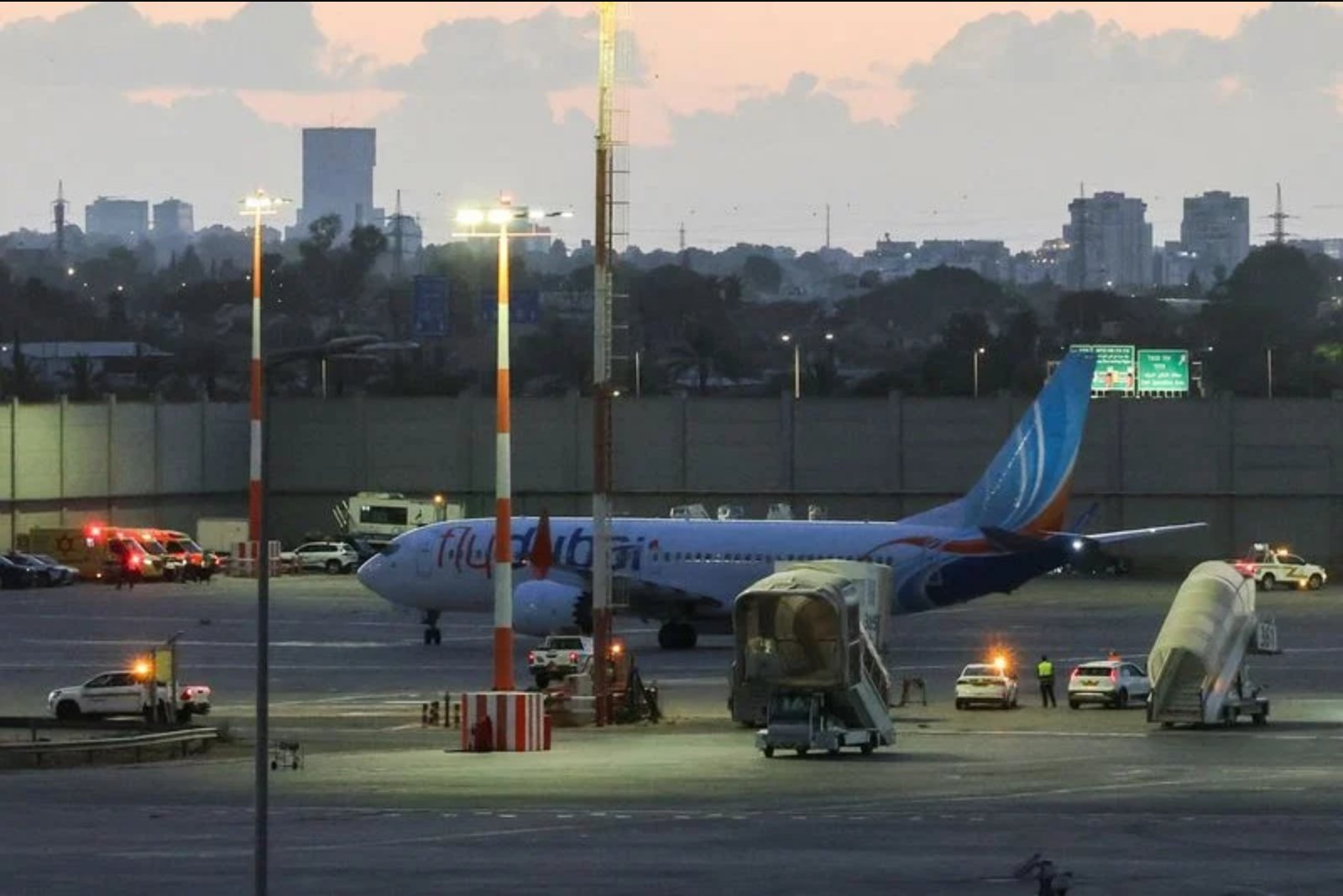
When flydubai flight FZ1073 plunged from cruising altitude on Wednesday, passengers initially described the sensation as extreme turbulence. They later learned the aircraft had been the scene of a life-or-death struggle in the cockpit.
Passenger Almog Italie recounted that the jet was cruising above 30,000 feet when it suddenly dropped. "It was dropping like for 20, 30 seconds, and then balanced, and then started dropping again, and balanced again," he said, describing a series of rapid descents and recoveries before he and others saw people gathered directly in front of the cockpit.
Israeli authorities said the co-pilot stabbed the captain in an apparent attempt to crash the plane, which was flying from Dubai to Tel Aviv with more than 170 Israeli passengers on board. Passengers and cabin crew who moved to the forward cabin confronted the situation and assisted in subduing the attacker, officials said.
Accounts from the front of the cabin
Doron Spielman, a spokesperson for the Israeli prime minister's office, said the wounded captain was bloodied and lying on the floor but had managed to use "the last moments of his energy" to open the cockpit door release. Mr. Spielman said that, as passengers rushed forward and entered the cockpit, they found the injured pilot on the floor and the alleged attacker standing at the controls, striking the control panel.
According to the account, a passenger then subdued the attacker. The intervention by those on board, combined with the presence of an additional flight crew on the aircraft, allowed control of the aircraft to be restored.
On-board video and statements
A video filmed on board and later verified captured the immediate aftermath in the forward cabin. The footage shows two wounded men lying on the floor and passengers speaking in Hebrew. One off-camera voice identifies one of the men as the pilot "they tried to murder," while another identifies the other man as the attacker, who is shown lying on his side with three stripes on his epaulette consistent with co-pilot rank.
"We were attacked now, on this airplane, they tried to murder the pilot, and we took control of the team/staff," a man with blood on his face is heard saying in the video. Another passenger adds: "We're standing here, no one is going to pass through the pilot's door."
Flight path and in-flight dynamics
A playback of the flight posted on the flight-tracking website flightradar24 showed the aircraft at about 34,000 feet heading west over Saudi Arabia when it dropped more than 14,000 feet in some 30 seconds. After that rapid descent the aircraft altered course to the northwest, briefly crossed into Jordanian airspace, then returned to Saudi airspace and proceeded to Tabuk Airport (TUU), where it made a safe landing.
Flydubai confirmed that a reserve crew who had been on board assumed control and landed the aircraft at Tabuk. The airline said the underlying reasons for the event remain unknown and cautioned against premature speculation.
Official statements and immediate response
Israel's defense minister, Israel Katz, characterized the incident as an attempted attack that was thwarted by the actions of several Israeli passengers. In a statement he said the assault was stopped "solely thanks to the heroism of several Israeli passengers who stormed the cockpit, subdued the terrorist, and - with their own hands - restored control of the aircraft to an additional flight crew present on board." He added that preliminary information indicated the attacker "had a single objective: to crash the plane."
Passenger experiences after landing
Italie said the reserve crew "took over the airplane and balanced it." He described a tense but orderly atmosphere among most passengers during the emergency. After the landing in Tabuk, he said passengers received a warm reception that included medical staff and provisions while they awaited onward travel back to Tel Aviv.
What is known and what remains unclear
The sequence of events reported by passengers, the verified on-board footage, the flight-tracking data, and statements from officials offer a consistent outline: a violent incident in the cockpit, intervention by passengers and crew, rapid altitude loss, and a diversion to Tabuk where the aircraft landed safely. Authorities and the airline state that the underlying motives or causes remain unconfirmed.
The episode has raised immediate questions around cockpit security, in-flight response capability, and the procedures for handling violent incidents on board a commercial aircraft. Investigations into the full circumstances and motivations are expected to continue as authorities examine the evidence and statements from those on board.