
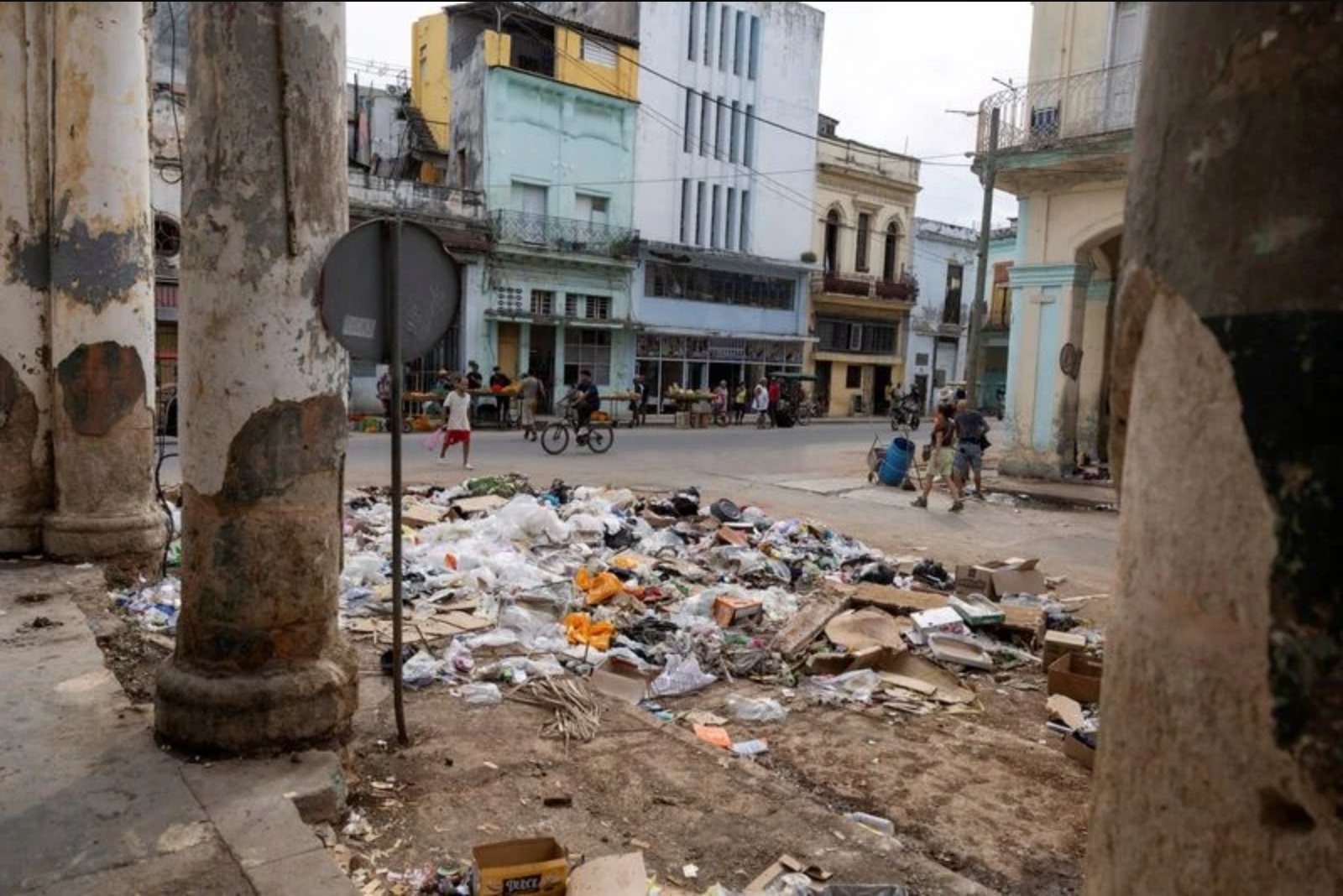
In neighborhoods across Havana, the interruption of electricity and running water has become an everyday crisis, fueling the spread of viral illnesses and creating acute sanitation challenges for households and clinics.
One of the city's residents, housewife and healthcare worker Yuamilka Hechavarria, described a recent night when water suddenly surged into the cistern of her decrepit old Havana tenement. She woke during a blackout and rushed to fill a bucket before the tap ran dry. According to Hechavarria, that was the first time her building had received water in two months.
Her experience reflects a broader pattern affecting nearly two million people in Havana, where frequent blackouts - which officials have linked to a US fuel blockade imposed in January - now often run longer than 24 hours. Those outages interfere with refrigeration and critically hinder the aging water-distribution network, a system heavily dependent on electric pumps.
Hechavarria said many residents in her building have fallen ill. For weeks she had to buy water from street vendors or gather it from fractured pipes. Hygiene deteriorated as tenants struggled to maintain basic cleanliness in cramped quarters, she said.
"There’s no one in this building who hasn’t gotten sick," Hechavarria said, adding that she was recently recovering from fever and diarrhea.
Health authorities and advisories
Officials on both sides of the Florida Straits have issued warnings. Cuban health authorities have reported the spread of viruses in recent days, including a strain of viral hepatitis, as power and water systems fail. A United States health alert earlier this month described a "significant increase in diarrheal illness across Cuba, associated with the continuing degradation of the water and energy infrastructure," and advised travelers and residents accordingly.
Infrastructure under strain
Cuba’s National Institute of Hydraulic Resources has noted that almost 90% of the country's water system depends on electrically powered pumps. With blackouts becoming more prolonged since the fuel blockade began, the pumps have been unable to operate consistently. The United Nations Office for the Coordination of Humanitarian Affairs has said that around 3.5 million people - just under half the island’s population - are now affected by water shortages.
In the two-story building where Hechavarria lives, thirty families share cramped, poorly ventilated rooms. A recent power surge rendered her refrigerator inoperable for food preservation; she now uses the appliance to store medicine, beans, and rice. Dishwater is reused to clean floors or flush toilets, and soap is used only when financially feasible.
Her husband regularly pushes a homemade cart fitted with two large barrels to a pipe protruding from a local school wall. If school pumps are running, water flows from the pipe into the alley and residents can fill containers. But when power fails, the pump does not run and only a trickle - if any - comes out, neighbors say.
Neighbor Andres Jimenez, 76, a retired metal worker, recounted arriving to collect water at the school pipe only to find the power had just gone out and the flow reduced to a thin stream. "If there’s no power, they don’t run the pump," he said, noting that concerns about hygiene are forced to take a back seat to securing any available water.
Strain on healthcare delivery
Local healthcare providers say the lack of water is hampering infection control and treatment. Nurse Maria Elena Parlado, who lives nearby and works at a neighborhood clinic, pointed to a trash heap and a small stream of sewage running beside the sidewalk as visible signs of the failing sanitation environment. She said the clinic where she treats patients suffering from fast-spreading viral infections is itself operating without water.
"Between one patient and another I should be washing my hands, but sometimes I can’t," Parlado said, describing the constraints on basic infection-control measures within the clinic.
Daily coping and public-health consequences
For many families, the current conditions have become the new normal. When water briefly returns, residents race to collect and store what they can. When it vanishes again, they rely on makeshift strategies - purchasing from vendors, scavenging leaks, or transporting water by hand - to meet minimal needs for drinking, cooking, and hygiene.
Public health consequences are already evident in Hechavarria’s building, where multiple tenants have experienced diarrhea and other illnesses tied to the degraded water and sanitation situation. Health warnings at national and international levels reflect concern that these conditions are contributing to broader outbreaks across the city.
As the situation continues, residents and frontline health workers face the persistent challenge of managing infection risk while lacking the most basic utilities needed for prevention and care.