
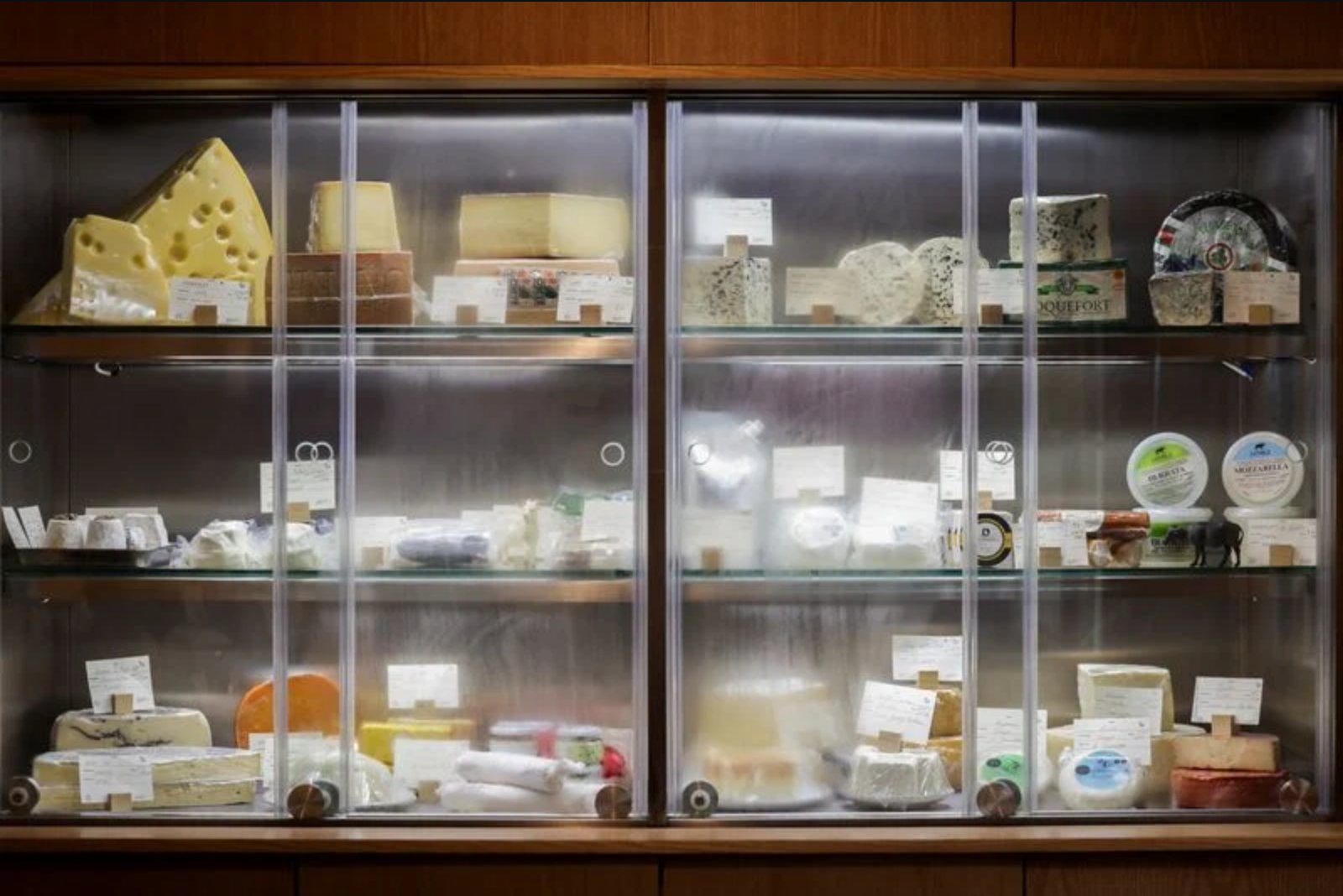
Negotiators in the current U.S.-Mexico trade discussions have run into an unusual sticking point: the proper names for cheeses. Officials say a new Mexico-European Union agreement that extends special legal protections to hundreds of European products tied to geographic regions is prompting U.S. objections because of the implications it could hold for American cheese exporters selling into Mexico.
The pact, signed by Mexico and the EU in May, includes protections for names such as Parmigiano Reggiano, feta and manchego and gives the European Union legal remedies against misuse of those names. Washington has argued that the arrangement could restrict future U.S. producers from marketing cheeses in Mexico under widely used names such as parmesan and feta - names the United States views as generic.
U.S. dairy exporters have voiced sharp criticism. "It’s absolutely wrong what Mexico did," said Jaime Castaneda, executive vice president of the U.S. Dairy Export Council. "The Mexican government has to make it absolutely certain that the United States and the Mexican manufacturers of common cheese names will continue to be able to be in the market." Castaneda’s comments underscore how the issue has escalated from a niche cultural matter into a trade policy lever.
The dispute sits alongside broader, high-stakes negotiations. Washington and Mexico are pursuing an interim trade deal to be concluded this year, while also conducting parallel talks aimed at renewing the U.S.-Mexico-Canada Agreement, an arrangement described as a linchpin of Mexico’s economy. Participants say the broader negotiating context has given the United States leverage to press its case in defense of a market that has become commercially significant for American cheese exporters.
Although Mexico has signed the Mexico-EU treaty, it has not yet completed the domestic procedures required for the agreement to come into force, according to Mexican officials. By contrast, the European Union has already completed its internal steps, a European Commission spokesperson said. Mexico’s economy ministry has said the agreement still needs to be ratified by lawmakers.
The European Commission has indicated it will not alter the substance of the pact and has "taken note of the U.S. actions" opposing the protections for European cheeses, according to the commission. The Office of the U.S. Trade Representative and Mexico’s economy ministry did not respond to requests for comment on the latest developments, though the U.S. trade agency has previously explained its opposition to the EU’s Geographical Indication, or GI, framework.
In an April report, the U.S. trade office described the EU approach this way: "The EU continues to seek to expand its harmful GI system within its territory and beyond." The report said forcing dairy producers outside the bloc to use labels such as "imitation feta" or "asiago-style" imposes costs and is unnecessary. The U.S. office also linked the GI system to the $1.2 billion U.S. cheese trade deficit with the EU.
How cheese figures in Mexican diets and trade
Mexico ranks among the world’s top consumers of cheese and favors domestic varieties such as stringy Oaxaca cheese, commonly melted on quesadillas, and crumbly queso fresco used at breakfast. Yet imports, mainly from the United States, have climbed since the 1980s and now account for nearly 30% of domestic cheese consumption.
U.S. brands and formats have become notable features in Mexican grocery aisles and foodservice menus, from grated parmesan sold under major brands to supermarket private-label manchego, and from demand driven by pizzerias to the popularity of processed and convenience-oriented cheeses. U.S. exports to Mexico amount to roughly $1 billion a year in cheese, compared with about $200 million in dairy exports from the EU to Mexico.
European producers frame the debate as one rooted in contrasting agricultural traditions. "The U.S. has always been a nation of high-volume consumption, which is precisely the opposite of what designations of origin represent," said Antonio Martinez, head of an organization that protects manchego’s regional designation. He added that the smaller scale of manchego producers in Spain gives them their "charm and unique identity."
Not all stakeholders take the same view. Some Mexican cheese distributors welcome the EU accord because they expect it to reduce tariffs on European imports and to open higher-end market segments. "These cheeses will serve different markets. European cheese will be sold in a higher niche," said Rodolfo Navarro, who operates a family-owned cheese distribution business. Navarro also criticized U.S. producers, whom he and other local cheesemakers accuse of undercutting domestic production.
Observers have raised concerns about the vulnerability of Mexican dairy producers to cheap imports. The Institute for Agriculture and Trade Policy warned in 2023 that Mexican dairy producers faced pressure from inexpensive U.S. exports. The profile of some U.S. dairy products - including processed slices commonly known as American cheese, which are made with emulsified salts and dairy leftovers and are technically not a cheese at all - contributes to perceptions about quality.
U.S. makers counter that their cheeses have fared well in international competitions and point to advantages such as long shelf life, versatility and lower cost, attributes that have allowed American-style cheeses to capture significant market share in Mexico. "The U.S. is flooding the Mexican market with its cheeses because they can sell them very cheap," said Georgina Yescas Trujano, co-founder of Mexican cheesemonger Lactography. "I’m glad tariffs on European cheese are being lowered, because Mexicans can learn to eat better cheese."
For now, the dispute over cheese names remains an active bargaining chip within wider trade negotiations. The outcome will depend on how negotiators reconcile competing views on generic use versus protected regional designations, and on how quickly Mexico moves to ratify the pact with the EU - or whether the parties adjust the timing of implementation in response to U.S. objections.