
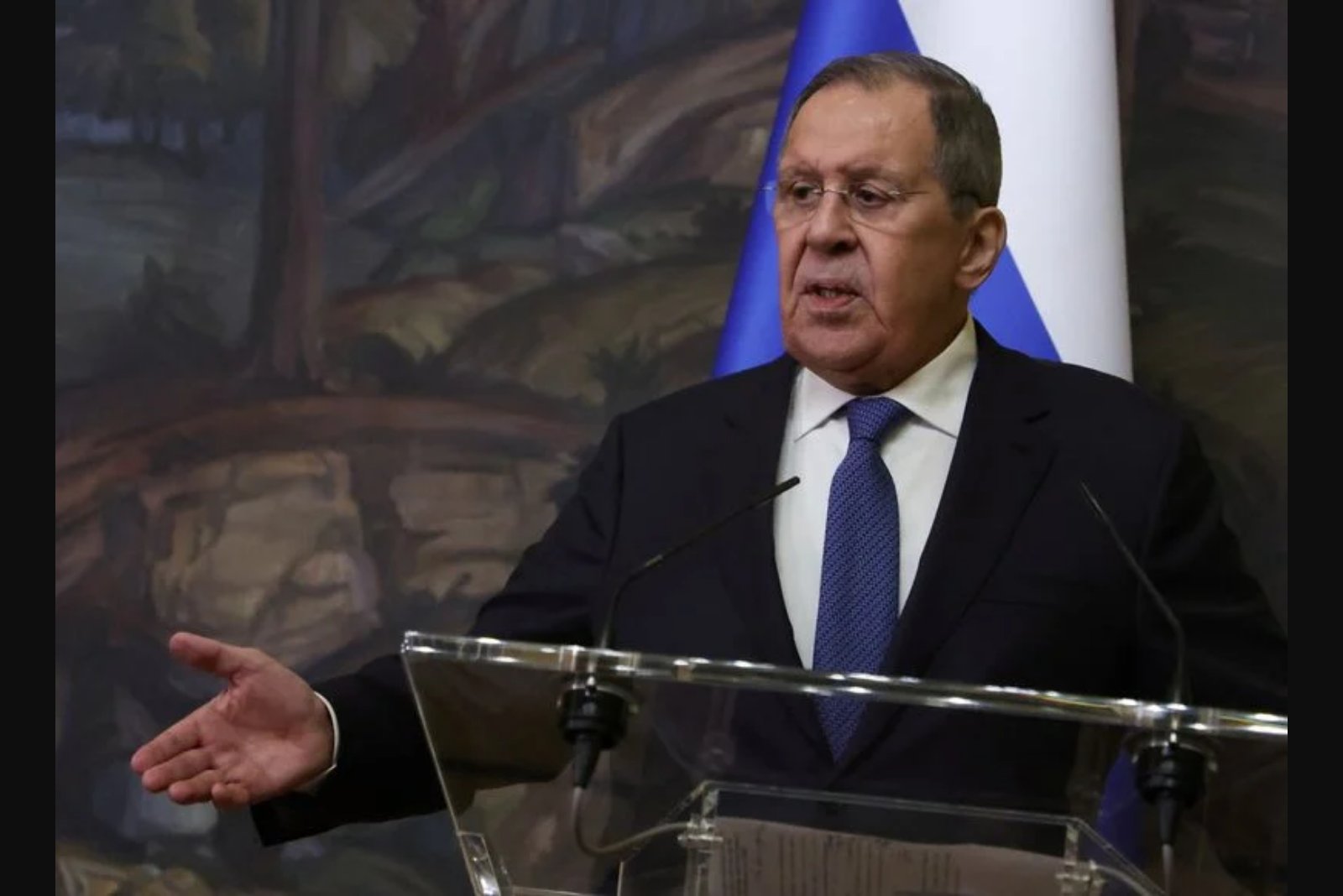
Moscow has demanded clarification from Washington over reports that U.S. President Donald Trump may have altered his approach to the war in Ukraine, following remarks by French President Emmanuel Macron at this month’s G7 summit in Evian, Foreign Minister Sergei Lavrov said.
Macron told fellow leaders at the summit that Trump had acknowledged Russia did not want peace in Ukraine, a point Macron described as "a real change in approach" by the U.S. The French president's account, and subsequent public comments by Trump, have prompted questions in Moscow about whether U.S. policy is evolving.
Trump himself urged Russia to make peace with Ukraine after what he described as a "very good" meeting with Ukrainian President Volodymyr Zelenskiy, comments that generated cautious optimism among G7 leaders about the possibility of a negotiated settlement.
"As far as Ukraine is concerned, we want to understand what happened in Evian," Lavrov said at an event in Moscow. "The Americans haven’t yet told us what they took away from the summit in Evian or what their future course of action will be," he added.
Lavrov also cited Macron as saying that understandings reached in Anchorage, Alaska last August between Trump and Russian President Vladimir Putin had effectively been "buried" at Evian. Russian officials commonly refer to the so-called "Spirit of Anchorage" as shorthand for what Moscow saw as a possible framework for an agreement. That framework, as described by Russian sources, envisaged Ukrainian forces withdrawing from the remainder of the Donbas region in return for Moscow freezing other frontlines.
On this point, the article of contention remains clear: Kyiv has repeatedly stated it will not hand over any of its territory to Russia without a fight.
Lavrov signalled growing Russian frustration with the state of talks and the delivery of prior understandings. He suggested the Alaska summit may have been a "U.S. ploy to buy time to rearm the Kyiv regime", a view he offered on Tuesday. Two other senior Russian officials also accused Washington this week of failing to implement the Anchorage "understandings".
On Wednesday, Lavrov summarized his reading of remarks he said were made in Anchorage, claiming President Putin had accepted a U.S. proposal during those discussions. "In Anchorage, he (Putin) told President Trump: ‘There are certain nuances here, but I’ll take responsibility for them; I accept your proposals.’ That was already a compromise. And now they’re telling us: ‘Listen, it’s not working out yet - let’s come up with another concession,'" Lavrov said.
Despite the criticisms, Lavrov stressed that Moscow wants to continue dialogue with Washington. He said the foreign ministry was awaiting reports from Trump’s envoys - Steve Witkoff and Jared Kushner - who are due to visit Moscow again, and suggested Russia was open to hearing what those envoys had to say.
Alongside diplomatic engagement, Lavrov aired several grievances he said remained unresolved with the United States: ongoing U.S. sanctions on Russia, the inability to resume direct commercial flights between the two countries, and the failure to secure the return of Russian diplomatic property seized by U.S. authorities. He also noted the U.S. was not imposing limits on the arms it supplies to European countries for Ukraine.
Those elements - sanctions, air links and weapons transfers - formed the bulk of the public list of Russian complaints, and underline the broader diplomatic and operational frictions that Moscow says are complicating any return to substantive negotiations.