
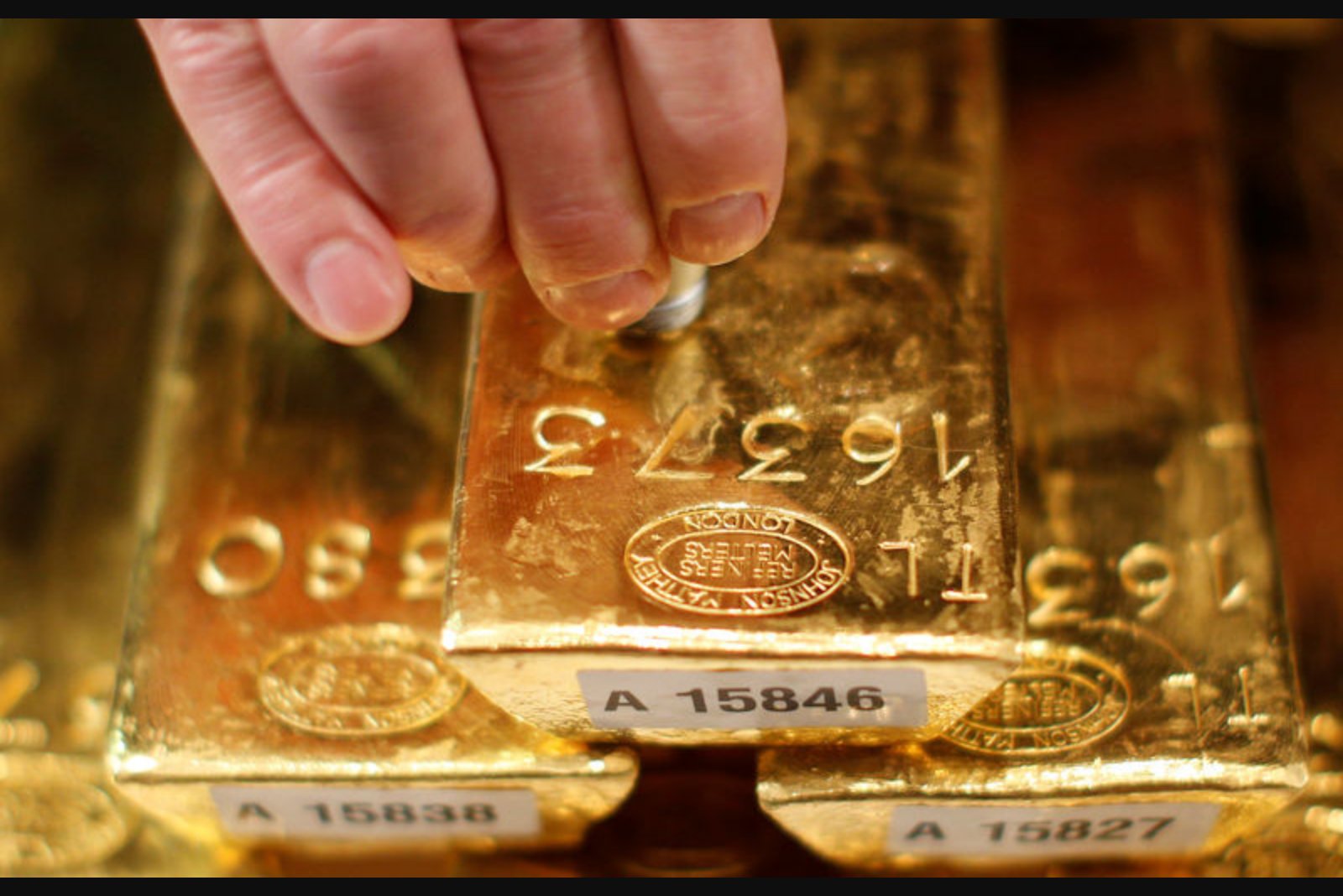
Spot gold was little changed in Asian trade on Tuesday, trading near an 11-week low after a short-lived easing in Middle East hostilities lowered some inflation concerns. By 21:41 ET (01:41 GMT), spot bullion was reported up 0.2% at $4,336.90 an ounce. U.S. Gold Futures for August were essentially flat at $4,361.82 per ounce.
In the prior session, the metal dropped to its weakest level since March 23 before trimming losses to finish largely unchanged. The earlier slide followed stronger-than-expected U.S. labor market data released last week, which reinforced market expectations that the Federal Reserve might keep policy rates elevated for longer.
Market sentiment improved after Iran and Israel agreed to halt attacks following a renewed flare-up in tensions over the weekend. Political developments in the region also drew comments from U.S. political leaders, with President Donald Trump saying on Monday evening that the U.S. was close to declaring a "total victory" in the Iran war and that oil prices were likely to fall sharply.
Oil prices eased on Tuesday after a previous-session surge on fresh hostilities, though traders remained cautious about the durability of the truce. Despite gold's traditional role as a safe-haven asset, the metal has struggled through much of the Gulf conflict, as the war's impact on crude markets created an unusual dynamic for bullion.
Higher oil prices have raised the prospect that energy-driven inflation could remain elevated, prompting investors to pare back expectations for Federal Reserve rate cuts and to, in some instances, price in the possibility of further tightening. That adjustment in expectations has put upward pressure on Treasury yields and the U.S. dollar, diminishing the relative appeal of non-yielding assets such as gold.
Attention now turns to U.S. consumer inflation data scheduled for Wednesday and producer price figures due on Thursday. Those releases could help determine whether the recent rebound in oil is translating into broader price pressures. A hotter-than-expected inflation reading would likely reinforce the outlook for higher-for-longer interest rates and could weigh further on bullion.
Market pricing shifted markedly after robust U.S. payrolls figures, with investors now attaching probability to at least one Fed rate hike this year. The changing rate outlook remains a key driver for precious metals and fixed-income markets.
Among other precious metals, silver edged up 0.1% to $68.24 per ounce, while platinum was muted at $1,760.60 per ounce.
Analysis note - The interplay between crude oil moves and inflation expectations has become a crucial influence on gold. With oil volatility linked to geopolitical developments, incoming U.S. inflation prints will be closely watched by markets seeking clarity on the Fed's next moves.