
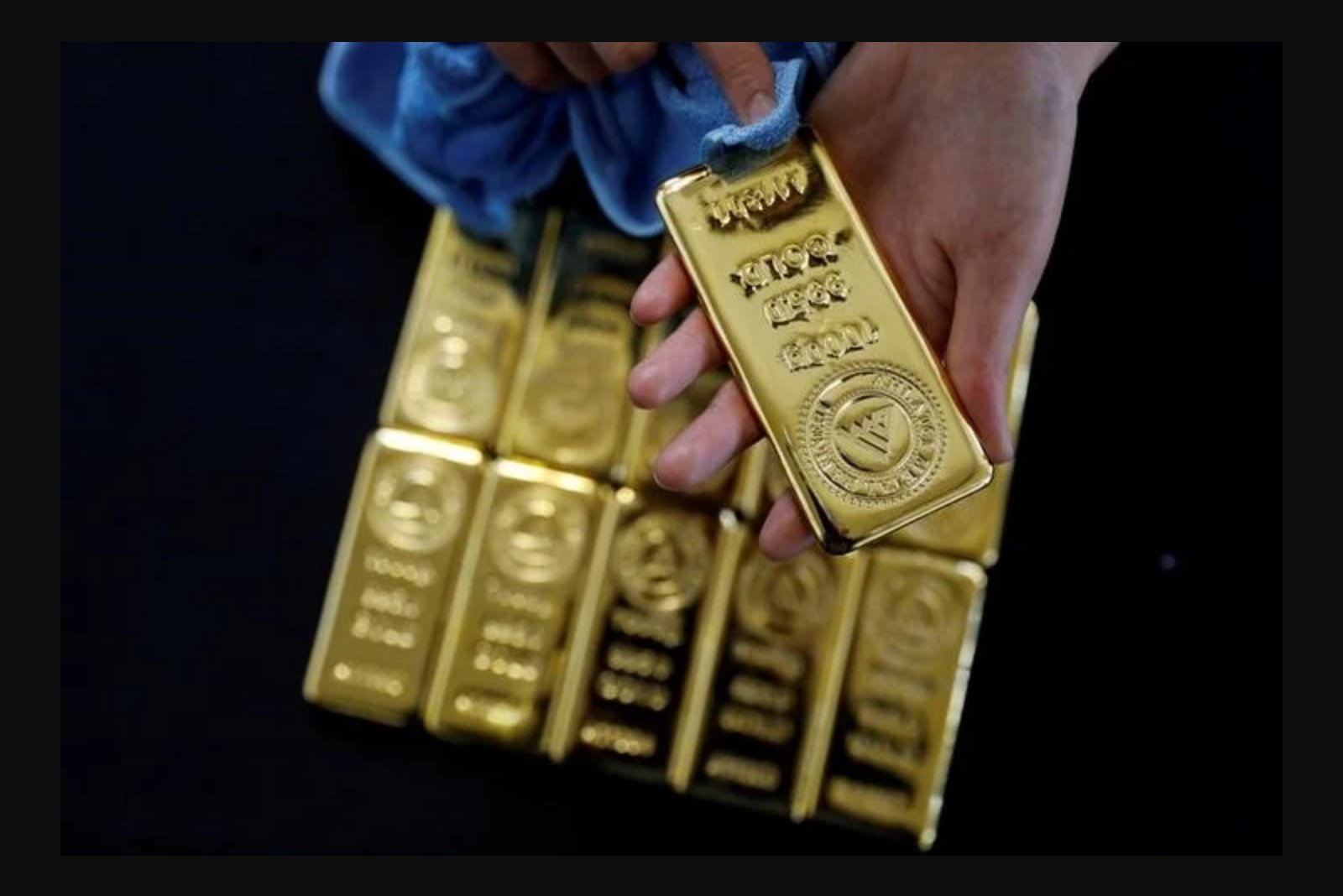
Spot gold showed a modest recovery on Wednesday after losing ground for three straight sessions, supported in part by a softer U.S. dollar and lingering geopolitical uncertainty that keeps inflation risks on the table ahead of the Federal Reserve’s next policy decision.
At 21:33 ET (01:33 GMT), XAU/USD rose 0.4% to $4,374.32 an ounce, while Gold Futures fell 0.5% to $4,418.11. Silver, quoted as XAG/USD, gained 0.7% to $66.19 an ounce, and platinum (XPT/USD) climbed 1.2% to $1,840.52. The U.S. Dollar Index inched lower to 98.82.
Near-term market picture
After a 2.6% decline over the prior three sessions, spot bullion has recovered enough to trade back above $4,370. The uptick tied to a softer dollar provided relief for holders of other currencies by improving gold’s relative affordability. Despite the bounce, the metal sits well below last week’s levels following stronger-than-expected U.S. payrolls data that revived speculation about central bank tightening.
Market pricing indicates roughly a 60% chance of a U.S. interest rate increase at the Fed’s Sept. 14 to 15 meeting. Higher interest rates typically weigh on gold because bullion yields no interest; as yields on bonds rise, the opportunity cost of holding non-yielding assets like gold grows.
The immediate watch for investors is U.S. inflation data due later this week. A hotter-than-expected reading would likely reinforce the argument for a Fed rate hike and place renewed downward pressure on bullion, while a softer inflation outcome could ease expectations for tightening and relieve some of the strain on gold.
Geopolitical flare-up and oil prices
Renewed tensions in the Middle East have also kept upside risks to inflation alive. U.S. forces recently destroyed five Iranian oil tankers carrying crude near Kharg Island, Iran’s principal oil export facility, following an attempted missile attack on an American warship. The incident raised concerns that the ongoing conflict could escalate and interfere with regional energy shipments.
Brent crude has remained close to $100 a barrel, a level that keeps inflationary pressure elevated in the run-up to the Fed meeting. Higher energy costs can feed through to consumer prices, making policymakers more reluctant to ease financial conditions and supporting the inflation narrative that influences rate decisions.
Investor positioning and central bank demand
According to ANZ analysts, investors appear to be stepping back from gold ahead of the Federal Open Market Committee meeting, with rising energy costs contributing to higher bond yields and creating a headwind for bullion. ANZ also noted that this selling pressure has not halted central-bank purchases.
China’s central bank added roughly 650,000 ounces of gold in August, its largest monthly accumulation since 2023, which provides a meaningful source of underlying demand even as prices face near-term pressure.
Technically, gold has traded in a relatively narrow band around $4,400 after rebounding from the roughly $4,000 area in July. The most recent downleg pushed spot gold below its 200-day moving average, but sustained buying from central banks and investor demand continues to act as a counterbalance to near-term headwinds from higher yields, rising oil and prospective Fed policy moves.
What to watch next
- U.S. inflation data due later this week, which could shift market odds around a Fed rate hike.
- Developments in the Middle East and any further disruptions to oil flows that might influence inflation and bond yields.
- Central bank purchases and investor flows that underpin longer-term demand for bullion despite short-term volatility.
For now, gold’s modest rebound reflects a balance between dollar-related relief and the restraining influence of stronger U.S. economic signals and elevated energy prices that support tighter monetary policy expectations.