
In the months before the conservative Liberal Party suffered a historically poor defeat last May, Sydney stockbroker Angus Aitken made a substantial donation to the party he believed he would support indefinitely - A$230,000. This year, however, Aitken has redirected his political contributions, committing A$1.1 million to Pauline Hanson’s One Nation as he distances himself from a conservative establishment beset by infighting and poor public polling.
Aitken is part of a growing cohort of wealthy private donors who have begun to transfer their support from the traditional Liberal-National coalition to One Nation, a party that until recently relied primarily on small-scale contributions. The shift has been encouraged by Gina Rinehart, Australia’s wealthiest individual, whose engagement with One Nation has included high-value donations and the provision of private travel.
One Nation, founded in 1997, has historically occupied a peripheral role in federal politics with a platform built on strict immigration controls and opposition to environmental and progressive social policies. After the re-election of U.S. President Donald Trump in 2024, the party adopted policies modeled on his plans for mass deportation of visa overstayers and broad deregulation.
"The biggest change I reckon you’ll see in the next 12 to 18 months is the groundswell of business and wealthy people supporting One Nation who have been frustrated with the Coalition," Aitken said, recounting his view after meeting Trump at Mar-a-Lago in March as a prize from a One Nation fundraiser. "People are just sick of all the red tape and shit across their individual segments of business. They think this is the person and the party that’s going to cut through some of that," he added, referring to Hanson and One Nation.
Political researchers point to several drivers behind the donor migration. High turnover among Liberal leaders and a public split between coalition partners over energy and hate speech policy are cited as key domestic factors. Experts also view the trend as part of a wider international reconfiguration in which affluent supporters in countries such as Britain and France have increasingly backed populist movements as traditional centre-right parties fragment.
"One Nation has benefited from coalition chaos, a general decline in support for major parties in Australia and internationally, then things like frustration with the cost of living (and) housing crises, as well as the changing media environment," said Jordan McSwiney, a researcher at the University of Canberra’s Centre for Deliberative Democracy who studies far-right politics.
By-election and Parliamentary Prospects
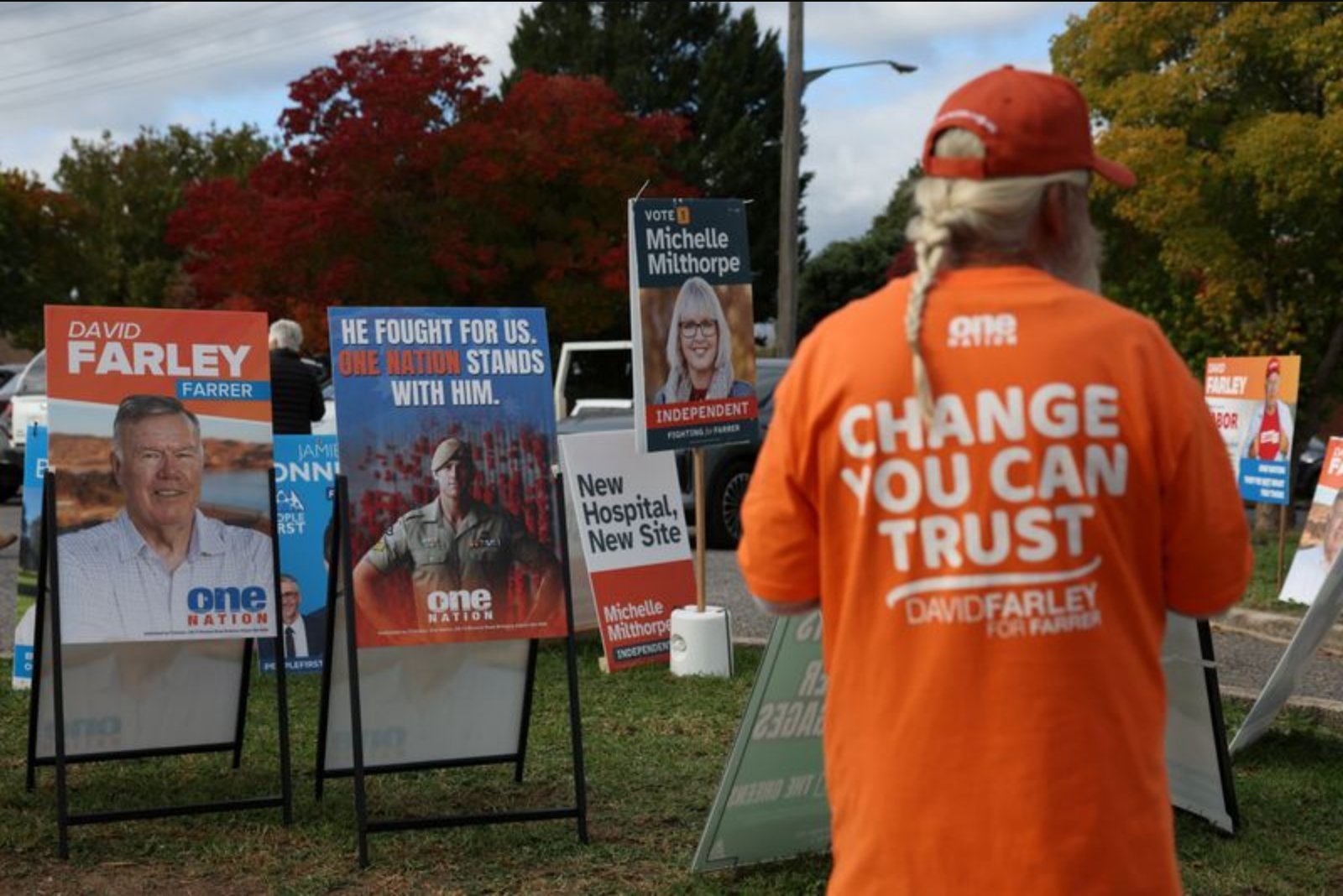
Opinion polls indicate One Nation is poised to capture its first House of Representatives seat from the Liberals in an upcoming by-election on Saturday. While such a gain would not alter the working majority of centre-left Prime Minister Anthony Albanese, it would represent a significant national advance for One Nation following a robust performance in a recent state vote. Polling has also shown party leader Pauline Hanson, who sits in the Senate, with higher personal approval than either Albanese or conservative opposition leader Angus Taylor.
Since the start of this year, One Nation has been polling second nationally - ahead of the conservative coalition - after barely featuring in the May 2025 federal election. Despite Hanson’s three-decade presence in Australian politics, her party has never held more than four of the Senate’s 76 seats.
Pollsters generally judge it unlikely that One Nation will win enough lower house seats to form government at the next federal election scheduled for 2028. However, current polling suggests the party could double its Senate representation, which would substantially increase its influence over legislation.
Mark Riboldi, a social impact researcher at the University of Technology, said that while the conservative coalition struggles to regain stability, it is unsurprising that wealthy voters are seeking alternatives and effectively hedging their bets on which party will become the main opposition.
Rising Donations and Private Aviation Support
Electoral commission data shows that publicly listed companies remain largely committed to donating to the major parties, but One Nation’s appeal among wealthy private donors has grown markedly, led by Rinehart’s outreach. Rinehart, who previously supported then-Liberal leader Peter Dutton – including providing flights aboard her private aircraft at least twice before the 2025 election - has shifted her largesse toward One Nation following Dutton’s loss.
Recent contributions tied to Rinehart include a Cirrus G7 aircraft valued at about A$1.5 million, donated to One Nation. Hanson disclosed that two employees of Rinehart’s flagship company each donated A$500,000 to the party, a dramatic increase from the party’s previous record individual donation of A$100,000.
Rinehart has organized multiple events aimed at persuading established Liberal donors to support One Nation, including dinners priced at A$15,000 a seat and a major fundraiser that culminated in the March Mar-a-Lago visit, according to five people familiar with the activities. Electoral commission records also indicate Rinehart hosted Hanson and other One Nation officials on her Gulfstream G700 and other private aircraft for about 20 flights, including at least one to Florida.
A spokesperson for Rinehart declined to comment on her relationship with One Nation but provided a statement criticizing what they described as "billions being spent on green energy" and concerns about "inadequately-screened immigrants straining the accommodation supply (and) putting strain on our hospital emergencies," among other issues.
Donor Motivations and High-Profile Encounters
Several donors have cited a mix of policy frustration and access to high-profile political events as reasons for their contributions. Doug Tynan, chief investment officer at GCQ Funds Management, said he donated A$100,000 and attended a One Nation fundraiser where he met Trump. He linked his donation to the Bondi tragedy, stating, "The donation was made in the days following the Bondi tragedy and because I feel it should be illegal to burn the Australian flag." Tynan said he was also eager to accept Rinehart’s invitation to travel to Mar-a-Lago to meet the U.S. president.
The Bondi attack referenced by donors involved Islamist gunmen who killed 15 people at a Jewish celebration last December, an event that several figures in the donor community cited as a motivating factor for political engagement.
Responses and Unanswered Questions
One Nation and Hanson did not respond to requests for comment on Rinehart’s involvement and the party’s changing donor base. A spokesperson for Liberal leader Angus Taylor was not immediately available for comment.
The emergence of high-value private donations and the provision of costly aviation resources mark a substantive shift in One Nation’s funding profile. Where the party once depended largely on modest contributions, it is now receiving multimillion-dollar support and in-kind gifts that could alter its operational capacity and campaign reach.
How this influx of wealthy backing will translate into lasting electoral gains remains uncertain. Analysts note that while financial resources can expand a party’s visibility and logistical reach, translating that into sustained parliamentary power requires broader voter shifts and electoral success in lower house contests that remain challenging for a single-issue or niche party.
For now, the change in donor behavior reflects a broader reassessment among affluent Australians of which political forces best align with their priorities on regulation, energy policy, immigration, and business red tape. Whether the trend continues through to the 2028 election and beyond will depend on electoral outcomes, policy debates within the coalition, and One Nation’s ability to convert financial backing into broader voter support.