
U.S. President Donald Trump is scheduled to travel to China in May for a meeting with Chinese President Xi Jinping - his first visit to China since leaving the White House eight years prior. The lead-up to the summit has been shaped by an intensifying rivalry between the United States and China that unfolded through a sequence of policy moves, reciprocal measures and episodic negotiations since Trump returned to office in 2025.
Recent developments - 2026
May - Beijing invoked its anti-sanctions law in response to U.S. blacklisting of refineries, instructing companies not to comply with the U.S. measures. In parallel, U.S. Treasury Secretary Scott Bessent urged China to intensify diplomatic efforts to persuade Iran to reopen the Strait of Hormuz to international shipping.
April - China’s State Council granted authorities powers to investigate and take action against foreign states, companies or international organisations that "adopt discriminatory measures" perceived to undermine industrial and supply chains. The measure also authorised countermeasures against foreign countries for exercising what China described as "unlawful extraterritorial jurisdiction". During the month, Chinese officials held preliminary discussions with suppliers of equipment used to manufacture solar panels as authorities weighed restrictions on the export of advanced technology to the United States. The U.S. imposed sanctions on some refineries in China for buying billions of dollars’ worth of Iranian oil, freezing their U.S. assets and barring Americans from doing business with them. At the end of April, Chinese Vice Premier He Lifeng, U.S. Trade Representative Jamieson Greer, and Treasury Secretary Scott Bessent took part in a video call characterised by "candid, in-depth and constructive exchanges".
March - Washington launched new Section 301 unfair trade investigations targeting multiple Chinese industries, a move that prompted reciprocal responses from Beijing. President Trump postponed his China visit to mid-May due to the Iran war. That month, Bessent and Greer met He Lifeng and senior trade negotiator Li Chenggang in Paris for a sixth round of talks both sides described as "constructive".
February - The U.S. Supreme Court rejected the legal framework for Trump’s global tariff regime, but the president indicated an intention to continue using tariffs as a tool. Concurrently, the U.S. and Israel initiated attacks on Iran, a campaign that disrupted global energy supplies, pushed costs higher for manufacturers and posed broader risks to the world economy. The disruption carried particular weight for China, described in official commentary as the world’s biggest energy importer and largest industrial power that relies on global demand to sustain its expansion.
January - China closed 2025 with a record trade surplus, in part reflecting a reorientation of trade flows toward Southeast Asia, Africa and Latin America as exports to the United States declined.
Key episodes in 2025
October - Beijing broadened export controls on critical minerals, expanding restrictions to encompass additional rare earth elements and applying greater scrutiny to semiconductor users. Washington responded with a 100% additional duty on certain Chinese imports and new export controls on critical software. Both measures included provisions affecting each other’s shipping sectors. At a meeting in Busan, South Korea, Trump and Xi agreed to a trade truce: the U.S. would reduce some tariffs while China pledged to target the illicit fentanyl trade, resume purchases of U.S. soybeans and pause certain rare earth export curbs.
September - Discussions included proposals for the divestiture of the social media app TikTok, while the U.S. sought talks on trade in chemicals, aircraft engines and parts.
June-August - Trump declared the truce back on track after some Chinese manufacturers of rare earth magnets began to receive export licences. The U.S. started issuing licences to Nvidia to ship advanced artificial intelligence chips to China, and the president publicly urged Beijing to quadruple purchases of U.S. soybeans. The tariff truce was extended by 90 days.
May - The first round of trade talks in Geneva produced a 90-day truce that lowered some of the high tariffs. Three weeks later, President Trump accused China of violating the agreement by not reciprocally rolling back tariffs and by maintaining restrictions on critical minerals exports. China labelled U.S. actions as "discriminatory restrictive" measures.
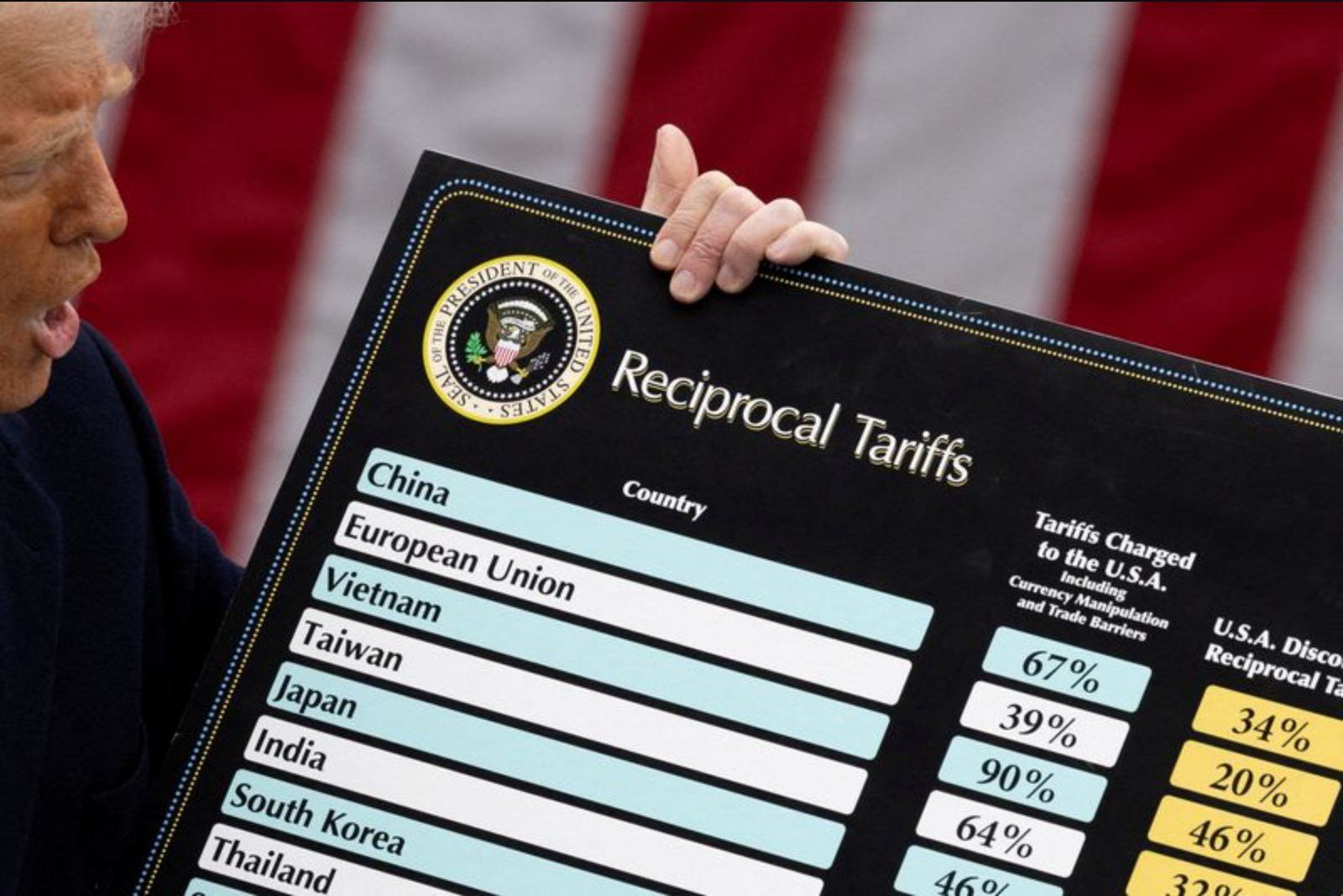
April - Upon returning to office, the president imposed a 10% punitive tariff on Chinese goods and then announced sweeping "Liberation Day" tariffs on all imports, measures that further strained bilateral ties. China retaliated; both countries repeatedly raised levies against each other, at times surpassing 100% in effective rates. Beijing also began limiting exports of certain rare earth minerals.
Impacts and sectors affected
The sequence of tariffs, export controls and sanctions touched multiple economic sectors. Energy and manufacturing faced near-term disruptions from attacks on Iran that affected global fuel flows. Semiconductor supply chains and advanced technology industries were affected by expanded export controls and licensing decisions. Agriculture sectors - notably soybeans - were explicitly referenced in truce commitments. Critical minerals and rare earths policies directly influence industries dependent on magnet materials and high-end manufacturing. Shipping and logistics faced scrutiny amid measures aimed at each nation’s maritime industries.
Negotiation dynamics
Despite alternating rounds of escalation and conciliation, the relationship between Washington and Beijing has remained volatile. Negotiations have periodically produced short-lived agreements and extensions of truces. Exchanges described as "constructive" and video discussions featuring "candid, in-depth and constructive exchanges" have not yet yielded a durable framework to stabilise tariffs, export controls or sectoral restrictions.
Summary assessment
The approach adopted by both capitals since 2025 has combined a mix of legal, economic and diplomatic measures - from Section 301 probes and punitive tariffs to export controls, sanctions and legislative countermeasures - producing an environment of heightened policy risk across several supply chains. The upcoming presidential visit in May will be a focal point for whether talks can convert episodic truces into more sustained, verifiable agreements.