
World April 24, 2026 03:55 AM

Poland’s Tusk Raises Doubts About U.S. Reliability, Urges Stronger European Defence Ties

Polish prime minister warns NATO readiness and urges the EU to build a practical defence alliance amid concerns over U.S. unpredictability

By Caleb Monroe
Poland’s Tusk Raises Doubts About U.S. Reliability, Urges Stronger European Defence Ties

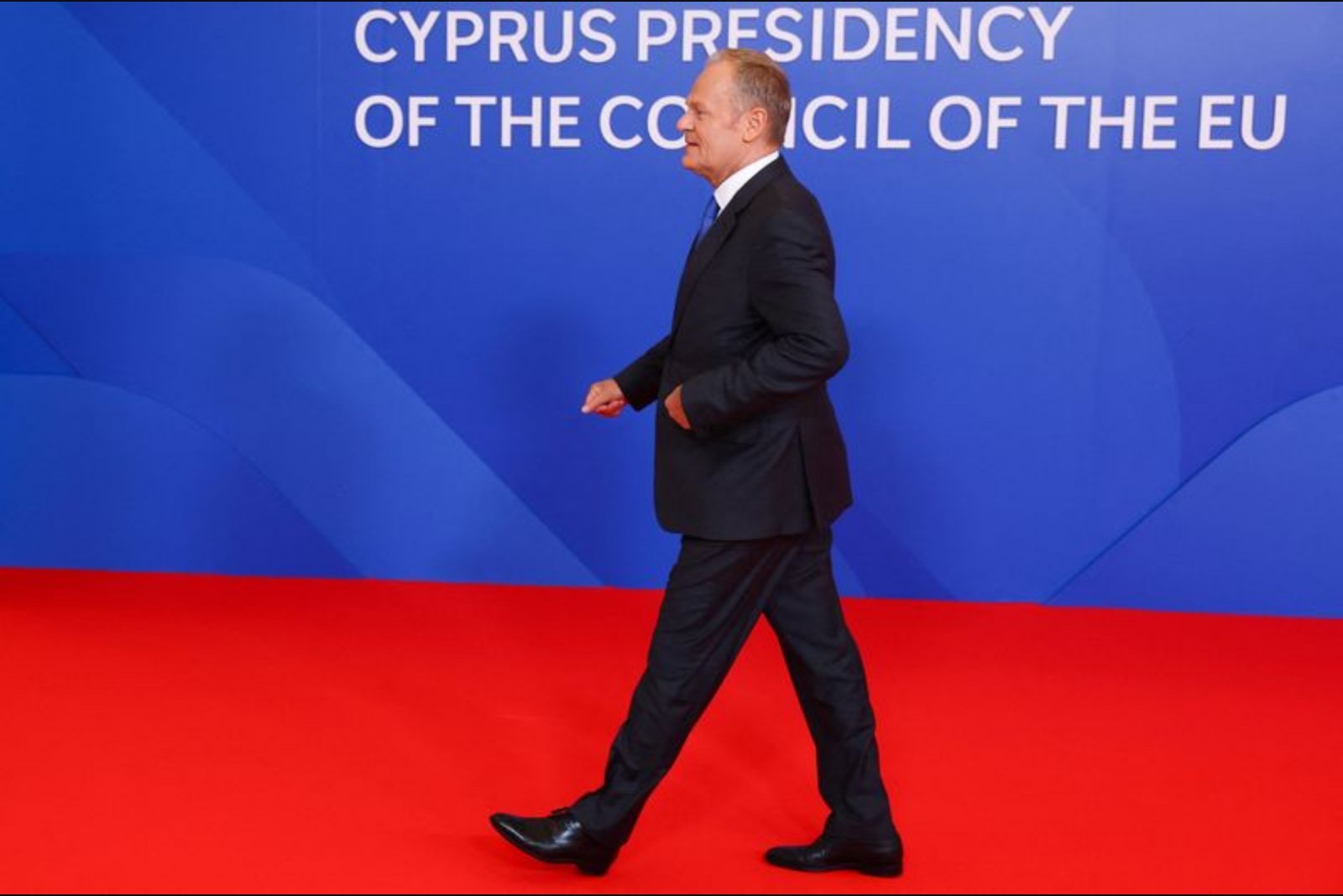
Polish Prime Minister Donald Tusk told the Financial Times that the central question for Europe is whether the United States will remain a dependable NATO ally in the event of a Russian attack. Speaking ahead of an informal EU summit in Cyprus, Tusk called for the European Union to develop into a functioning defence alliance, and suggested reviewing the EU’s mutual defence clause after Hungary’s leader, an ally of Russia, has left.

Key Points

  • Polish Prime Minister Donald Tusk questioned U.S. readiness to act as a loyal NATO ally in the event of a Russian attack, in comments to the Financial Times.
  • Tusk urged the European Union to move toward a functional defence alliance with practical tools for rapid military mobility and mutual protection.
  • EU leaders convened informally in Cyprus to discuss the Middle East conflict, energy responses, and the Union’s next long-term budget, a context for Tusk’s call for closer European defence cooperation.

Poland’s prime minister has framed the transatlantic security relationship as the continent’s defining strategic concern, questioning whether the United States will stand as a reliable NATO partner if Russia were to mount an attack. Donald Tusk expressed those views in an interview published by the Financial Times.

Tusk said the prospect of a Russian attack is "something really serious," and stressed that countries on NATO’s eastern flank need clarity about the alliance’s willingness and ability to respond. "For the whole eastern flank, my neighbours... the question is if NATO is still an organisation ready, politically and also logistically, to react, for example against Russia if they try to attack," he told the British newspaper.

He emphasised the urgency of the issue, saying the relevant time horizons are short: "I’m talking about short-term perspectives, rather months than years... For us, it’s really important to know that everyone will treat the NATO obligations as seriously as Poland."

The comments come as EU leaders gather informally in Cyprus. The summit agenda includes discussion of the war in the Middle East, potential energy measures in response, and planning for the bloc’s next long-term budget. Those items provide a backdrop to Tusk’s call for deeper European defence cooperation.

Appearing to link internal EU politics to the bloc’s defence posture, Tusk suggested the Union could revisit Article 42.7 of the EU treaty - the mutual defence clause - in the wake of a change in Hungary’s leadership. He noted the departure of Viktor Orban, described in the interview as an ally of Russia, as a factor in thinking about the Union’s collective defence arrangements.

"What you need if you want to have, not only on paper, a real alliance, is true tools and real power when it comes to defence instruments and mobility of militaries from country to country etc. It’s a very practical problem for today," he said.

Summing up his priorities, Tusk said his current mission is to "reintegrate Europe," explaining that for him this means establishing common defence capabilities and "a common effort to protect our eastern borders."

Those remarks reflect growing concern about unpredictable U.S. policies and threats directed at European partners, concerns that have influenced debate about how Europe should organise its collective defence and how quickly it must be capable of responding to threats.

Risks

  • Uncertainty over U.S. commitment to NATO could weaken deterrence on NATO’s eastern flank - this impacts defence planning and defence-sector procurement decisions.
  • A potential Russian attack remains a key security risk in the short term, raising immediate operational and logistical challenges for European militaries - affecting defence readiness and related public spending.
  • Political shifts within the EU, such as the departure of Hungary’s leader described as an ally of Russia, may prompt re-examination of the EU’s mutual defence clause and complicate consensus on collective defence measures - with implications for defence and budgetary planning.

More from World

Taiwan Coast Guard Minister Visits Second Islet in South China Sea, Says Trip Was Environmental Drill Apr 29, 2026 Beijing Urges Taiwan to Embrace Union, Taipei Reaffirms Rejection Apr 29, 2026 Ukraine’s Push to Thwart the Shahed: A Nationwide Effort to Hold the Line Apr 29, 2026 Military Court Opens Trial of Four Officers Accused in Acid Attack on Rights Activist Apr 29, 2026 Global tropical forest loss slowed in 2025 but risks persist, report finds Apr 29, 2026