
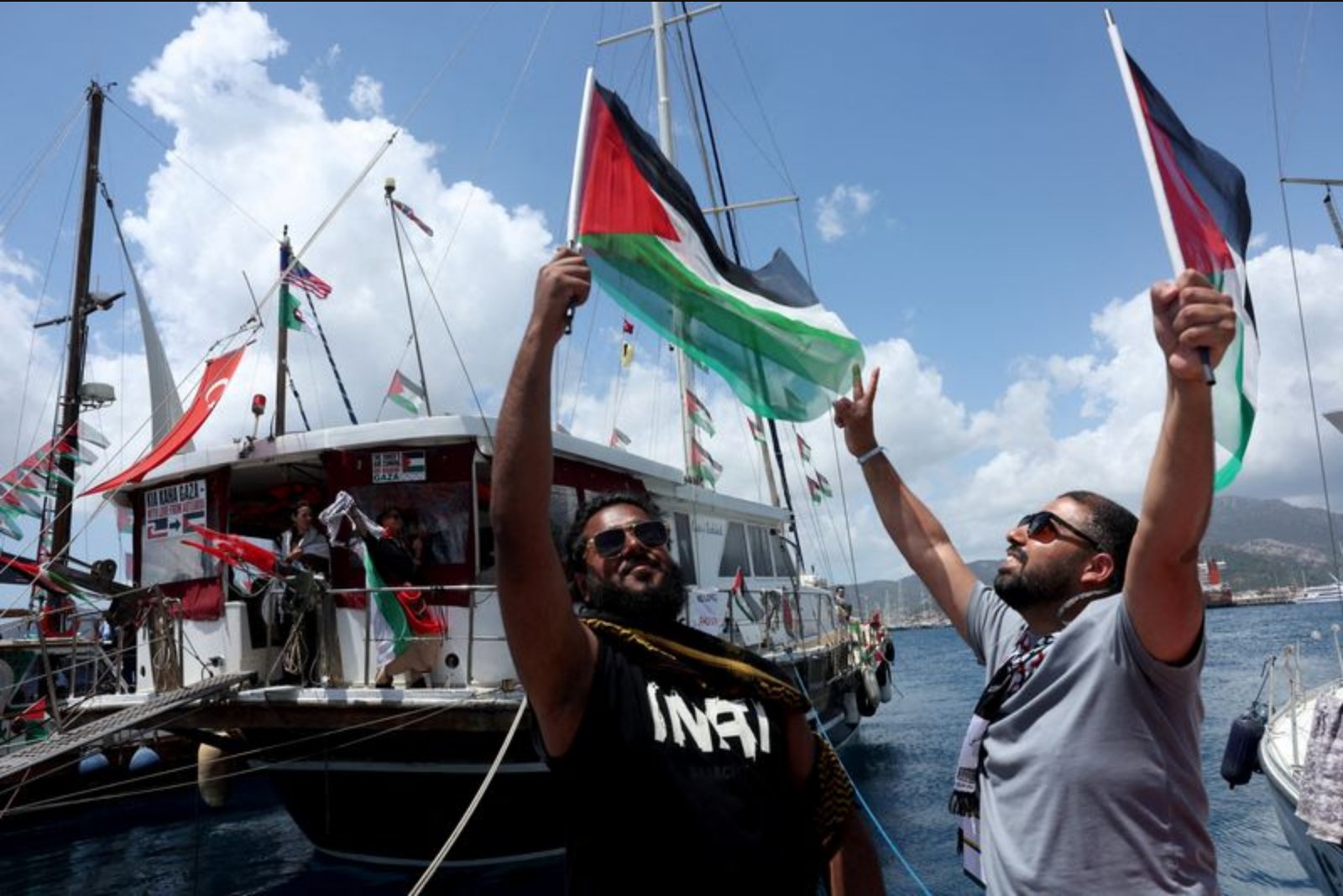
MARMARIS, Turkey, May 14 - Ships from the Global Sumud Flotilla set off from the southern Turkish port of Marmaris on Thursday for a third attempt to reach Gaza, organisers said, following earlier interceptions by Israeli forces in international waters.
The flotilla had initially departed from Spain on April 12 but was intercepted between Sicily and Crete, with Israeli forces taking more than 100 pro-Palestinian activists to Crete and detaining two others in Israel. Activists on the Marmaris departure said the group must press on to deliver aid to Gaza even as global attention shifts elsewhere, including to the impact of the Iran war.
"It’s very important that what’s happening around the world is not allowing us to see Gaza for the situation as it is," said Susan Abdullah, a member of the flotilla’s steering committee. "The blockade is still on. The aid is not coming in."
Katy Davidson, representing the British delegation aboard the flotilla, said the vessels had been intercepted previously between Sicily and Crete and criticised the British government response, saying it "did nothing". Davidson added that, even if the flotilla ultimately failed to reach Gaza, any interception would still help draw attention to the enclave's situation.
Turkish activist Seyma Denli Yalvac told Reuters that the group would not be dissuaded by limited media coverage. "Even if no channel reports on us, it doesn’t matter. We will continue on our path," Yalvac said.
Pro-Palestinian activists involved with the flotilla say that Israel and the United States wrongly conflate their advocacy for Palestinian rights with support for Hamas militants. Organisers noted that Israel’s military halted a previous flotilla assembled by the same organisation last October, arresting Swedish activist Greta Thunberg and more than 450 participants.
Palestinians, international aid organisations, Turkey and a number of other countries maintain that supplies reaching Gaza remain insufficient, despite a ceasefire reached in October that included guarantees of increased aid deliveries. Activists say this shortfall underlines the need for direct attempts to carry aid to the territory.
Most of Gaza’s more than 2 million residents have been displaced, with many living in bombed-out homes, makeshift tents on open ground, along roadsides, or atop the ruins of destroyed buildings, the activists and aid bodies say. Israel, which controls all access to the Gaza Strip, denies that it withholds supplies from residents.
Context and logistics
Organisers and participants described the Marmaris departure as part of sustained attempts to breach what they call an ongoing blockade and to deliver humanitarian supplies. The recent interceptions and detentions during prior departures have not deterred the group from setting out again.
Statements from participants
Participants framed the flotilla’s aim both as a direct effort to deliver aid and as a means of drawing international attention to conditions inside Gaza. Activists argued that competing global crises have diverted focus away from humanitarian needs in the enclave.
Humanitarian situation
Those involved with the flotilla and several international agencies say that evidence of displacement and damaged civilian infrastructure indicates continuing urgent needs across Gaza. The ceasefire agreement reached in October included provisions aimed at increasing aid, but activists and aid groups report that supplies remain inadequate.
This report summarises the statements and reported events as provided by flotilla organisers and participating activists. It does not introduce new claims beyond those presented by the participants and cited organisations.