
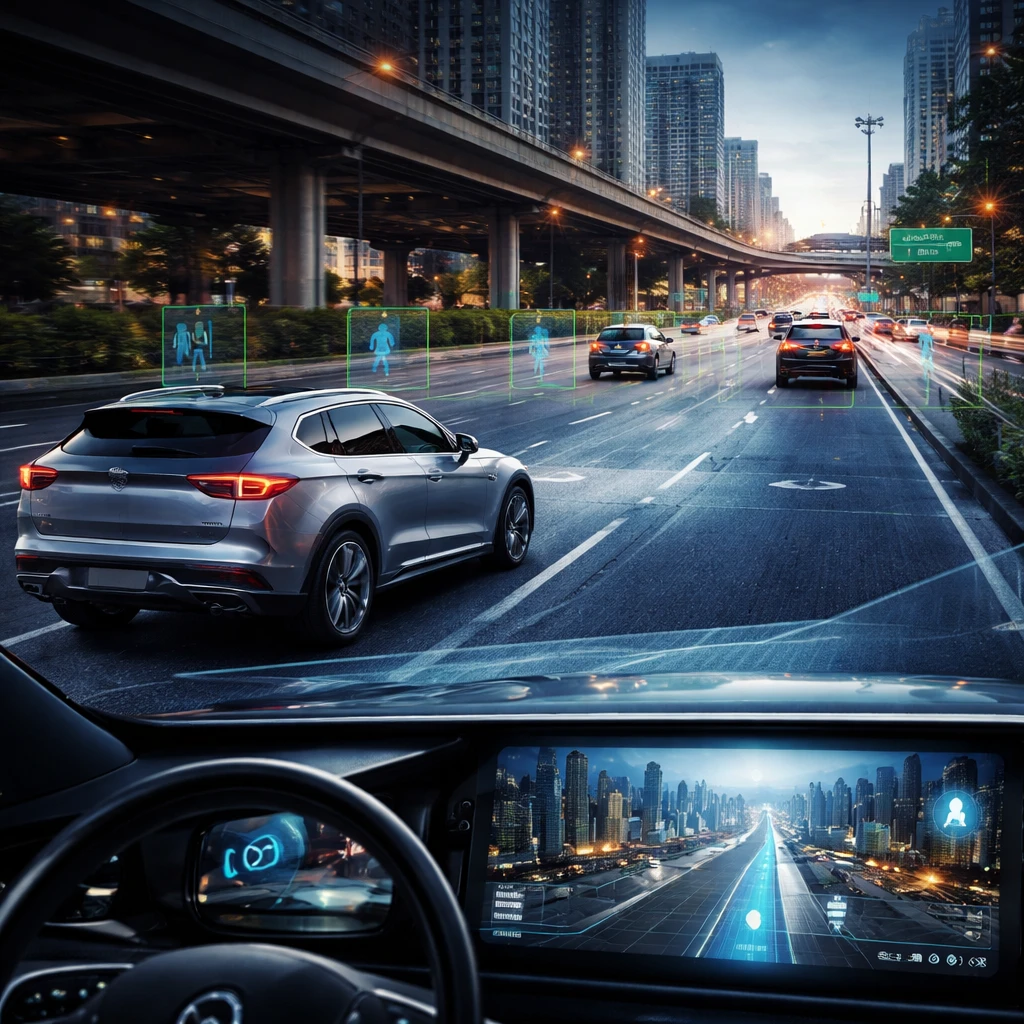
Volvo Cars announced a collaboration with Google to bring Google Gemini artificial intelligence capabilities into its vehicles, with the EX60 set to be the initial platform. The project is designed to fuse AI with live vehicle camera feeds to produce context-aware driving features when the driver grants permission.
At the upcoming Google I/O conference on May 19-20, the two companies will publicly demonstrate how Gemini can connect to and interpret a vehicle’s camera inputs. The system is intended to let Gemini "see" the driving environment and provide real-time understanding of what the camera captures.
Planned capabilities include enabling drivers to recall road signs and interpret lane markings, as well as supplying contextual information about nearby landmarks or restaurants. One highlighted use case is reading parking signs live from the vehicle’s camera feed to help drivers understand restrictions, time limits, permit requirements, and charging rules.
The technical integration relies on a combination of the Gemini model’s multi-modal understanding, the EX60’s neural processing engine, and Volvo’s software-defined vehicle architecture. Volvo described the EX60 as an "ideal platform to explore the future of contextually aware driving experiences."
"The EX60 provides an ideal platform to explore the future of contextually aware driving experiences," said Alwin Bakkenes, Head of Global Software Engineering at Volvo Cars. "Working closely with Google as a lead device partner allows us to help bring the latest advances in AI into the automotive environment faster and more collaboratively than ever before."
In addition to the Gemini camera integration, Volvo Cars will incorporate Immersive Navigation from Google Maps. The navigation enhancement offers a 3D perspective with redesigned renderings of buildings, tunnels, and overpasses to assist drivers in comprehending complex road layouts and upcoming turns. Voice guidance in the feature will reference real-world landmarks alongside distance and timing cues.
"We’re excited to partner with Volvo Cars on helping build the next generation of driving experiences for the real world," said Patrick Brady, Vice President of Android for Cars at Google.
Google said Immersive Navigation will be made available in the Volvo EX60 as well as the EX90 and ES90 models. The companies emphasize that the camera-based Gemini functionality operates with driver permission and is intended to deliver contextual assistance rather than autonomous control.
Summary of the announcement: Volvo and Google will integrate Gemini AI with vehicle camera systems beginning with the EX60, demonstrate the capability at Google I/O on May 19-20, and also bring Google Maps’ Immersive Navigation to the EX60, EX90, and ES90.