
Overview
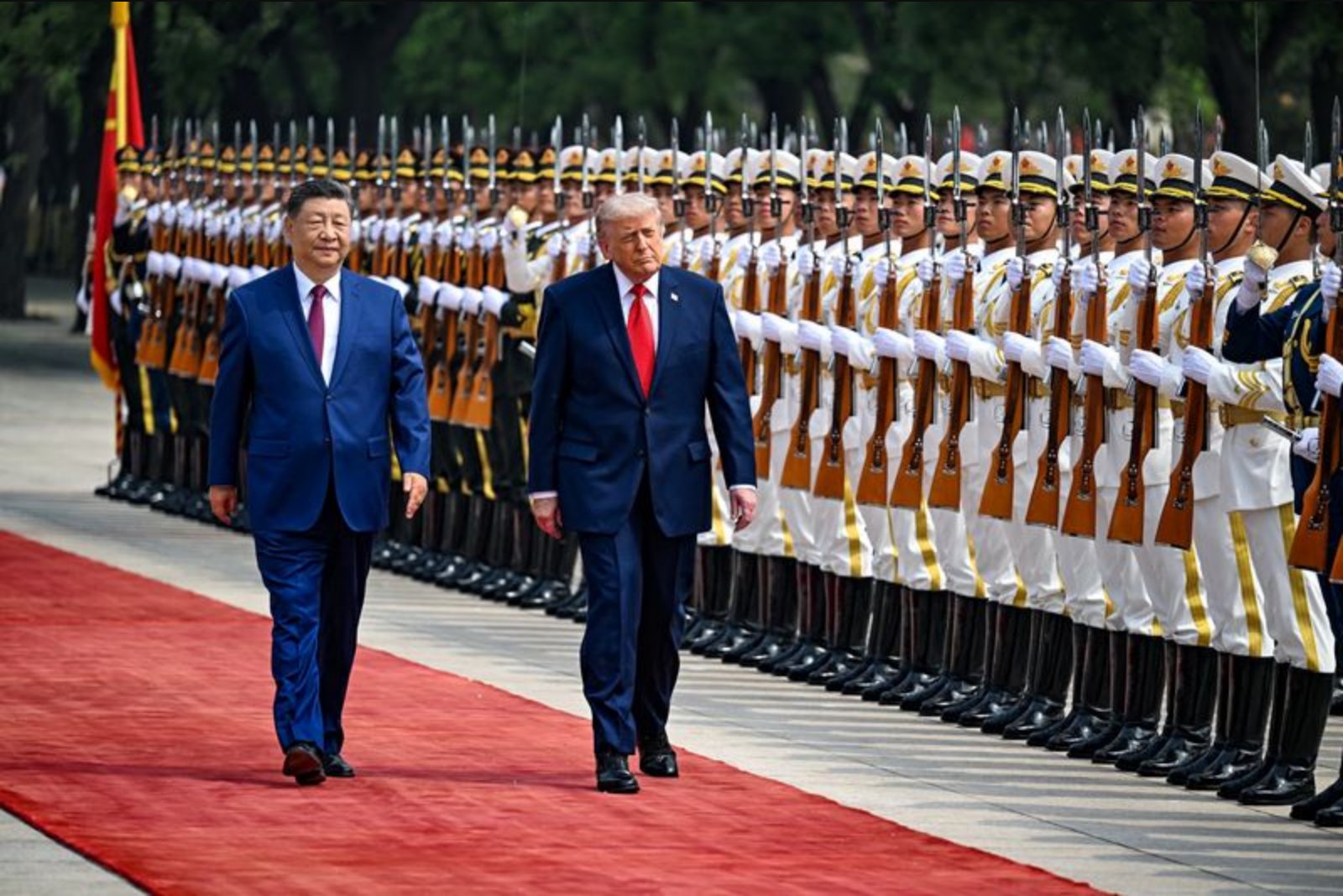
U.S. President Donald Trump and Chinese President Xi Jinping are scheduled to meet on the second day of a two-day state visit that has combined elaborate ceremony with high-level commercial and strategic discussions. The summit, which has included honor guards, massed children waving flags and formal banquets, has also produced a sharp warning from Xi about Taiwan that underlined underlying tensions between the two powers.
Final meetings and departure
The two leaders are due to have tea and lunch together before President Trump departs for the United States at the close of the visit. The itinerary is intended to wrap up the diplomatic and economic agenda set out when Trump arrived, while delivering visible outcomes that might be portrayed as successes for both sides.
Trade truce and commercial signals
One central aim of the summit has been to preserve the trade truce struck at the leaders' prior meeting in October. That accord saw President Trump pause plans for triple-digit tariffs on Chinese imports, while Xi refrained from using export controls to restrict supplies of critical rare earth elements. Delegations from both countries have conducted preparatory trade negotiations aimed at converting the truce into more durable economic mechanisms.
China’s foreign ministry indicated that preparatory talks between U.S. and Chinese trade teams produced "balanced and positive outcomes." Leading those U.S. trade discussions, U.S. Treasury Secretary Scott Bessent said he expected progress on setting up mechanisms to support future bilateral trade and investment, and that an announcement on large Chinese orders for Boeing aircraft was anticipated.
In a televised interview, President Trump said China had agreed to order 200 Boeing jets, marking what he described as Beijing’s first purchase of U.S.-made commercial airplanes in nearly a decade. That figure, however, was lower than some market expectations; earlier media speculation had suggested the planemaker might be close to deals for 500 or more aircraft. After the president's comments were aired, Boeing shares fell more than 4 percent.
Security, oil routes and Iran
The leaders discussed security and energy-related issues as well. A U.S. summary of the prior day’s talks emphasized both leaders' interest in reopening the Strait of Hormuz waterway - the critical shipping lane off Iran through which about a fifth of global oil and natural gas supplies transit in normal times - and Xi’s apparent openness to purchasing American oil to diversify China’s energy sources away from the Middle East.
President Trump is also expected to press China to encourage Iran to reach a settlement with the United States over a war that has become politically unpopular among American voters. The visit therefore blended commercial ambitions with efforts to coordinate on regional security and energy flows.
Taiwan warning
Amid the ceremonial elements of the visit, Xi delivered a blunt warning about Taiwan during a closed-door session that lasted more than two hours, according to Chinese foreign ministry accounts. He cautioned that mishandling the Taiwan issue could push relations with the United States into "a very dangerous place." Taiwan, a democratically governed island Beijing claims, sits roughly 50 miles (80 km) off China’s coast and remains one of the most sensitive flashpoints in U.S.-China ties.
The United States is bound by law to provide Taipei with the means to defend itself, while Beijing has not ruled out the use of military force to assert control over the island. Marco Rubio, who accompanied President Trump in China, told NBC News that Taiwan was raised in discussions and characterized it as a recurring topic the Chinese raise; he said U.S. policy on Taiwan remained unchanged at that time.
Political context and leverage
President Trump arrived in Beijing seeking tangible outcomes that could help his standing ahead of key midterm elections. His bargaining position on the trade front, however, has been constrained by two factors noted during the visit: judicial limits placed by U.S. courts on his unilateral ability to impose tariffs, and rising prices at home driven in part by the Iran war, which have heightened his political vulnerability.
Despite these limits, the public spectacle of the summit - notably a ceremonial appearance at Beijing’s Great Hall of the People and photographed moments at the Temple of Heaven UNESCO World Heritage site - presented an image of cordial relations even as substantive, and sometimes tense, topics were debated behind closed doors.
What officials say
China’s foreign ministry quoted Xi as saying that the trade preparatory negotiations had reached balanced, positive outcomes. U.S. Treasury Secretary Scott Bessent, who led those negotiations for the U.S. side, expressed expectations of progress toward institutional mechanisms that would underpin future bilateral trade and investment, and referenced anticipated announcements regarding large Chinese aircraft orders.
Looking ahead
The summit’s concluding meetings will signal whether ceremonial warmth translates into concrete economic and strategic commitments. Observers will be watching for any formal confirmations of aircraft purchases and for indications that the two sides have agreed processes to stabilize trade relations. At the same time, Xi’s warning on Taiwan underscores a persistent strategic risk that could complicate future diplomatic and commercial cooperation.
Note on reporting - This article reports statements and developments that emerged during the leaders' two-day visit, including official summaries and comments made publicly by the principals and their officials.