
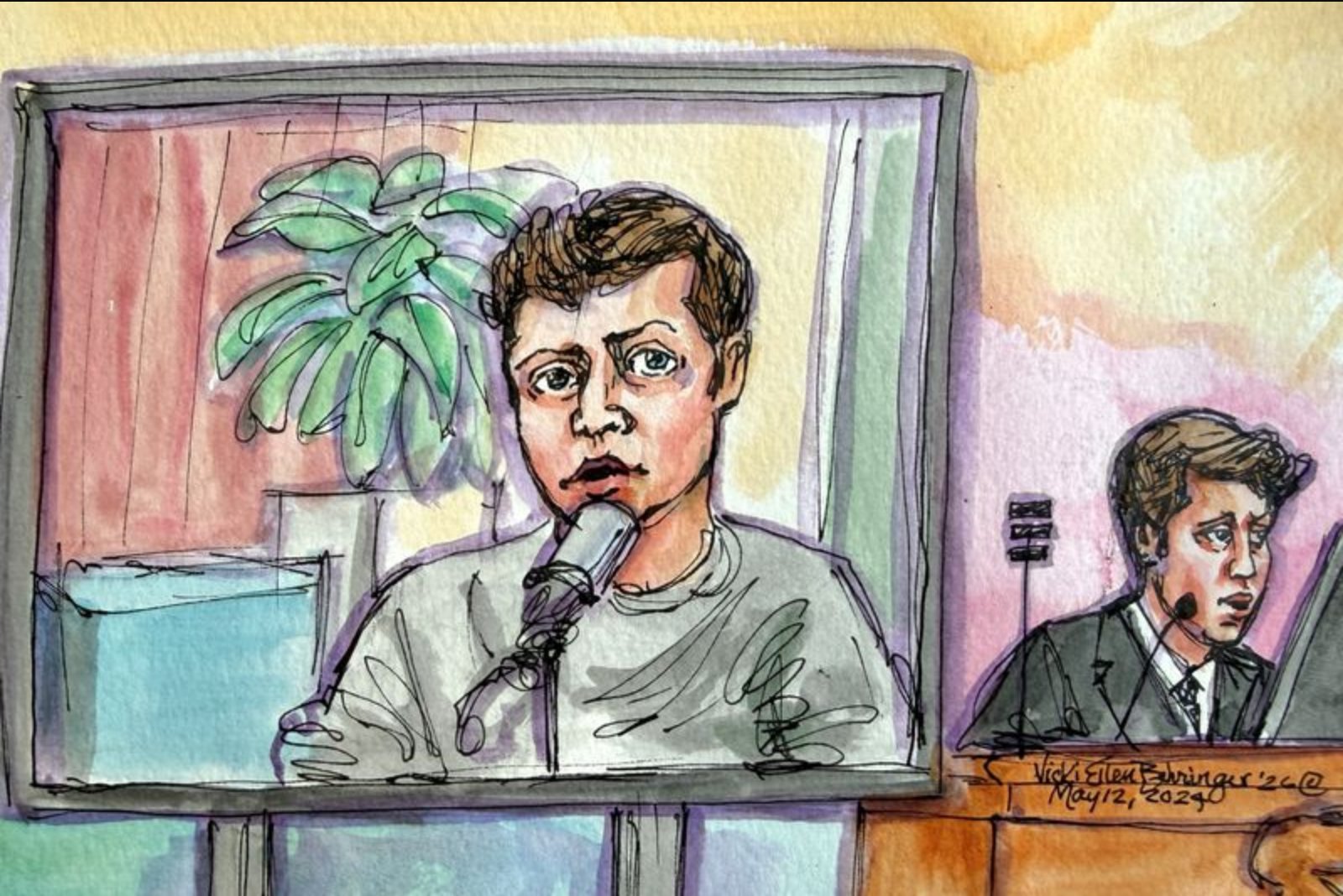
Closing arguments are scheduled on Thursday in the federal courtroom in Oakland as Elon Musk presses a jury to find OpenAI and its chief executive, Sam Altman, liable for converting a charity into a vehicle for private gain. The lawsuit accuses OpenAI and Altman of breach of charitable trust and unjust enrichment, alleging the organization departed from its founding promise to build safe artificial intelligence for the public good.
Musk contends he was manipulated into providing $38 million in support and that OpenAI subsequently attached a for-profit arm to the original nonprofit, enabling it to accept what he describes as tens of billions of dollars from Microsoft and other investors. He asks the court to award roughly $150 billion in damages from OpenAI and Microsoft, with the funds to be paid to OpenAI's nonprofit to further its altruistic objectives. He is also seeking the removal of Sam Altman and OpenAI President Greg Brockman from their leadership posts.
OpenAI’s defense has portrayed the evolution into a for-profit structure as necessary to strengthen the organization, including the continued role of the nonprofit as a shareholder in the corporate entity. The company has argued that Musk resisted that transition because he wanted unilateral control. Executives for Microsoft testified during the trial that the software giant has invested heavily in the partnership, with testimony indicating Microsoft has spent more than $100 billion on its collaboration with OpenAI.
The litigation unfolds against a backdrop of an expanding, competitive AI market. OpenAI is named as competing with companies such as Anthropic and Musk’s own xAI. Court proceedings included discussion of OpenAI’s preparations for a potential initial public offering that could value the business at about $1 trillion. Musk’s xAI is now organized under his space and rocket enterprise, SpaceX, which itself is reportedly preparing for a possible major public offering.
Court process and potential remedies
U.S. District Judge Yvonne Gonzalez Rogers is overseeing the case. It remains unclear when the nine-person jury will begin formal deliberations. The judge and the parties plan to reconvene if there is no verdict before Monday to address how the company might be restructured and what damages would be appropriate if Musk prevails. Ultimately, the judge will decide on remedies and will issue no award if the jury rejects Musk’s claims.
The question of remedies has been briefed in the courtroom while jurors continue to observe proceedings, with lawyers expected to argue appropriate relief and other practical consequences should the jury find in Musk’s favor.
Public concerns about AI and the trial’s larger context
The case takes place amid broad public concern over the proliferation of AI technologies across society. During the trial record, counsel and witnesses noted the variety of AI applications in circulation, including facial recognition, financial advice, journalism, medical diagnostics and deep-fake content. Witnesses also testified to widespread public distrust and anxiety about the technology’s potential to displace jobs.
Credibility, governance and financial ties under scrutiny
Central to the trial has been the credibility of the principal figures involved. OpenAI was founded in 2015 by Sam Altman, Elon Musk and other partners. Musk left the organization’s board in 2018. Both Musk and Altman have faced challenges to their sincerity on the witness stand and through other testimony introduced at trial.
OpenAI has sought to show that Musk himself once supported creating a for-profit arm to raise computing funds and counter powerful competitors such as Google. The company has also contended that Musk sought unilateral authority to guarantee his continued financial backing. Musk’s later attempt to buy OpenAI via a consortium led by xAI has been a contested episode in litigation, with OpenAI arguing the effort is inconsistent with Musk’s present legal claims.
Musk’s legal team presented testimony aimed at portraying Altman and Brockman as motivated by personal enrichment. The record includes testimony that Altman held more than $2 billion in stakes in companies that conducted business with OpenAI, and statements from Brockman indicating his own stake in OpenAI was nearly $30 billion. Testimony about Altman’s 2023 removal by OpenAI’s board - and his reinstatement within a week - was offered to challenge his candor. Former OpenAI chief scientist Ilya Sutskever testified that he had collected evidence he described as showing Altman’s "consistent pattern of lying."
Musk’s counsel also questioned whether Altman had conflicts of interest because of his involvement in outside companies that worked with OpenAI. Altman has testified that he does not hold a direct equity stake in OpenAI, although he does have an interest in a fund that invested in the company.
What remains unsettled
As the trial reaches its conclusion, several core questions remain in the hands of jurors and the presiding judge - whether the nonprofit was diverted from its founding charitable mission, whether leaders gained unjust enrichment, and whether remedies such as removal of executives or the transfer of large damages to the nonprofit are warranted. The trial’s outcome could carry significant implications for governance structures in fast-growing technology organizations and for stakeholders across the AI sector.
The proceedings do not yet provide a final answer to those questions, and the court will make determinations based on the jury’s findings and subsequent legal argument over appropriate relief.