
Munich Re and Chubb have published reports drawing the same central conclusion: agentic and autonomous AI are set to boost the frequency of cyber intrusions in the near term more than they will increase the individual severity of those events.
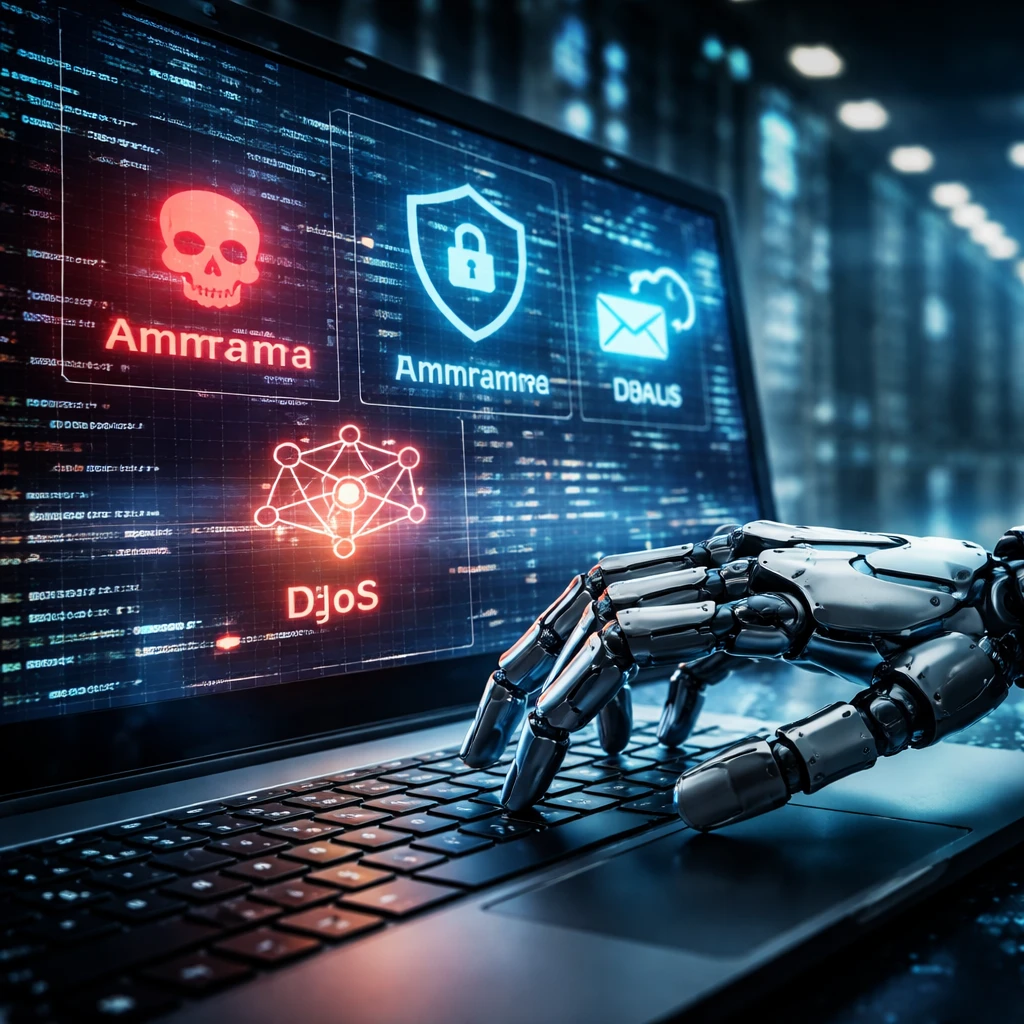
Both reports underline that insured cyber losses continue to cluster in four principal categories - ransomware, data breach, business email compromise (BEC) and distributed denial-of-service (DDoS) attacks. According to the analyses, these threat types now touch almost every sector, with governments, manufacturers and technology companies singled out as facing the highest exposure in 2025.
Munich Re highlights that ransomware-related financial impacts still arise primarily from business interruption. The reinsurer says attackers are leveraging AI to automate reconnaissance and exploitation, which facilitates deeper infiltration into targets and supply chains. Ransomware campaigns have evolved beyond simple file encryption, the report finds, with many incidents now combining encryption with data breaches. There is also a noticeable shift in attacker behaviour toward campaigns that focus solely on exfiltrating data without encrypting it.
Looking ahead, Munich Re expects the next wave of cyber risk to be influenced by a combination of geopolitical factors, supply chain vulnerabilities, increasingly sophisticated cybercrime operations and the rise of both agentic and physical AI. The reinsurer maps possible insurance implications across both first-party and third-party elements. On the first-party side, affected coverage areas could include system failure and business interruption, incident response, data restoration and cyber extortion. On the third-party side, Munich Re anticipates potential upticks in claims tied to wrongful collection, privacy violations, media liability and technology errors and omissions.
Munich Re also notes that AI capabilities already enable the rapid production of deepfakes and highly realistic domains and websites, and can be used to craft personalized social engineering and phishing messages. Those capabilities, the report says, are expanding existing attack surfaces at scale.
Chubb's report presents related findings. The insurer reports that malicious actors are applying agentic and autonomous AI to compromise multiple systems within minutes, which significantly shortens the timeframe available for manual intervention. Chubb further observes that rising AI adoption worldwide has produced a parallel effect: while AI can be used to enhance detection and remediation, it is also being exploited by adversaries to develop more sophisticated attacks.
Both firms' assessments point to an operating environment in which frequency of incidents may rise as adversaries harness automation, even as immediate per-incident financial severity does not necessarily increase at the same pace. The reports also suggest insurers and insureds may need to reassess coverage scopes and response capabilities as automation and AI-driven techniques become more prevalent.