
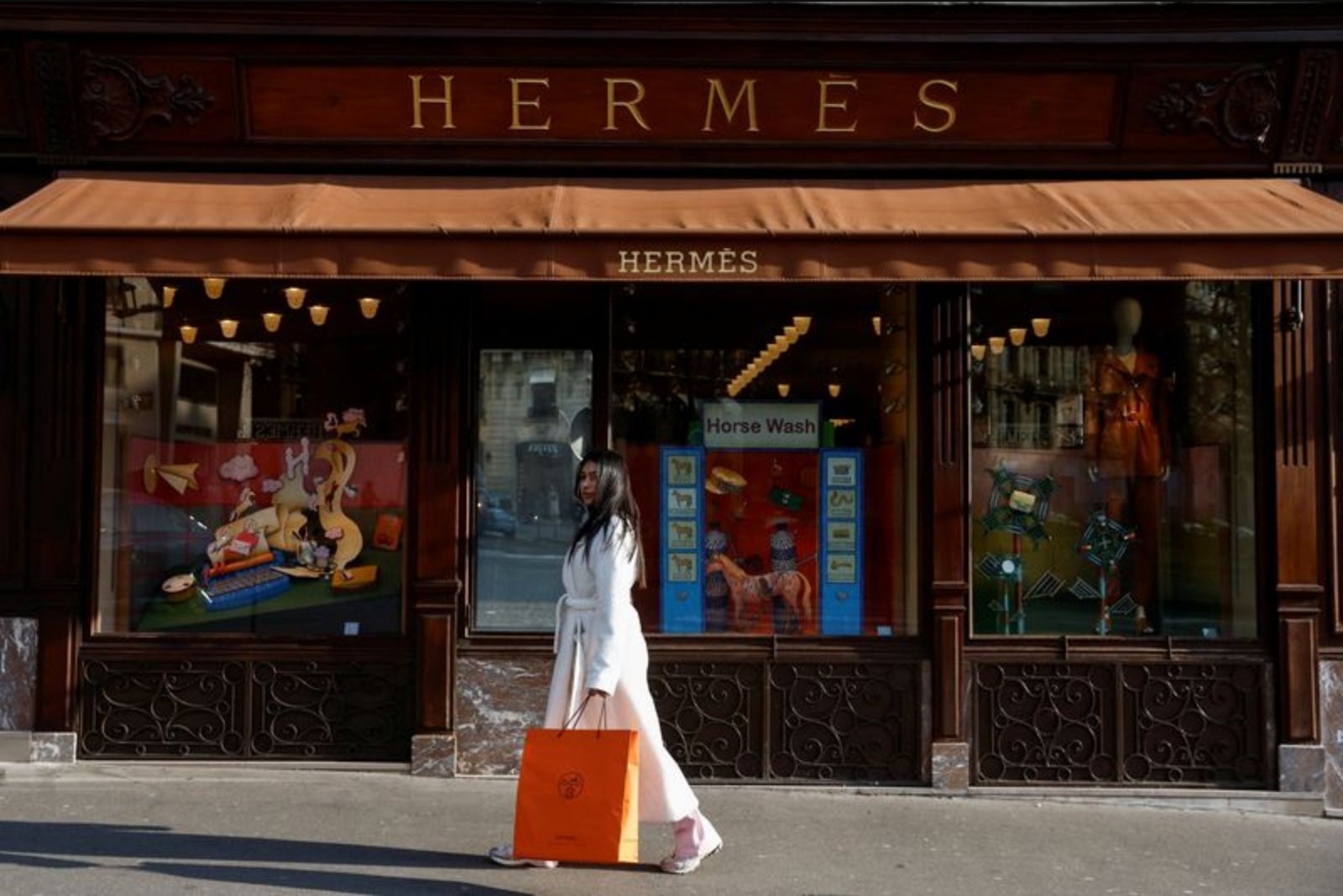
Shares of Hermès tumbled 14% at the opening bell on Wednesday after the French luxury house said the ongoing Iran war had directly reduced sales in the Middle East and suppressed tourist purchases in Europe. The company cited fewer visitors to fashion capitals such as Paris and London, and a sharp slowdown in shopping at Gulf malls, as key drivers of the weakness.
Investors who had been expecting a recovery in luxury consumption this year saw those expectations undercut by the conflict, which the company said had dented sales in Dubai malls and pushed energy prices higher, weighing on consumer confidence. Hermès, which has long managed production and distribution tightly to preserve brand exclusivity, has often been among the most resilient names through an industry-wide slowdown, but management said it was not immune to the effects of the geopolitical shock.
The stock fell to its lowest level in more than three years with the one-day decline, leaving the share price down 28% since January 1. Other luxury groups, including LVMH and Kering, had earlier disclosed that their sales were affected by the conflict.
Results and regional performance
On a currency-adjusted basis, total product sales - spanning Birkin and Kelly bags, silk scarves and perfumes - increased 5.6%, below a Visible Alpha analyst consensus of 7.1% growth. The Middle East region saw a 6% fall in currency-adjusted sales, declining to 160 million euros from 185 million euros in the first quarter of the prior year.
Hermès finance chief Eric du Halgouet said the company experienced strong, double-digit growth in January and February but that the momentum “abruptly halted” in March. He added that sales at luxury malls in Dubai and other Gulf shopping hubs plunged by 40% in March.
Although the Middle East represents just 4.4% of Hermès’ sales, it had been the fastest-growing region for the company in the previous year. Against that backdrop, fluctuations in exchange rates also proved costly: a stronger euro reduced revenue by 290 million euros in the quarter, dragging reported sales down 1% to 4.07 billion euros from 4.13 billion euros a year earlier.
Tourism, airports and country-level trends
Hermès noted that a decline in tourist numbers hit sales at airport concession stores and in markets that rely on Gulf shoppers, including Britain, Italy and Switzerland. Sales in France fell 2.8%, a decline the company attributed principally to the drop in tourism.
In Asia, Hermès’ largest region by sales, currency-adjusted revenue growth was modest at 3.5%. Management said air travel disruption also weighed on trading in Asia, singling out Singapore and Thailand as especially affected.
The United States stood out as a bright spot, where currency-adjusted sales rose 17.2% during the quarter.
Implications for investors and markets
The immediate market reaction reflected concern that geopolitical shocks can quickly erode demand in tourism-dependent retail channels and in regions that had been driving growth. While Hermès’ controlled production strategy supports pricing and scarcity, the company’s results illustrate how concentrated tourism flows and currency moves can produce uneven outcomes across geographies.
($1 = 0.8482 euros)