
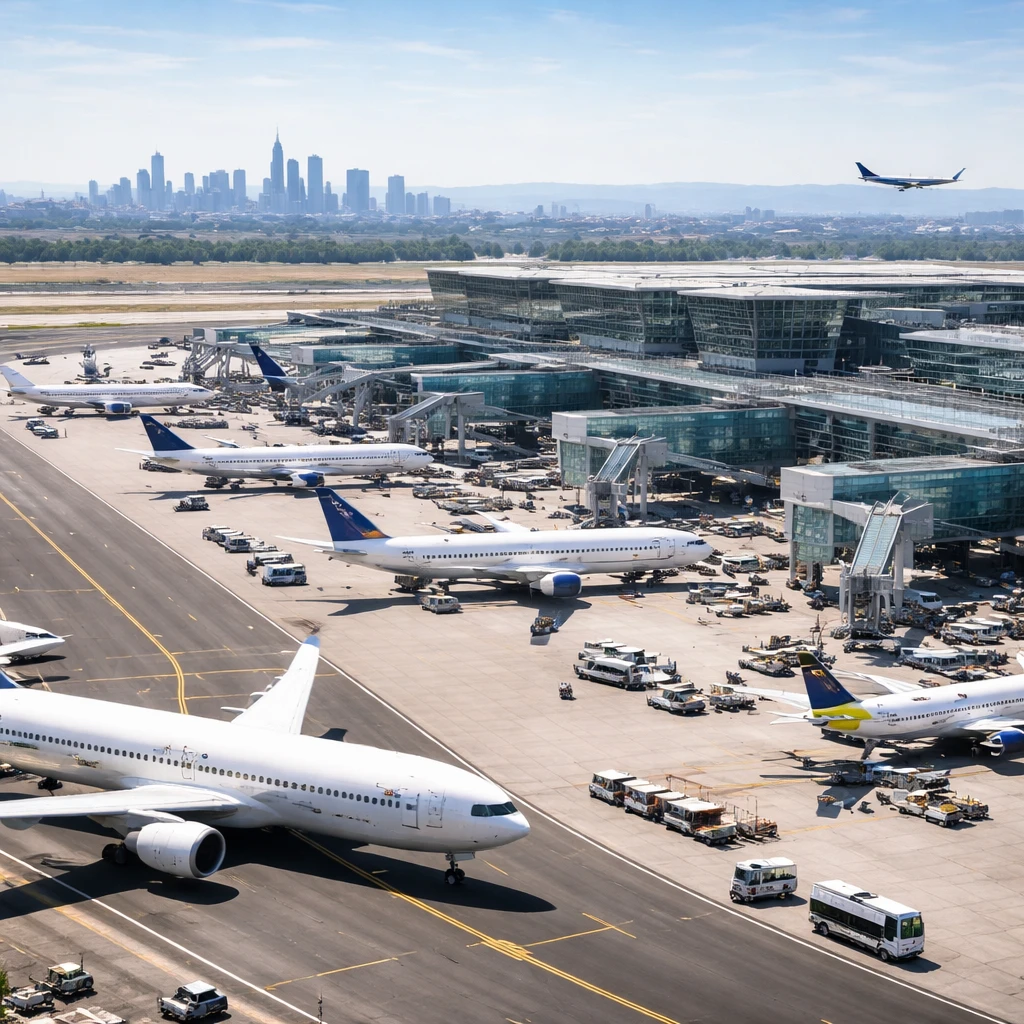
Frankfurt Airport recorded 4.7 million passengers in March 2026, an increase of 2.1% compared with the same month a year earlier, operator Fraport reported on Wednesday. The monthly rise occurred even as the airport experienced operational disruptions linked to two strike days and ongoing geopolitical challenges.
Fraport said mid-March strikes by Lufthansa affected roughly 100,000 passengers at the German hub. At the same time, traffic to Middle East destinations contracted sharply - down 68.6% in March - a development Fraport attributed to the Iran war.
Those declines were partly counterbalanced by robust demand on other long-haul markets. Flights to African destinations expanded by 22.3% in March. Far East traffic also strengthened, with Fraport reporting that destinations including Thailand, India, and China each posted 22.2% growth; the company also noted that Thailand saw a larger increase of 32.4%.
On a quarterly basis, Frankfurt handled 12.7 million passengers in the first three months of 2026, a 2.3% rise from the first quarter of the prior year.
Cargo and operational metrics showed mixed movements in March. Airfreight volumes rose 0.4% to 185,486 metric tons. By contrast, aircraft movements - takeoffs and landings - fell 1.1% to 34,892. Maximum takeoff weight across operations declined 1.9% year-on-year to approximately 2.2 million metric tons.
Fraport's international airport portfolio delivered gains across multiple regions in March. Ljubljana Airport in Slovenia served 110,615 passengers, up 17%. The group's Brazilian airports in Fortaleza and Porto Alegre together handled 1.2 million passengers, an 18.2% increase. Lima Airport in Peru carried 2.1 million passengers, a 1.4% rise.
Across Europe and Turkey, Fraport's 14 Greek airports reported 889,043 passengers, up 6.9%. Bulgarian airports Burgas and Varna together recorded 91,770 passengers, a 19.6% increase, while Antalya Airport in Turkey handled 1.2 million passengers, marking a 10.3% gain.
Overall, total passenger traffic across all Fraport-managed airports reached 10.3 million in March, a 5.1% year-on-year increase. For the first quarter, consolidated passenger volumes rose 5.2% to 28.6 million.
Summary: Frankfurt Airport saw modest year-on-year passenger growth in March 2026 despite labor disruptions and a marked decline in Middle East traffic; stronger flows to Africa and parts of the Far East helped offset losses, while Fraport's global network posted broader increases.