
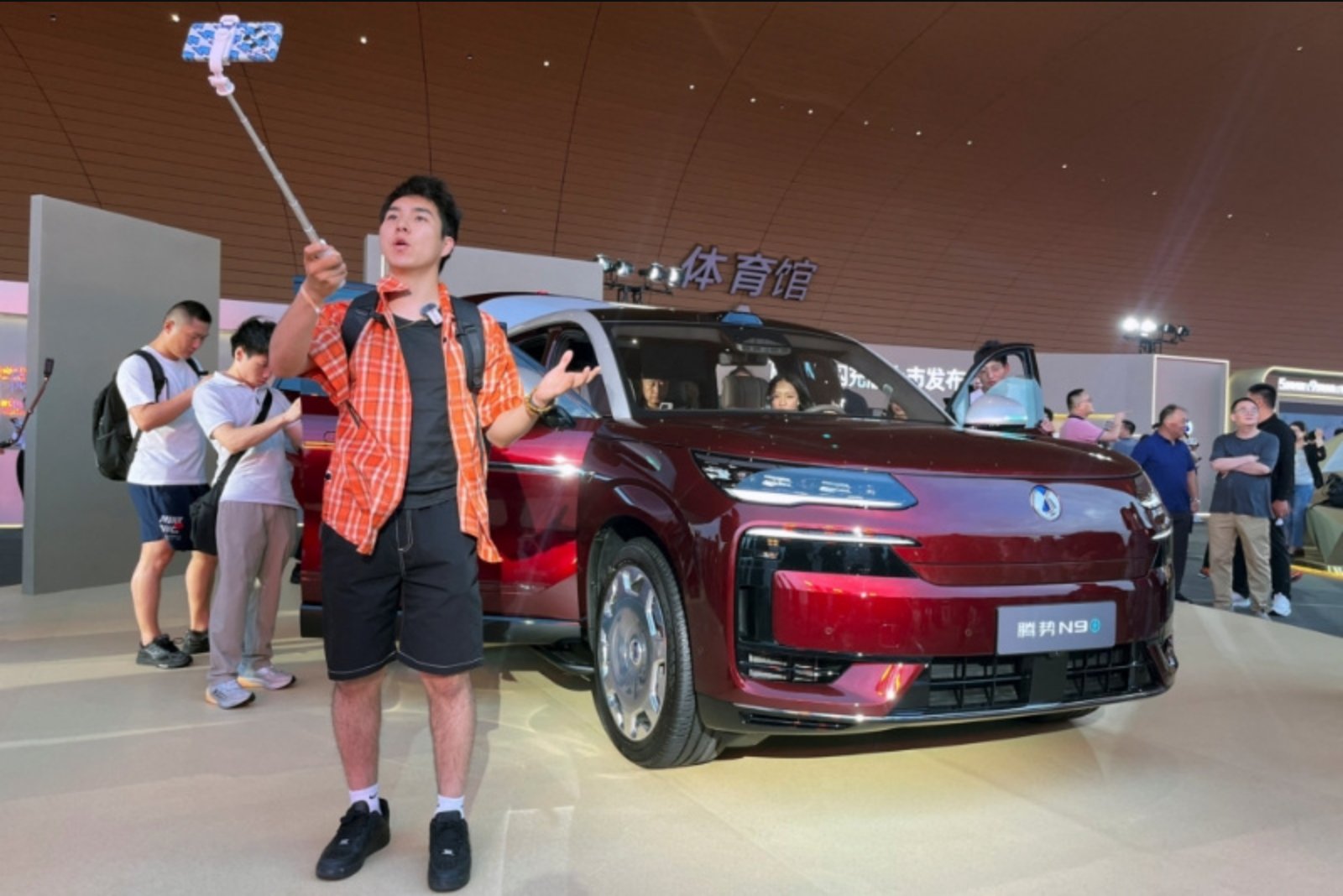
BYD introduced an upgraded version of its Denza flagship SUV at an event in Guangzhou, announcing a 5% rise in the model's starting price as the company leans into a higher-margin, premium-market strategy. The new Denza N9 plug-in hybrid begins at 409,800 yuan ($60,265), compared with the 389,900-yuan base price of the prior model launched 14 months earlier.
Li Hui, general manager of the Denza brand, told an audience made up of car owners and social media influencers that the revamped N9 includes in excess of 100 upgrades. Among the improvements Li highlighted were an extended electric range and a fast-charging function that BYD has previously described as setting "an industry benchmark." Li also framed the move as part of a broader elevation of China’s premium new-energy offerings, asserting that, including Denza, "China’s new energy luxury brands have firmly positioned themselves at the center of the global luxury market."
Li cited buyer migration trends as part of Denza's premium positioning, noting that 70% of Denza D9 purchasers in China were former BMW, Mercedes-Benz, or Audi owners. The D9 multipurpose vehicle remains a central model for the brand, accounting for 45% of Denza's total retail sales in China in April, according to DCar, an information and trading platform.
The Denza brand’s ownership has shifted since its origins as a joint venture. Originally formed as a 50-50 partnership between BYD and Mercedes-Benz, BYD took full control after Mercedes-Benz gradually scaled back involvement and exited the venture in 2024. That transition occurred at a time when Denza's sales were significantly supported by the D9 MPV.
Despite the refreshed N9 and an explicit push toward higher-end buyers, Denza has faced headwinds from domestic competitors. DCar data show Denza’s retail sales in China fell by 41.5% in the first four months of the year compared with the same period a year earlier, with competition from homegrown brands such as Zeekr and Voyah cited as pressures weighing on sales.
BYD is also using Denza as part of an export and premium-brand strategy abroad. The company staged a launch in Europe with an event at Paris’ Palais Garnier in April and engaged British actor Daniel Craig as part of the brand’s promotion. The company continues to present the Denza line as a vehicle for growth in higher-margin geography and customer segments.
Currency reference included in the event materials put the exchange rate at $1 = 6.8000 Chinese yuan renminbi.
Context and implications
The upgraded Denza N9 illustrates BYD’s effort to shed a lower-cost image while prioritizing profitability and premium positioning. The company’s statements about buyer origins and the model mix underline a strategy focused on attracting affluent consumers and expanding internationally, even as short-term retail sales metrics show notable declines.