
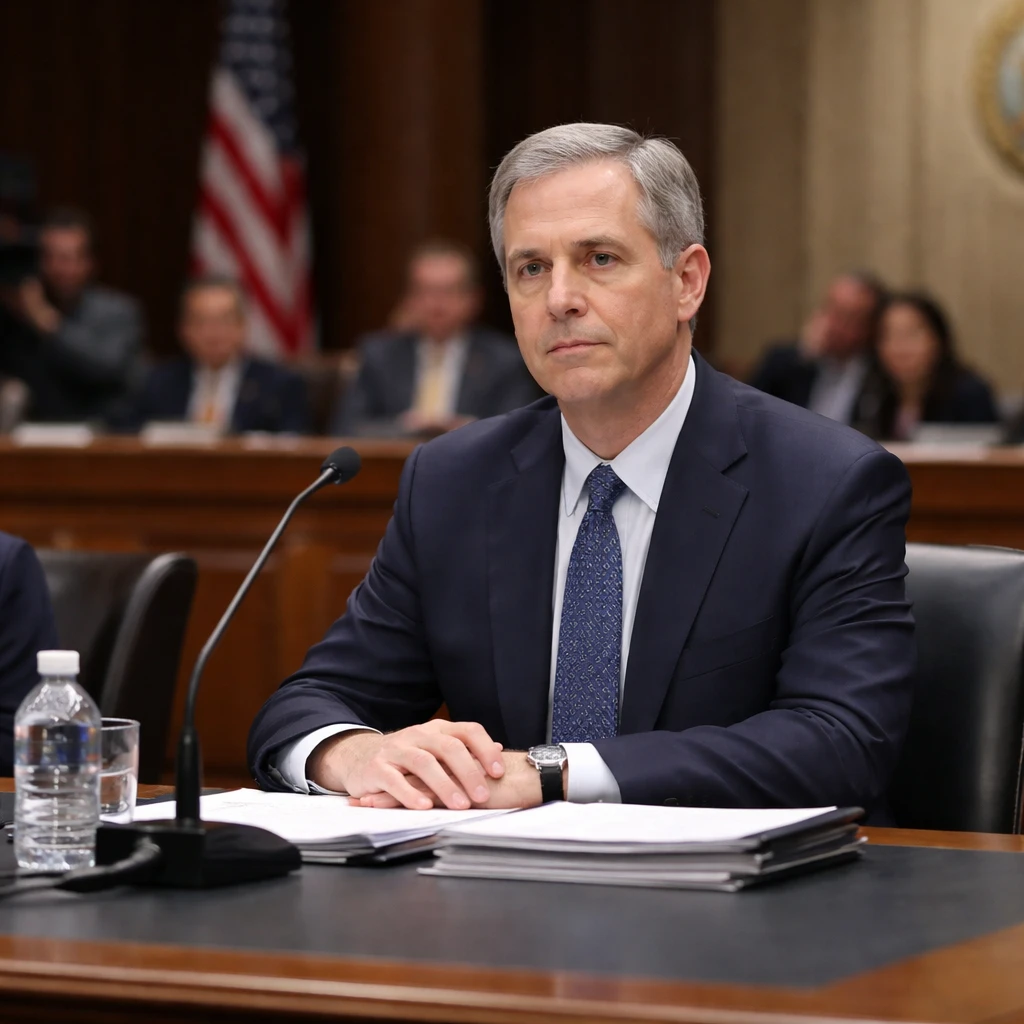
FAA Administrator Bryan Bedford is scheduled to appear before a U.S. Senate Commerce subcommittee on Tuesday to address what he will describe as a failure by the agency to act on warning signals ahead of a fatal January 2025 collision near Reagan Washington National Airport. The crash, involving an American Airlines regional jet and an Army helicopter, resulted in the deaths of 67 people.
In written testimony to be delivered to lawmakers, Bedford will state that the nation’s airspace monitoring system did provide warning signals prior to the collision. He will make the distinction that the problem the agency faced was not one of missing information, but rather a failure to convert available data into operational action.
According to the prepared remarks, addressing the gap between the presence of warning data and the execution of appropriate responses is an urgent priority for the FAA. Bedford will tell members of the Senate subcommittee that closing that gap is a top focus for the agency.
The collision occurred in January 2025 near Reagan Washington National Airport and involved an American Airlines regional jet and an Army helicopter, killing 67 people. The administrator’s testimony centers on the agency’s handling of warning signals prior to that event and on steps needed to ensure that data leads to timely action in future situations.
Bedford’s appearance before the Senate Commerce subcommittee will give lawmakers an opportunity to question the FAA about the specifics of how warnings were processed, why those warnings did not result in preventative measures, and what changes the agency will pursue to prevent similar failures.
While the written testimony emphasizes that warning information existed, it focuses responsibility on the conversion of that information into action. The administrator will characterize eliminating that implementation gap as an urgent agency priority when he speaks to the subcommittee on Tuesday.
Context limitations: The written testimony and the administration’s planned remarks focus on the existence of warning signals and on the agency’s failure to act on them. The testimony, as described, does not provide additional details beyond that distinction.