
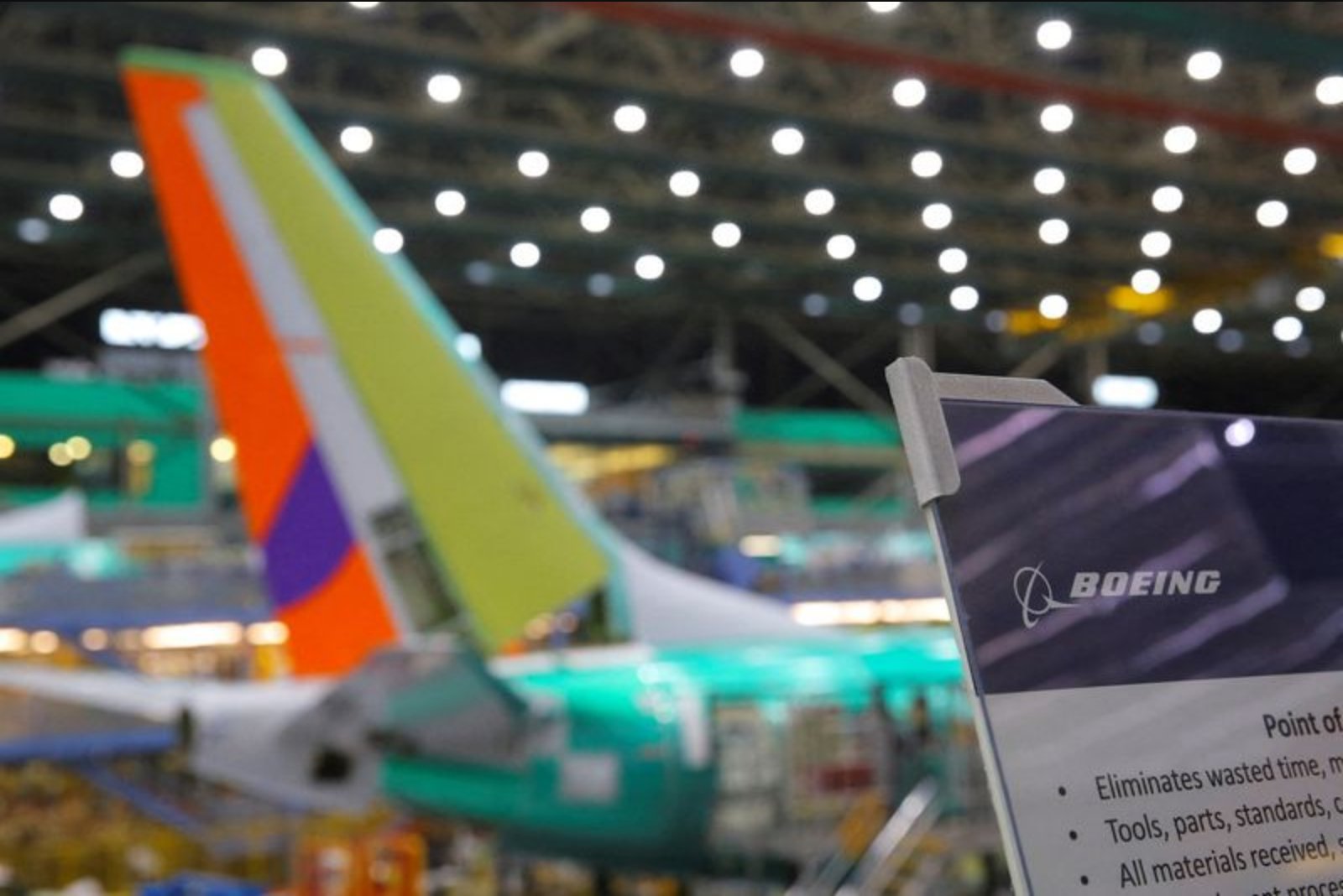
Boeing on Wednesday reported a sharply reduced first-quarter loss, a development the company framed as evidence that its recovery is gaining traction after pandemic-era disruptions and a series of challenges that dented its reputation and balance sheet. The company recorded a $7 million net loss for the quarter, narrower than the $31 million loss from the same period a year earlier.
On an adjusted basis, Boeing posted a core loss of $0.20 per share, substantially below the average analyst expectation of a $0.83 per-share loss. In an internal memo distributed after the results, CEO Kelly Ortberg said: "We’re off to a good start and continue building on our momentum with stronger performance across our business." He added that employees are "making strides to strengthen our culture and restore trust with our customers while growing our record backlog to nearly $700 billion."
Despite the improved earnings metrics, Boeing consumed $1.5 billion of cash during the quarter. Management attributed the cash outflow largely to significant investments to expand 787 production capabilities in South Carolina, to scale military jet output in the St. Louis area, and to commission a new 737 MAX production line in Everett, Washington. The company currently produces about 42 of its top-selling single-aisle jets per month and is targeting an increase to 47 per month by year-end.
Certification work has also weighed on cash. Boeing said ongoing efforts to certify the 737-7 and 737-10 MAX variants, together with the 777X program, were contributors to the quarterly cash burn. Industry publication the Air Current reported that Boeing had begun test flights of a new anti-icing system for the 737 MAX engine, a development the company views as relevant to clearing a major certification hurdle. Boeing expects U.S. regulators to certify the MAX 7 and MAX 10 this year and is projecting first deliveries in 2027.
Commercial jet operations
Revenue in Boeing’s commercial airplane unit rose 13% to $9.2 billion, helped by the company’s highest first-quarter deliveries since 2019. Even so, the commercial division posted a loss of $563 million for the quarter, reflecting ongoing program and certification costs.
Defense and space
Boeing’s defense and space segment produced a significant earnings improvement, with operating results rising 50% to $233 million in the quarter. The company cited progress on high-profile programs, including the Space Launch System rocket - a joint effort with Northrop Grumman - which successfully launched NASA’s Artemis II mission around the moon during the period.
Company leaders and analysts expect Boeing to benefit from elevated defense budgets as global tensions remain heightened by conflicts in the Middle East and Ukraine. The company last year won a Pentagon contract for the nation’s first sixth-generation fighter, the F-47, and is also a finalist for the U.S. Navy’s sixth-generation F/A-XX fighter program.
Services and margins
Boeing Global Services continued to be a stable revenue contributor. Operating income at the unit increased 3% to $971 million, though operating margin eased slightly to 18.1%. Management attributed the margin compression in part to the $10.6 billion sale last year of its digital aviation services business, Jeppesen, which had been a strong earner for the services division.
Overall, Boeing recorded a loss of $0.11 per diluted share for the quarter, or $0.20 per share on a core basis, compared with a $0.16 loss per diluted share in the first three months of 2025.
Analyst and market context
Investors and industry watchers will be watching whether Boeing can convert higher production rates and a robust backlog into sustained cash generation. The company’s near-term cash trajectory reflects both required investments to raise output and the timing of certification and delivery milestones that are critical to revenue realization.
Marketing and research tools referenced in filings
The company’s investor materials also included a consumer-facing investment tool blurb asking "Should you invest $2,000 in BA right now?" It described an AI-based ProPicks product that evaluates BA alongside thousands of companies using more than 100 financial metrics and cited prior winners identified by the tool. That section highlighted the tool’s approach to assessing fundamentals, momentum, and valuation.
Boeing’s quarterly results reflect a mix of operational progress and continuing financial strain from capital-intensive production ramp-up and certification programs. The company’s trajectory in the coming quarters will hinge on its ability to lift production rates, complete required certifications, and translate its near-record backlog into reliable cash flow.