
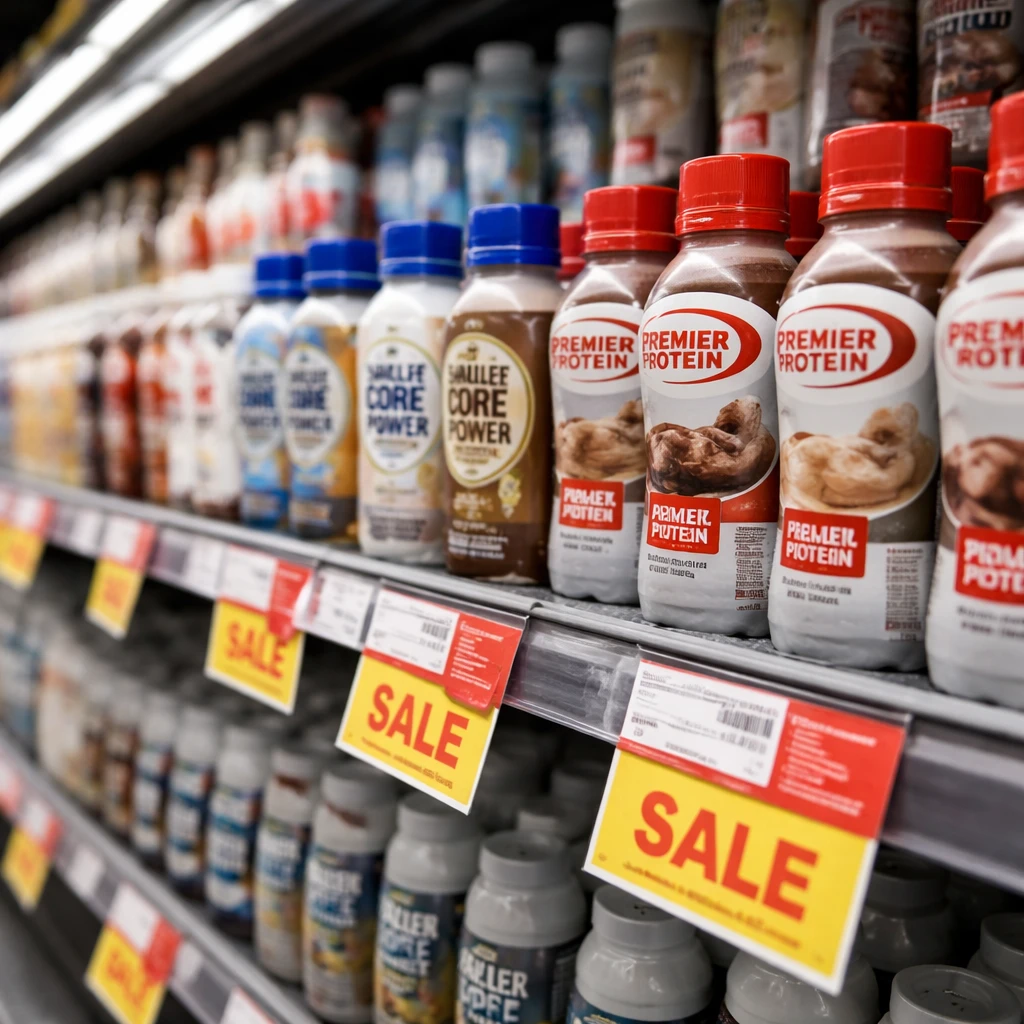
BellRing Brands was the target of a flurry of analyst downgrades after the company disclosed second-quarter results that included a sizable earnings shortfall and a sharp reduction to its full-year adjusted EBITDA outlook. The results and revised guidance prompted a dramatic selloff in the stock, reflecting investor concern over the company's near-term trajectory.
Shares dropped 38.77% on Tuesday, closing at an all-time low of $10.63 and touching an intraday trough of $9.22. Trading in the stock extended lower in Wednesday's premarket session, with an additional decline of about 2.7%.
In response to the quarterly report, Morgan Stanley moved its rating to Equal-weight from Overweight and cut its price target to $13 from $24. Bernstein lowered its recommendation to Market-Perform from Outperform and reduced its target to $11 from $35. Bank of America reduced its view to Underperform from Neutral and set a $10 price objective, down from $19.
Company management described the quarter as having been affected by a "perfect storm" of factors: increased consumer price sensitivity, heightened promotional intensity among competitors, and upward pressure on input costs. Reflecting these headwinds, guidance was materially revised. Management now expects full-year net sales growth of flat to plus 2%, down from a previous range of plus 4% to 6%. Adjusted EBITDA guidance was cut to a range of $315 million to $335 million, versus the prior guidance of $425 million to $440 million - a reduction of roughly 25%.
Analysts said their primary concerns go beyond a temporary spike in competitor promotions. Morgan Stanley analyst Megan Alexander Clapp noted the company's challenges include a shift in consumer behavior, with ready-to-drink (RTD) shake buy rates declining for the first time in five years. Clapp pointed to the higher incidence of promotion in the category, reporting that approximately 27% of RTD shake category volumes were sold on promotion during the quarter, an increase of about 800 basis points year-over-year. She added that the stock may remain under pressure until the market sees multiple quarters of stabilization in the business.
Bernstein revised its earlier expectations after concluding that promotional intensity was no longer largely confined to a single retail channel. Analyst Alexia Howard wrote that smaller insurgent brands increased promotional activity outside of traditional club channels in the quarter, training price-sensitive shoppers to wait for deals. Bernstein described its previously positive investment thesis as "now broken," citing additional margin pressure from surging milk protein concentrate and dry whey costs that the firm expects to start affecting shake margins late in fiscal 2026 and to persist into 2027. The firm also pointed to rising freight costs that it believes will disproportionately burden smaller manufacturers like BellRing compared with larger competitors.
Bank of America analysts similarly described limited visibility into a re-acceleration of either revenue or margins in the near term. They highlighted rising competitive intensity and aggressive promotions that increase the cost of defending BellRing's leading market share. The analysts also emphasized the dual challenges of declining RTD shake buy rates and a slowdown in category growth - from prior teen percentage growth rates to approximately 8% - which they said creates a more difficult path to rebuilding investor confidence.
The combination of an earnings miss, a sizable cut to full-year adjusted EBITDA guidance, and signs that promotional pressures and input-cost inflation are broadening across the category have led major brokerages to lower ratings and price targets, and have left investors seeking evidence that the underlying business has stabilized.
Summary
BellRing Brands reported a disappointing second quarter, slashing full-year adjusted EBITDA guidance by roughly 25% and cutting net sales growth expectations. The results triggered near-universal broker downgrades and a steep share-price decline, as analysts flagged expanding promotional activity, a shift in consumer purchase behavior, and rising input and freight costs as central concerns.
Key points
- Major brokerages - Morgan Stanley, Bernstein and Bank of America - downgraded BellRing and cut price targets after the quarter.
- Management reduced full-year net sales growth guidance to flat-to-plus-2% and lowered adjusted EBITDA guidance to $315 million - $335 million from $425 million - $440 million earlier.
- Broader market implications include pressures on consumer-packaged-goods margins and increased promotional activity impacting retail and grocery sectors.
Risks and uncertainties
- Higher promotion rates and intensified competition could continue to erode revenue growth and margins - a concern for the consumer packaged goods and retail sectors.
- Rising input costs, specifically milk protein concentrate and dry whey, alongside higher freight expenses, may pressure margins into late fiscal 2026 and through 2027 - affecting manufacturers, particularly smaller producers.
- Changing consumer behavior, evidenced by a decline in RTD shake buy rates for the first time in five years, creates uncertainty about demand trajectory and the pace of category recovery.