
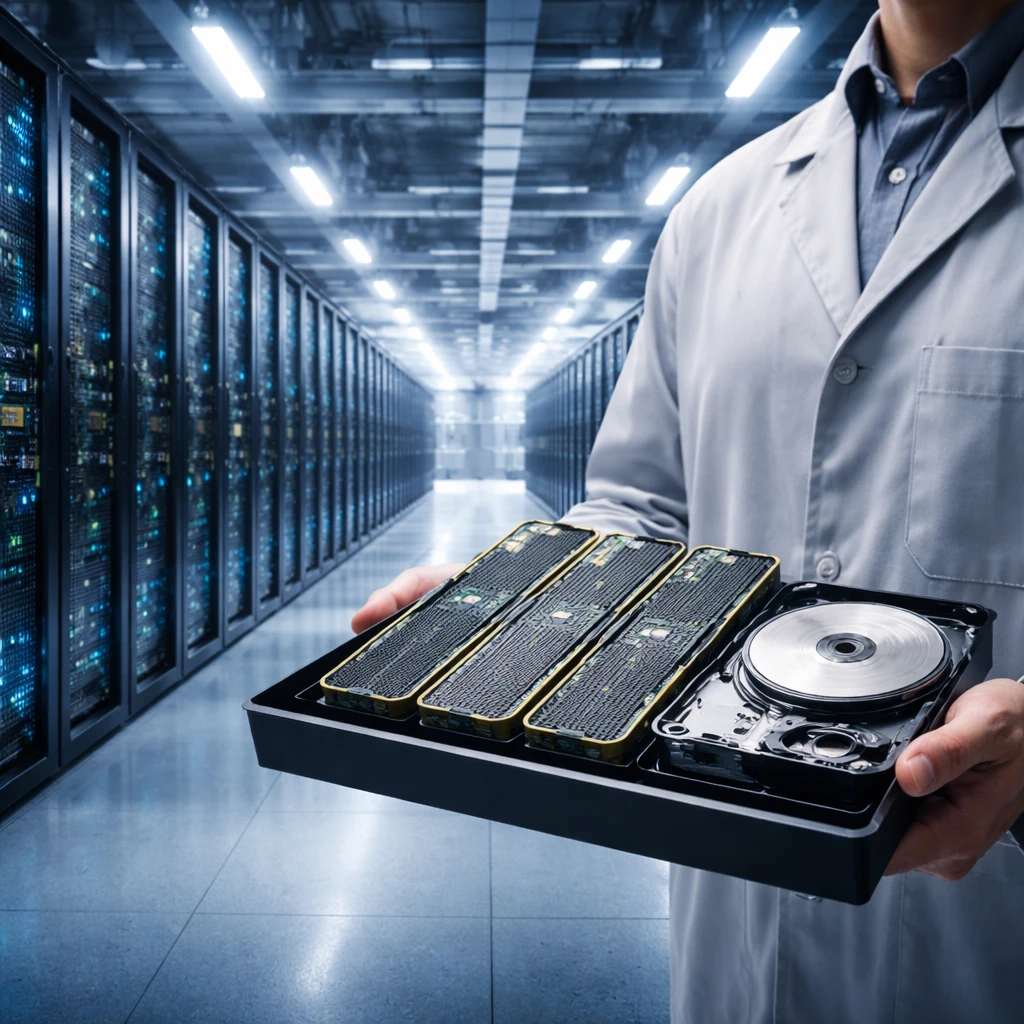
After a dramatic slump tied to a post-pandemic supply surplus in 2023 that drove prices lower and erased operating profits across the sector, memory chip makers are now reporting record earnings as demand from AI-related data center projects accelerates.
Barclays' technology analysts have recalibrated expectations for hyperscaler capital expenditure and AI infrastructure demand. The bank now estimates that annual AI infrastructure spending by Western hyperscalers and AI labs could exceed $1 trillion - a figure the analysts note is more than $300 billion above current consensus. Barclays also highlights potential additional upside from sovereign AI programs and demand in China, and projects that this spending trajectory could peak in 2028 as the pace of recursive self-improvement moderates the growth rate of AI training needs.
Against that backdrop, Barclays has assembled a list of more than 400 companies it views as essential to the digital and power infrastructure that will underpin the anticipated buildout. From that wider universe the bank identified five U.S. memory and storage names as particularly central to supplying components and capacity for AI workloads and expanded data center footprints.
Micron Technology - Barclays underscores Micron's role as a supplier of DRAM, NAND and NOR memory products that are tuned for AI and other data-intensive applications. The bank called out Micron's portfolio positioning as relevant to AI server demand. In a recent development reported alongside Barclays' view, Micron has begun sampling 256GB DDR5 memory modules designed for AI servers. The company also received price target increases from BofA Securities and DA Davidson, moves that were attributed to robust AI-driven memory demand.
Western Digital - Barclays points to Western Digital's provision of hard disk drive storage as a key enabler for both AI training and inference workloads. The company reported third-quarter results in which earnings and revenue exceeded analyst expectations, a performance Barclays associates with strong demand in Western Digital's cloud storage business.
SanDisk - Described by Barclays as a "pure-play flash memory company," SanDisk has seen a substantial market rally over the past year. Barclays notes that the stock has risen by more than 3,200% during that period, a move the bank ties to sustained demand for high-capacity NAND flash memory in hyperscaler data centers that are building storage infrastructures requiring far more capacity than traditional workloads.
Seagate Technology - Seagate, a designer and manufacturer of both hard disk drives and solid-state drives marketed for mass-capacity data storage, was highlighted for its positioning in large-scale enterprise and hyperscaler deployments. The company provided strong revenue and profit guidance that Barclays interprets as a signal of continuing enterprise spending on AI equipment. Following Seagate's outlook, several firms - including Evercore ISI, BofA Securities and Rosenblatt - raised their price targets for the company.
Everpure (Pure Storage) - The rebranded Pure Storage, now referred to as Everpure, rounds out Barclays' U.S. list. Barclays describes the company as a provider of specialized memory modules and associated supply chain services for a range of hardware systems.
Barclays' emphasis on these five names reflects the bank's broader view that the AI arms race will continue to support elevated hyperscaler capital expenditure and, by extension, improved fundamentals across memory and storage suppliers. The sector's turnaround from the pronounced margin pressure of 2023 to current record earnings underscores the link between hyperscaler spending patterns and memory industry profitability.
While Barclays' work highlights potential upside to consensus capex assumptions and identifies hundreds of companies in the buildout supply chain, the bank frames its target list as part of a much larger infrastructure opportunity tied to AI compute and storage needs.