
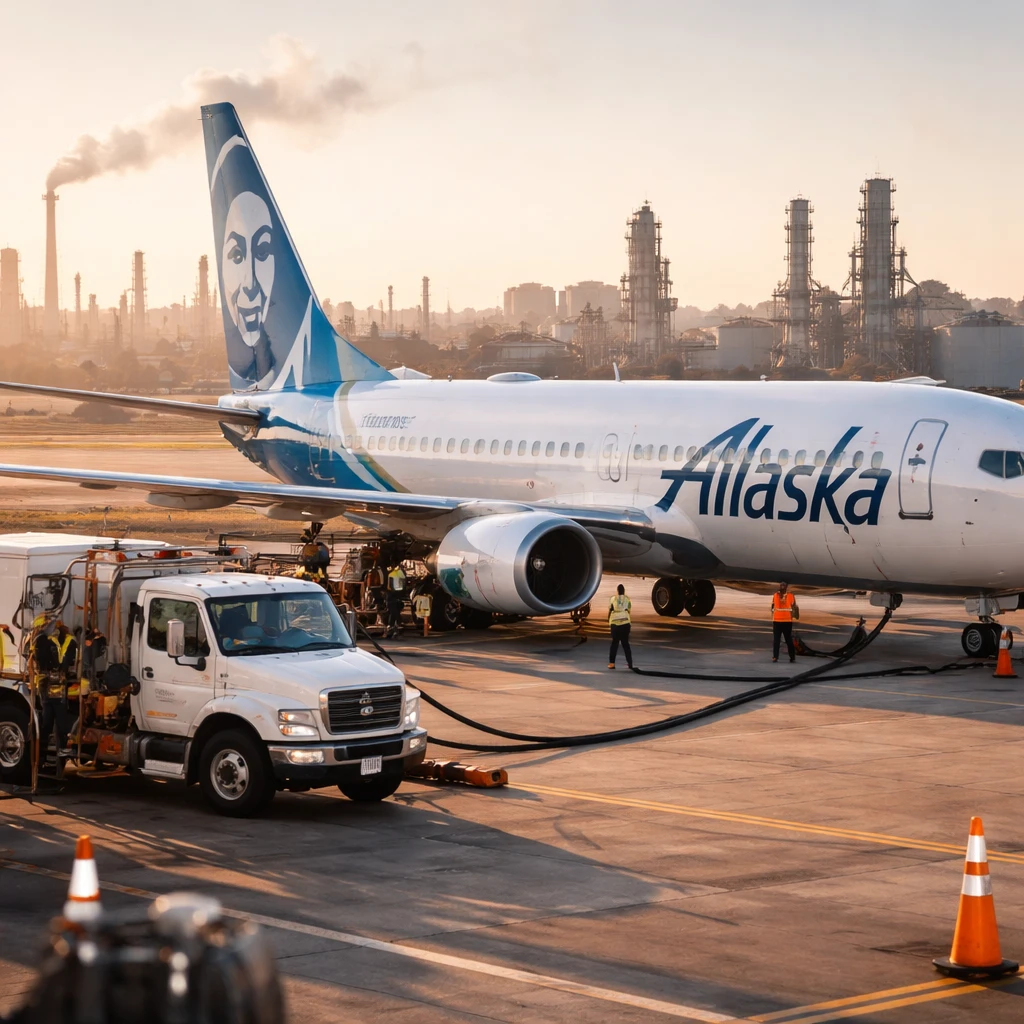
Alaska Air Group said on Tuesday it is withdrawing its full-year forecast as jet fuel costs climb and trading swings driven by events in the Middle East complicate near-term planning. The airline cited a pronounced jump in fuel prices over the past week that has made financial projections difficult.
According to the company, jet fuel prices swung between about $4.45 and $5.15 per gallon within the last week, creating a volatile cost backdrop. Alaska Air said it has been able to offset roughly one-third of the recent increase in fuel expense through higher fares, leaving an unfunded portion of the cost rise that is expected to pressure second-quarter earnings.
Chief Executive Benito Minicucci told investors on the airline’s earnings call that bookings have stayed firm even after substantial fare increases. In recent weeks, airfares in Alaska Air’s core U.S. markets have risen by more than 20% compared with the same period a year ago.
"Offsetting some of that pressure is a strong demand backdrop, with fare increases holding," Minicucci said on the call.
The spike in costs has been compounded by a sharp increase in refining margins. Alaska Air reported that refining margins in Singapore rose by more than 400% in the first quarter, turning a market that is typically one of its cheaper fuel sources into its most expensive. That change has affected approximately one-fifth of the carrier’s fuel supply.
Even with that turnaround in Singapore pricing, the airline still views that market as a strategic long-term advantage. The company said it plans to increase the share of fuel procured from Singapore over time to between 30% and 40%, up from about 20% at present.
Travel demand across Alaska Air’s network remains strong. The airline reported an 8% increase in premium travel in the first quarter and a 19% rise in corporate travel. Advance corporate bookings are running nearly 30% higher, the company said.
On supply risk, Alaska Air indicated it does not anticipate disruptions to fuel deliveries across its network in the near term. However, the carrier warned that long-term jet fuel supply constraints persist on the U.S. West Coast, where pipeline capacity and refining throughput remain limited and will need to be addressed by the industry.
Other major U.S. carriers are reporting their quarterly results this week: United Airlines is scheduled to report first-quarter results later today, Southwest Airlines is due on Wednesday, and American Airlines is set to report on Thursday.
Key points:
- Alaska Air withdrew full-year guidance after jet fuel prices swung between about $4.45 and $5.15 per gallon in the past week.
- The carrier is recovering about one-third of the fuel cost increase via higher fares, but the remaining gap is expected to pressure June-quarter earnings.
- Refining margins in Singapore jumped more than 400% in Q1, affecting roughly 20% of Alaska Air’s fuel supply; the airline plans to raise Singapore-sourced fuel to 30%–40% over time.
Risks and uncertainties:
- Continued volatility in jet fuel prices could further erode profitability for airlines, affecting airline earnings and travel-sector equity valuations.
- Elevated refining margins, particularly in Singapore, may increase fuel procurement costs and complicate short-term cost management for carriers.
- Ongoing limitations in pipeline and refining capacity on the U.S. West Coast present longer-term supply risks for jet fuel that could affect operations and costs.