
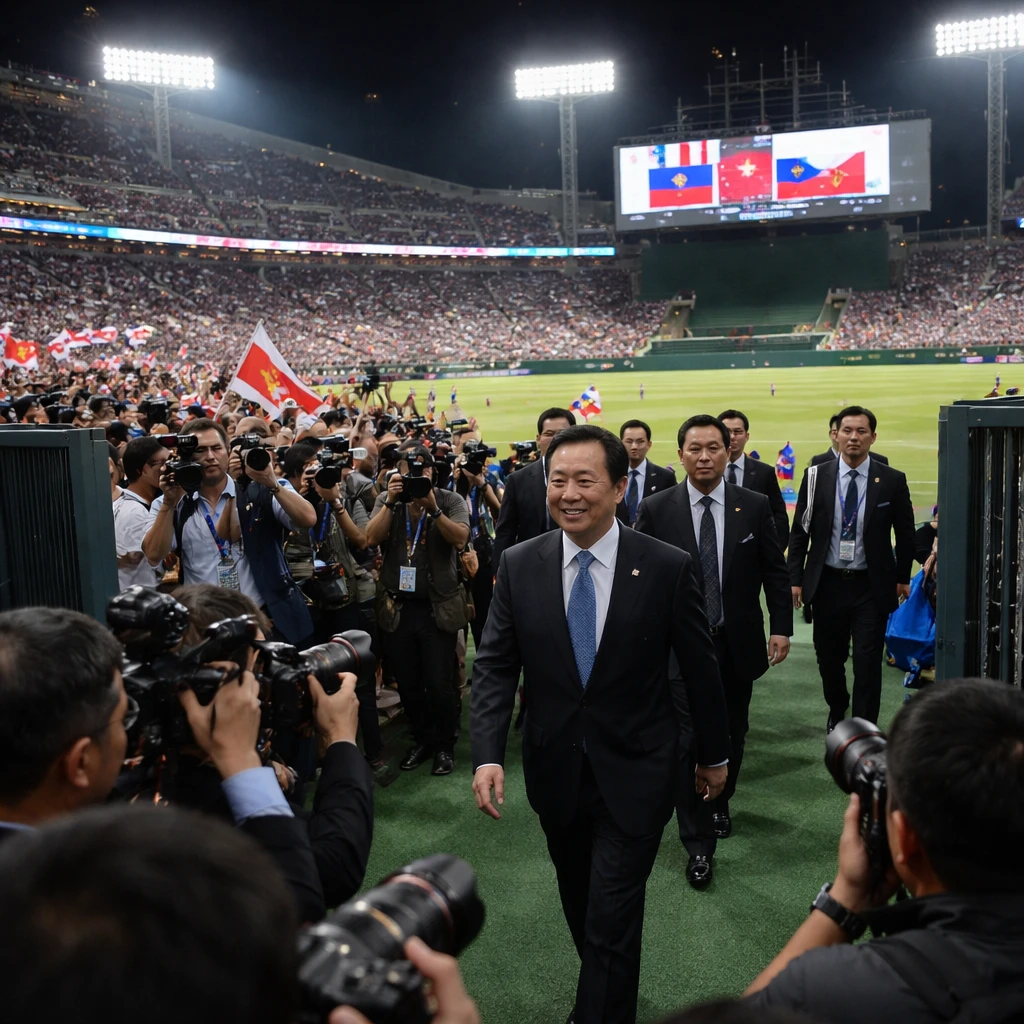
Taiwan’s Premier Cho Jung-tai travelled to Tokyo this weekend for what officials described as a personal trip to watch a baseball game between Taiwan and the Czech Republic. The visit marks the first public appearance in Japan by a Taiwanese premier since 1972 and departs from long-standing diplomatic norms between Beijing and Tokyo.
The timing of Cho’s trip heightens sensitivity in a region already facing growing strategic tensions. It follows recent statements from Japan’s Prime Minister Sanae Takaichi suggesting Japanese forces could, in theory, be deployed should China mount an invasion of Taiwan. That assertion has contributed to a fraught security environment in which small diplomatic moves carry outsized political and economic significance.
Beijing regards such visits as inconsistent with the One China principle and has previously responded to similar events with punitive measures. In response to other diplomatic incidents, mainland authorities put in place targeted export controls and issued travel advisories aimed at Japan. Market participants note the potential vulnerability of Japan’s semiconductor and broader technology industries to regulatory measures from China, given their exposure to Chinese markets and supply-chain linkages.
On the military front, Taiwan’s defense ministry reported a continued, if unexplained, slowdown in activities by the People’s Liberation Army in the Taiwan Strait during the period surrounding Cho’s visit. Officials recorded no aircraft detections in the 24 hours that coincided with the visit, according to the ministry’s statement.
Official comment from both Beijing and Tokyo was restrained over the weekend, leaving observers to weigh the political and economic implications. The episode recalls the 2022 trip by then-Vice President Lai Ching-te, which led to significant protests from mainland authorities and set a precedent for the kinds of mainland responses that can follow high-profile Taiwanese visits to friendly states.
Investors across the Asia-Pacific region are focused on whether this form of diplomatic engagement - sometimes described as "baseball diplomacy" - could trigger a fresh round of sanctions or trade measures that would reverberate through regional supply chains. Market watchers are particularly attentive to any new restrictions or an uptick in People’s Liberation Army activity that might signal a deteriorating environment for trade and investment.
For now, the visit provides a degree of plausible deniability by being framed as a personal appearance. Still, the longer-term trajectory of relations between Beijing and Tokyo appears strained as Australia, the United States, and Japan draw closer in strategic alignment. That alignment, combined with ongoing sensitivities around Taiwan, keeps the risk profile elevated for sectors closely tied to cross-strait trade and regulatory decisions.