
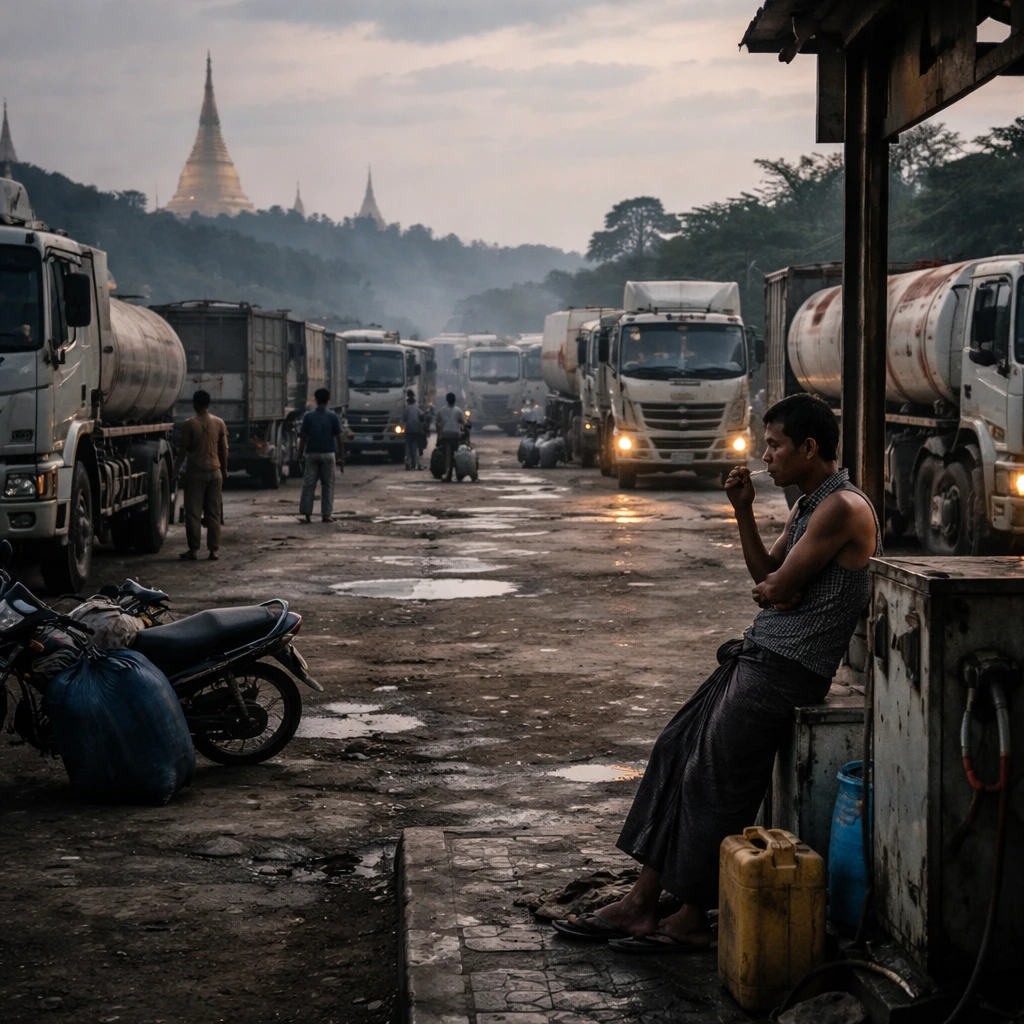
The World Bank has issued a sobering assessment of Myanmar's economic trajectory, revealing that a recent surge in fuel prices has significantly exacerbated economic strain across the Southeast Asian nation. Despite observing tentative signs of stabilization in certain areas, the institution emphasized that the country remains under considerable pressure as it grapples with the compounding effects of the ongoing conflict and energy market volatility.
According to the latest Myanmar Economic Monitor report, the World Bank has revised its projection for Myanmar's real GDP growth for the 2026/27 fiscal year, which commenced in April, down from a previously estimated 3.0%. The original 3.0% projection had been formulated before the onset of the Iran conflict, which triggered a global energy shock. Instead, the revised outlook now points to a 2.0% growth rate for the coming fiscal year. Furthermore, the report indicated that real GDP is estimated to have contracted by 2.0% during the 2025/26 fiscal year.
Melinda Good, the World Bank division director for Thailand and Myanmar, highlighted the precarious nature of the current economic landscape. "While there are signs that economic conditions have stabilised, Myanmar's economy remains under significant strain," Good stated. She noted that continuous shocks have exposed deep-seated structural flaws within the economy, which are likely to impede any fragile recovery process that might otherwise take root.
The disruption caused by the energy crisis has been multifaceted, affecting various sectors of the economy. The surge in energy prices has led to increased costs for transport, logistics, production, and distribution. This inflationary pressure has also intensified the demand for foreign exchange, as the country requires more foreign currency to cover the rising costs of fuel imports. These dual pressures are complicating efforts to maintain economic stability.
Even prior to the current energy crisis, economic indicators such as output, sales, and profits were already struggling to recover to pre-2021 coup levels. The devastating earthquake that struck last year further compounded these challenges, pushing economic performance even further below the benchmarks established before the political turmoil of 2021. The economy had shown modest improvement heading into early 2026, but the Middle East conflict disrupted this fragile progress.
The report identified numerous risks that threaten the economic outlook. These include the ongoing civil war, which continues to disrupt trade and logistics networks across the country. External pressures also weigh heavily on the economy, with weaker export earnings and continued volatility in energy prices adding to the uncertainty. These factors create a challenging environment for businesses and investors alike, who must navigate a landscape marked by political instability and economic headwinds.
Myanmar has been in a state of turmoil since the military coup in 2021, which ousted the elected civilian administration led by Nobel laureate Aung San Suu Kyi. The coup sparked nationwide protests that eventually escalated into an armed rebellion against the military junta. In March 2025, a massive earthquake caused further significant economic disruption, adding another layer of complexity to the country's challenges. In April, former junta leader Min Aung Hlaing assumed the presidency following a military-engineered election that excluded key opposition groups and was widely criticized internationally as a sham.