
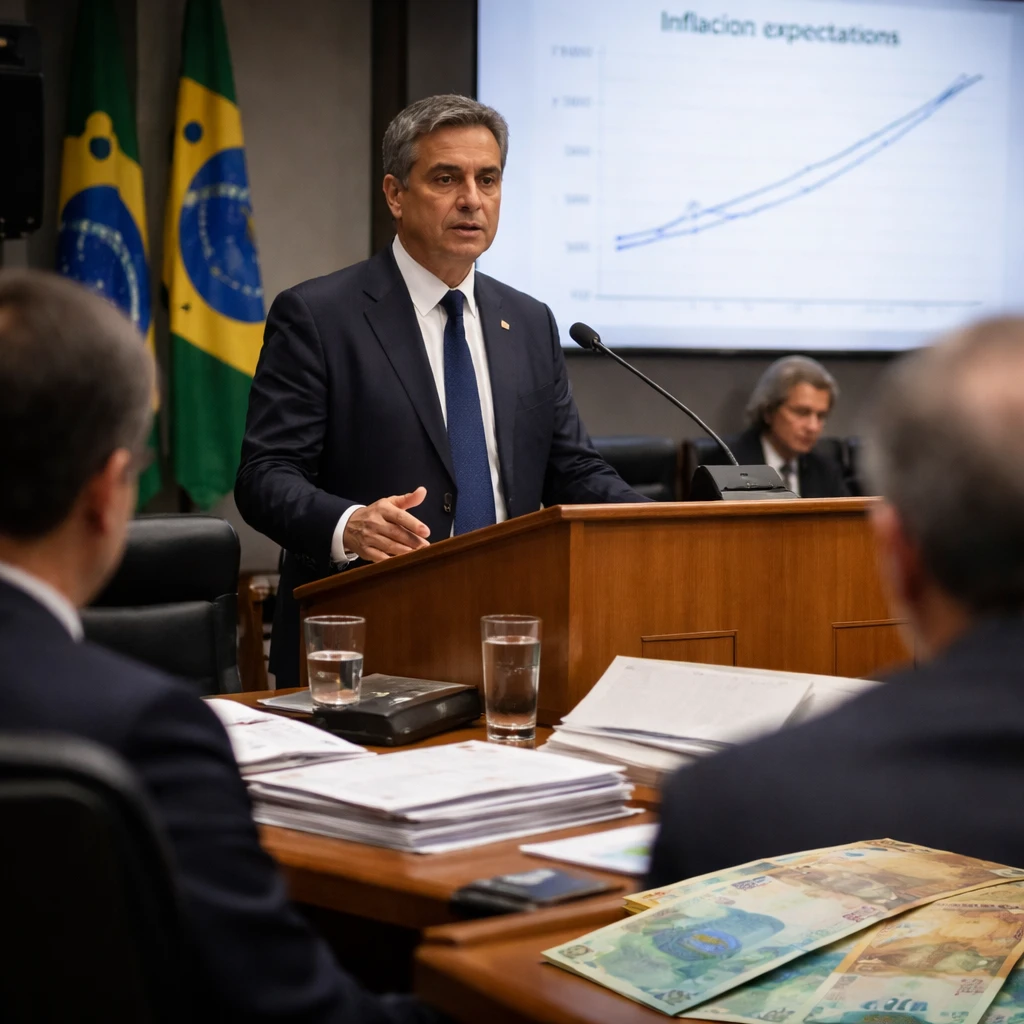
Brazil's central bank governor addressed lawmakers in Brasilia, saying that expectations for inflation in 2028 have become further unanchored. He attributed the shift to present supply shocks and indications that domestic demand and price-setting are running hot.
The governor emphasized that interest rates are still very restrictive, but that inflationary pressures remain elevated. He singled out two external supply shocks - the Iran war and the El Nino weather phenomenon - as factors affecting price dynamics.
Core inflation in services, the governor said, is under marked pressure. He characterized that pressure as a signal the domestic economy may be overheated, a development that complicates the central bank's task even while policy rates remain tight.
On currency moves, the governor noted that the Brazilian real has been performing well, a separate observation from the inflation and policy assessment.
The governor also disclosed findings from an internal inquiry into a separate matter involving Banco Master. The investigation concluded that two central bank officials received improper benefits in relation to the Banco Master case. Those findings have been forwarded to Brazil's Comptroller General's Office for handling.
He described the connection between the two officials and Banco Master as extremely serious. The central bank's interest in Banco Master intensified after the bank began selling new loan portfolios in January, at a time when it was already facing financial difficulties.
Reiterating governance commitments, the governor stated the central bank will apply governance rules irrespective of who is implicated. He cautioned that punishing an institution that has been a victim of mismanagement would be a mistake, noting that liquidation occurs only when a bank fails to meet required conditions.
Context and implications
- Inflation expectations for 2028 have shifted upward and appear less anchored, driven by supply shocks and an overheated services sector.
- Policy rates remain very restrictive, yet inflation pressures persist, complicating monetary policy decisions.
- Governance concerns tied to Banco Master prompted an internal probe and referral to the Comptroller General's Office.