
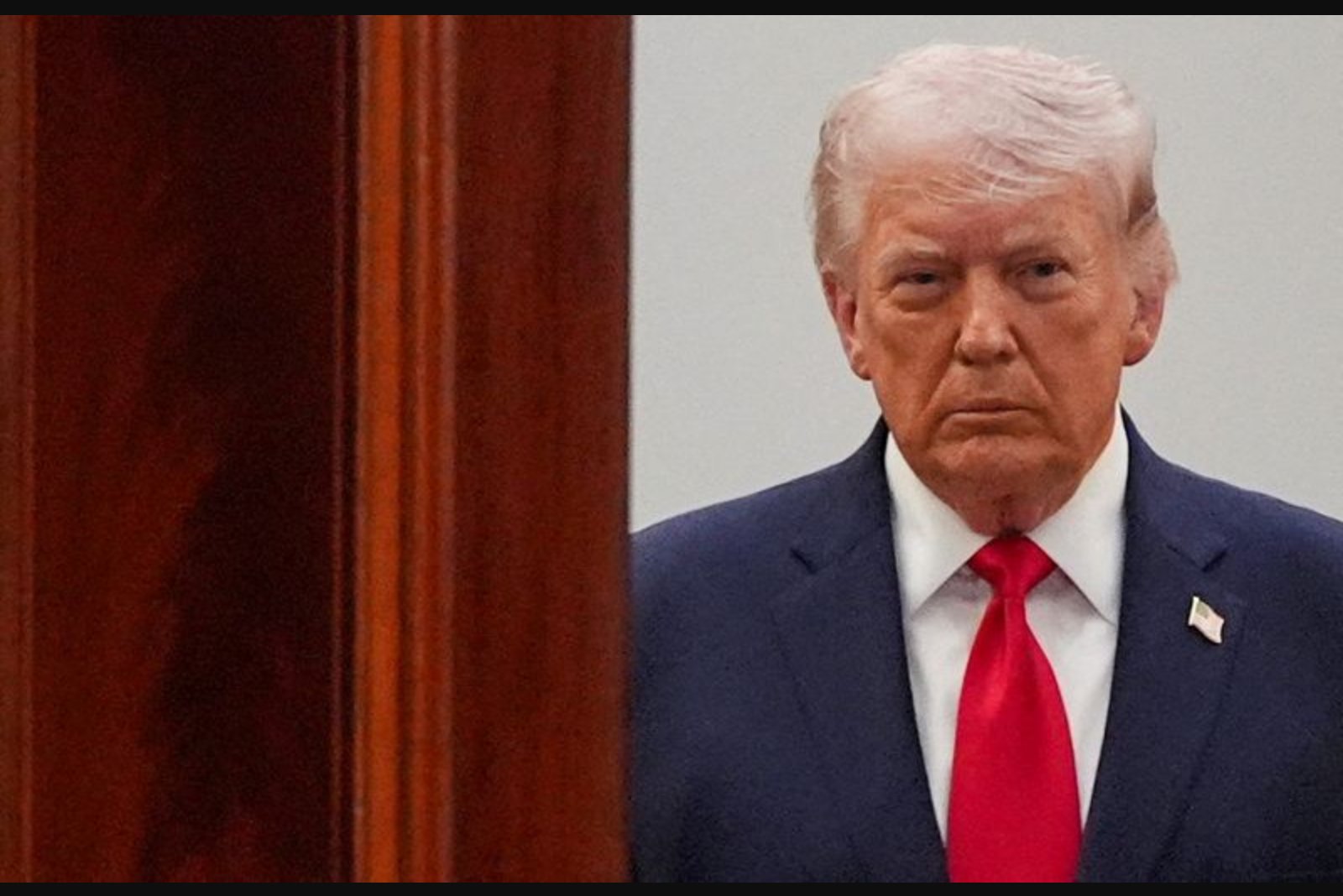
April 12 - President Donald Trump said on Sunday that the United States Navy would begin an immediate blockade of the Strait of Hormuz and would take action against ships that have paid transit tolls to Iran. The announcement was made in a post on Truth Social hours after U.S.-Iran peace talks ended without a deal.
In his post, Trump said the diplomatic meeting "went well, most points were agreed," but added that the two sides had not reached consensus on Iran's nuclear program. He framed the naval action as a direct response to Iran's practice of charging vessels to pass through the strategic waterway.
Trump's statement included explicit instructions to U.S. naval forces. "Effective immediately, the United States Navy, the Finest in the World, will begin the process of BLOCKADING any and all Ships trying to enter, or leave, the Strait of Hormuz," he wrote. He added: "I have also instructed our Navy to seek and interdict every vessel in International Waters that has paid a toll to Iran. No one who pays an illegal toll will have safe passage on the high seas."
The president characterized payments of transit tolls to Iran as illegal and indicated that vessels that have made such payments would be subject to interdiction by U.S. forces even while in international waters. The announcement immediately followed the end of talks between the United States and Iran that, according to Trump, did not resolve the issue of Iran's nuclear program.
The sequence of events as presented by the president is limited to his public remarks: an international meeting concluded without agreement on a key security matter, and in response the administration announced a naval blockade and orders to interdict vessels tied to payments to Iran. Details beyond those assertions, including operational plans, legal frameworks, rules of engagement, or responses from other governments, were not included in the president's post.
Key points
- President Trump ordered an immediate U.S. naval blockade of the Strait of Hormuz and directed interdiction of vessels that have paid a toll to Iran.
- The announcement followed U.S.-Iran peace talks that ended without agreement on Iran's nuclear program; Trump said the meeting "went well, most points were agreed."
- Sectors likely to be affected include maritime shipping, energy markets tied to tanker routes, and defense-related operations given the naval deployment implications.
Risks and uncertainties
- Potential for disruption to commercial shipping transiting the Strait of Hormuz if a blockade is implemented - shipping and energy sectors could be affected.
- Escalation risk from interdiction actions against vessels in international waters - defense and maritime security sectors face uncertainty.
- Legal and operational questions remain unanswered in the president's public statement, creating uncertainty for insurers, vessel operators, and market participants.