
World July 3, 2026 05:24 AM

U.S. Withdraws Majority of Forces After Nigeria ISIS Operation, AFRICOM Says

Washington shifts to intelligence support while Nigerian forces continue ground operations following May joint strike

By Maya Rios
Share
Twitter Reddit Facebook LinkedIn

The head of U.S. Africa Command said most U.S. personnel sent to support a May operation against Islamic State affiliates in northeastern Nigeria have been pulled back. AFRICOM will continue intelligence cooperation at Nigeria's request after a joint mission that killed a top ISIS commander and disrupted the group's regional command and communications.

U.S. Withdraws Majority of Forces After Nigeria ISIS Operation, AFRICOM Says
Summarize with
ChatGPT Perplexity Claude Grok Gemini

Key Points

  • Most U.S. forces temporarily deployed for the May operation in Nigeria have been withdrawn; the U.S. remains engaged through intelligence sharing at Abuja's request - sectors impacted: defense, intelligence.
  • The May joint U.S.-Nigerian operation in the Lake Chad Basin killed Abu-Bilal al-Minuki, described as ISIS's global second-in-command, and degraded the group's leadership and communications - sectors impacted: security, defense contractors.
  • AFRICOM portrayed the operation as a model for future cooperation in Africa, emphasizing U.S. provision of specialised capabilities while African partners lead ground operations - sectors impacted: defense partnerships, security services.

Abuja - The United States has removed the bulk of the troops it temporarily deployed for a recent operation targeting Islamic State militants in Nigeria, but will keep providing intelligence assistance at the request of Nigeria's government, the commander of U.S. Africa Command (AFRICOM) said.

The move follows a May operation in Nigeria's Lake Chad Basin region conducted jointly by U.S. and Nigerian forces that resulted in the death of Abu-Bilal al-Minuki, who was described as the second-in-command of Islamic State globally. That action came after a separate U.S. strike on Christmas Day, which President Donald Trump said targeted militants who had been focusing attacks on Christians in Nigeria.

AFRICOM assessment and next steps

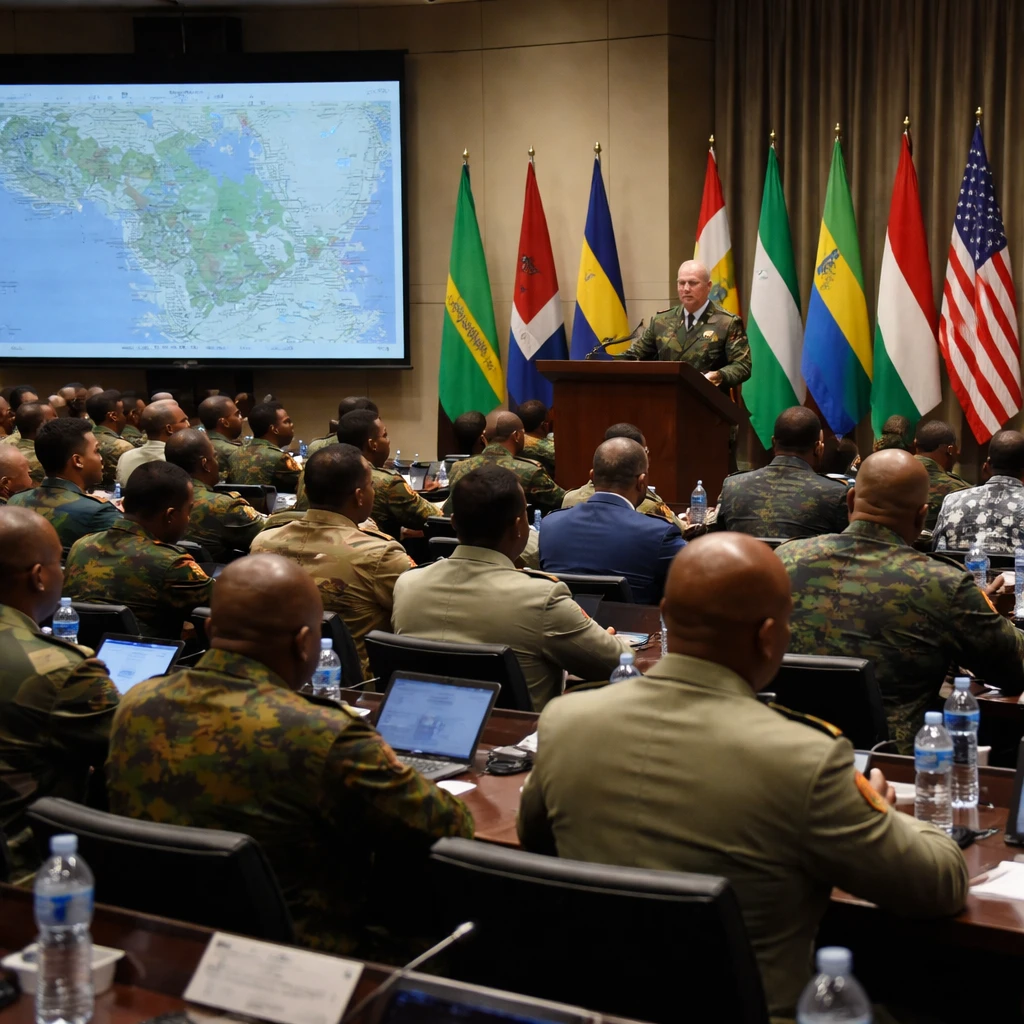
Addressing a gathering of African defence chiefs in Luanda, Angola, AFRICOM Commander General Dagvin Anderson characterized the May mission as an example of how Washington intends to partner with African militaries - supplying specialised capabilities while allowing local forces to lead operations.

"We have withdrawn much of our forces that were just there for that operation, but are continuing the partnership that Nigeria has asked for to help continue with the intelligence sharing," Anderson told journalists during a U.S. State Department-hosted briefing after the conference.

Anderson said the joint operation significantly degraded Islamic State's leadership in the region and disrupted not only local commanders but also wider communications and operational networks tied to the militant group. He noted that the operation's effects were felt beyond West Africa because of ISIS's international network.

Role of Nigerian forces and regional response

According to Anderson, Nigerian forces have remained active since May, taking the lead in pursuing remaining targets. "Nigeria has been very active since that operation in May," he said. "They continue to prosecute targets themselves."

He also reported that Nigerian military pressure, coupled with efforts to publicise the operation, has helped prompt additional defections and surrenders among Islamic State fighters in northeastern Nigeria.

The comments were made at the conclusion of a three-day defence chiefs conference held in Luanda that brought together military leaders from 35 African countries, along with representatives from the United States and Brazil.


Note - The United States has shifted from a forward deployed presence tied to the operation to an intelligence-support role at the invitation of Nigerian authorities, while Nigerian forces continue ground operations in the affected region.

Risks

  • Residual international links of Islamic State could allow the militant group to persist beyond the immediate region, creating ongoing security risks for West Africa - impacts security and defense sectors.
  • Reliance on intelligence sharing in lieu of an extended U.S. deployed presence may limit on-the-ground capability and places operational burden on Nigerian forces - impacts defense and regional stability.
  • Uncertainty remains about the long-term effects of leadership losses on militant operations; while the operation disrupted communications and command, future activity could resurge - impacts security and regional markets sensitive to instability.

More from World

Netanyahu Faces Test as Likud Members Pick Candidates in Contentious Primaries Aug 17, 2026 Iran Demands Access to Qatar After Dispute Over Alleged Captured Pilots Aug 16, 2026 Indonesia’s Deadliest Quakes of the Last Decade, After New 7.7-Magnitude Shock Aug 16, 2026 Romania Downs Drone That Violated Its Airspace, NATO Jet Involved Aug 15, 2026 Quake in Eastern Indonesia Forces Thousands to Flee, Leaves Dozens Dead and Roads Blocked Aug 15, 2026