
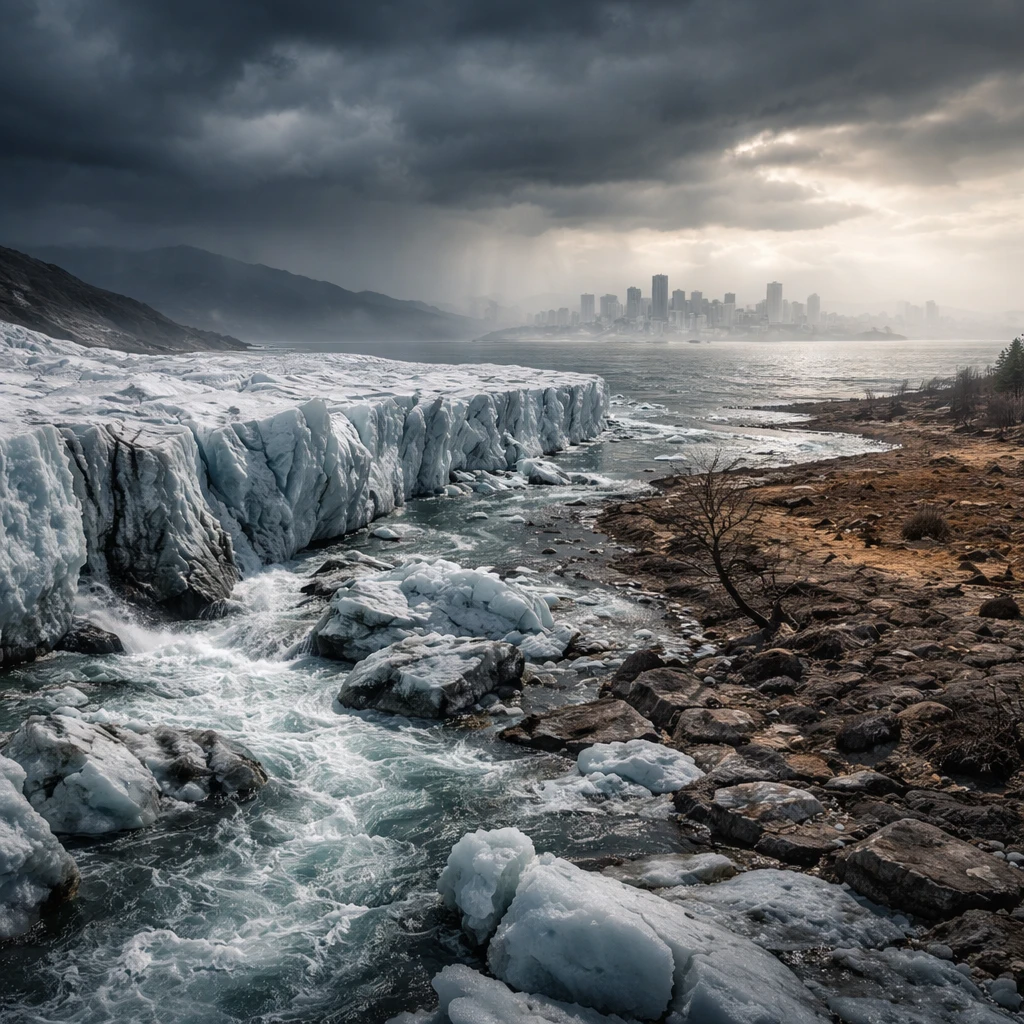
The United Nations Environment Programme has concluded that global temperatures are set to exceed the 1.5 degrees Celsius threshold "within a few years," a development the agency says will drive more severe weather events and place greater strain on ecosystems, mountain glaciers and coastal urban areas.
UNEP emphasized that bringing temperatures back under 1.5C is "possible but highly uncertain." The agency said doing so would demand both fast, significant reductions in greenhouse gas emissions and active interventions to remove carbon dioxide that is already present in the atmosphere.
Key findings highlighted by UNEP:
- Under the 2015 Paris Agreement, governments pledged to keep temperature rises within 1.5C to reduce the harms from extreme weather.
- With an "overshoot" of 1.5C now judged extremely likely, the focus should shift to limiting how long temperatures remain above that threshold, UNEP said in its report.
- UNEP warned that "Every year of delay and every fraction of a degree above 1.5C increases risks and makes recovery harder, with irreversible losses possible even if temperatures later decline."
The report lays out scenario-based projections. In the most optimistic case, where all existing national pledges are implemented, temperature rise would peak at about 1.8C above pre-industrial levels. UNEP noted, however, that the true outcome is likely to be higher than this optimistic scenario.
For the trajectory implied by current policies, the agency said the median projection for global warming by 2100 reaches around 2.6C. UNEP underscored that carbon dioxide removal (CDR) efforts - which include approaches such as afforestation and other measures to draw down CO2 - will be "critical" to controlling temperature increases, but cautioned that such measures cannot substitute for rapid and deep reductions in ongoing emissions.
The agency's message stresses immediacy: delays in cutting emissions increase the likelihood of sustained overshoot and raise the risk of irreversible impacts, even if later mitigation succeeds in lowering temperatures. The report frames both aggressive emissions cuts and scalable carbon removal as necessary components of any pathway that aims to limit long-term warming.