
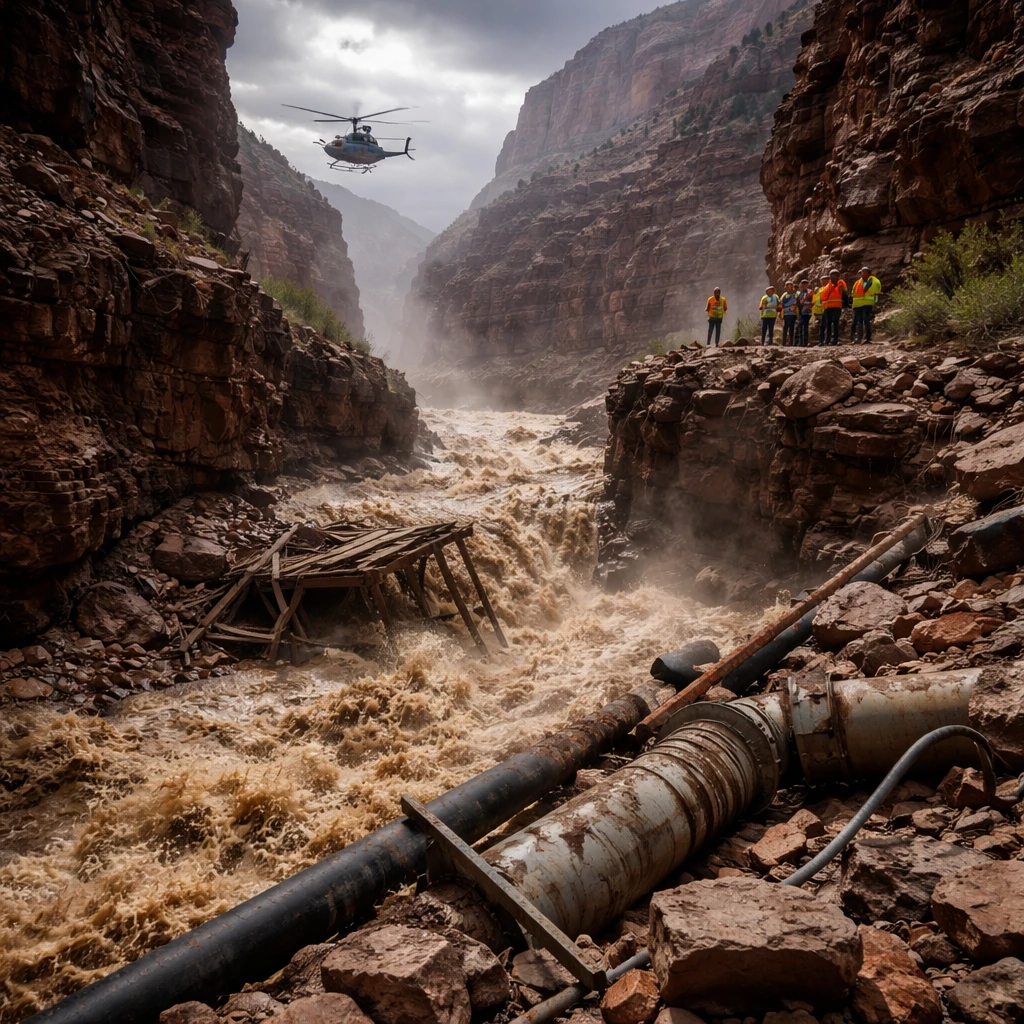
Flash flooding that swept through Grand Canyon National Park over the weekend left trails and footbridges in ruins, damaged infrastructure that supplies water across the park, and contributed to at least two deaths, park officials said.
The National Park Service confirmed on Monday that one body has been recovered following the surge of water that moved through the canyon on Saturday, and that recovery operations were under way for a second body. Park officials had earlier reported on Sunday that the body of a 46-year-old man had been located.
Heavy rainfall on Saturday generated violent flows that destroyed trails and footbridges and inflicted damage on systems that carry water for use throughout the park. The flooding forced emergency evacuations: according to the park service, 62 hikers were airlifted by helicopter and evacuated by Sunday morning.
In a post on X, the National Park Service said "more than 20 individuals" might be missing or unaccounted for and asked the public to provide information about any hikers who may have been in the path of the raging waters. When asked about developments on Monday, the park service confirmed the existence of a second body but did not provide additional details about that victim or an updated count of the missing.
Officials cautioned that additional thunderstorms were forecast early this week. In response to the flooding and ongoing recovery work, the park has implemented stringent water-use restrictions. The South Rim of the park remained open for daytime access on Monday, but overnight lodging and other concessions were closed. Several hiking zones and lodging areas affected by the floods remained fully shuttered as search-and-recovery efforts continued.
The National Park Service asked visitors to stay away from closed areas while crews continue their work. Park authorities have not released further details about the second victim or any change to the number of unaccounted-for individuals.
Local operations inside the park remain constrained by closures and restrictions intended to protect public safety and to enable ongoing emergency response and recovery activity. Officials continue to monitor weather conditions and the status of the park's water infrastructure while coordinating the search-and-recovery effort.