
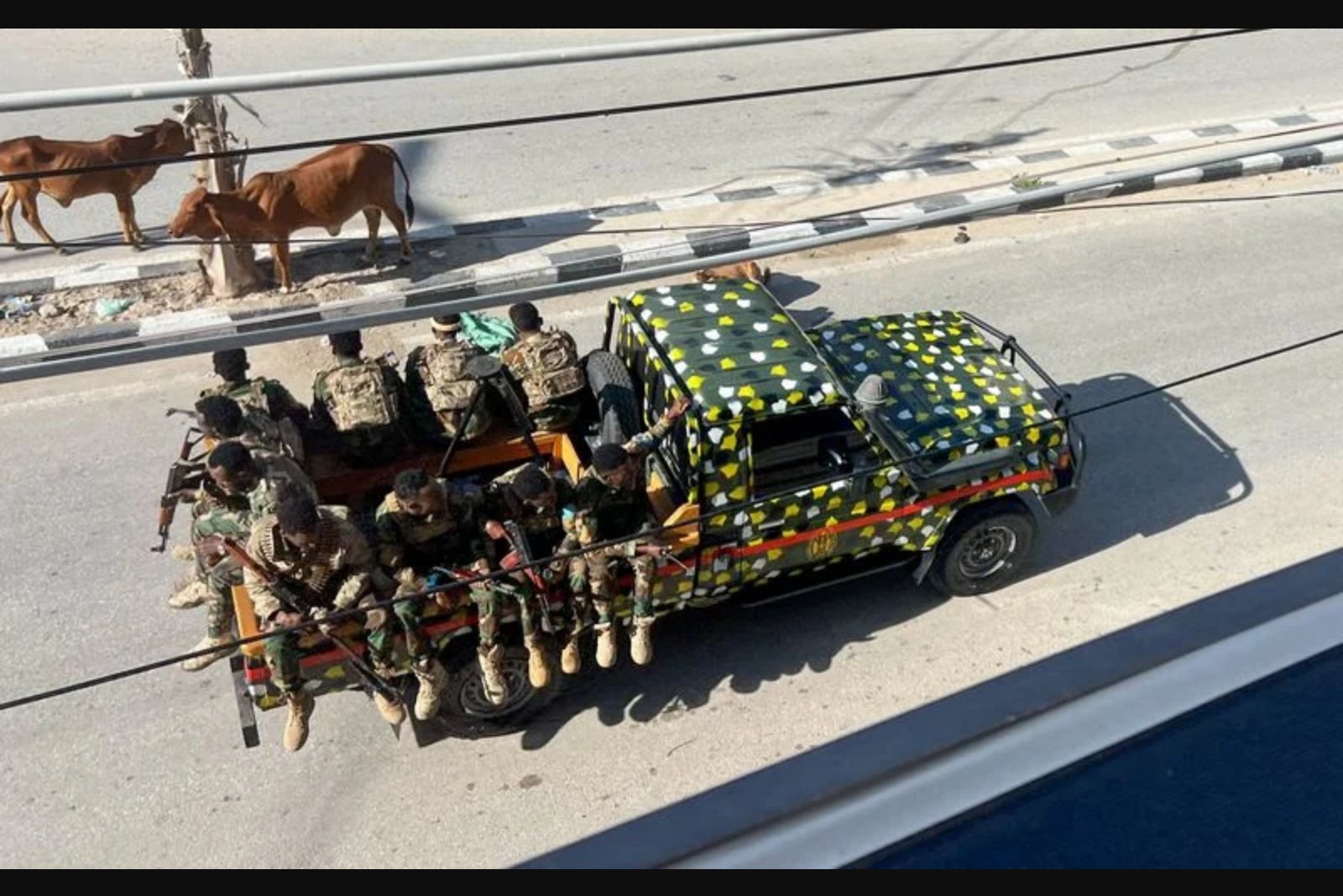
Somali security forces say they have restored order in two districts of the capital following clashes between government troops and militias allied with opposition politicians, according to a statement issued by the information ministry on Friday. The fighting, which forced some civilians to flee, occurred a day earlier and coincided with a build-up to planned protests that did not take place.
The ministry said in its statement that opposition group militias had been disarmed and removed from the affected areas and that civilians had resumed their normal activities. Journalists were unable to reach opposition leaders for comment, and some residents offered a different account, telling reporters that the militias were not formally disarmed but ceased hostilities after mediation involving clan elders.
The disturbances followed political tensions over President Hassan Sheikh Mohamud's decision to remain in office after his term expired last month. Parliament in March approved constitutional changes that could allow the president to extend his term by up to a year and delay an election, a development that had prompted plans for public demonstrations that ultimately did not go ahead.
On Thursday, former president Sharif Sheikh Ahmed, who served from 2009 to 2012, said government forces had struck his home and accused the administration of "illegally altering the constitution." Also on Thursday, former prime minister Hassan Ali Khaire alleged that government troops had employed heavy weaponry, including anti-tank weapons and drones, in the densely populated area. Those claims were not independently verified at the time.
In response, the information ministry on Friday accused Sharif Sheikh Ahmed and Hassan Ali Khaire of putting ordinary civilians at risk by deploying their militias into residential neighborhoods and attacking police officers. The ministry's statement asserted that the security operations had restored stability in the districts affected by the clashes.
Multiple international organizations - including the United Nations, the African Union and an East African regional bloc - had urged parties involved in the violence to seek a resolution through dialogue.
Somalia has experienced prolonged instability and clan-based conflict since the fall of autocratic ruler Mohamed Siad Barre in 1991, and the country is also contending with an insurgency led by the al Qaeda-linked al Shabaab group that has persisted for nearly two decades. The recent flare-up in the capital reflects the ongoing political and security challenges that continue to affect daily life in Mogadishu.