
World July 29, 2026 09:45 AM

Romanian Parliament Clears Laws to Release €3 Billion in EU Recovery Aid

Extraordinary session approves changes to boost revenue collection and temporary fuel measures ahead of an August deadline

By Caleb Monroe
Share
Twitter Reddit Facebook LinkedIn

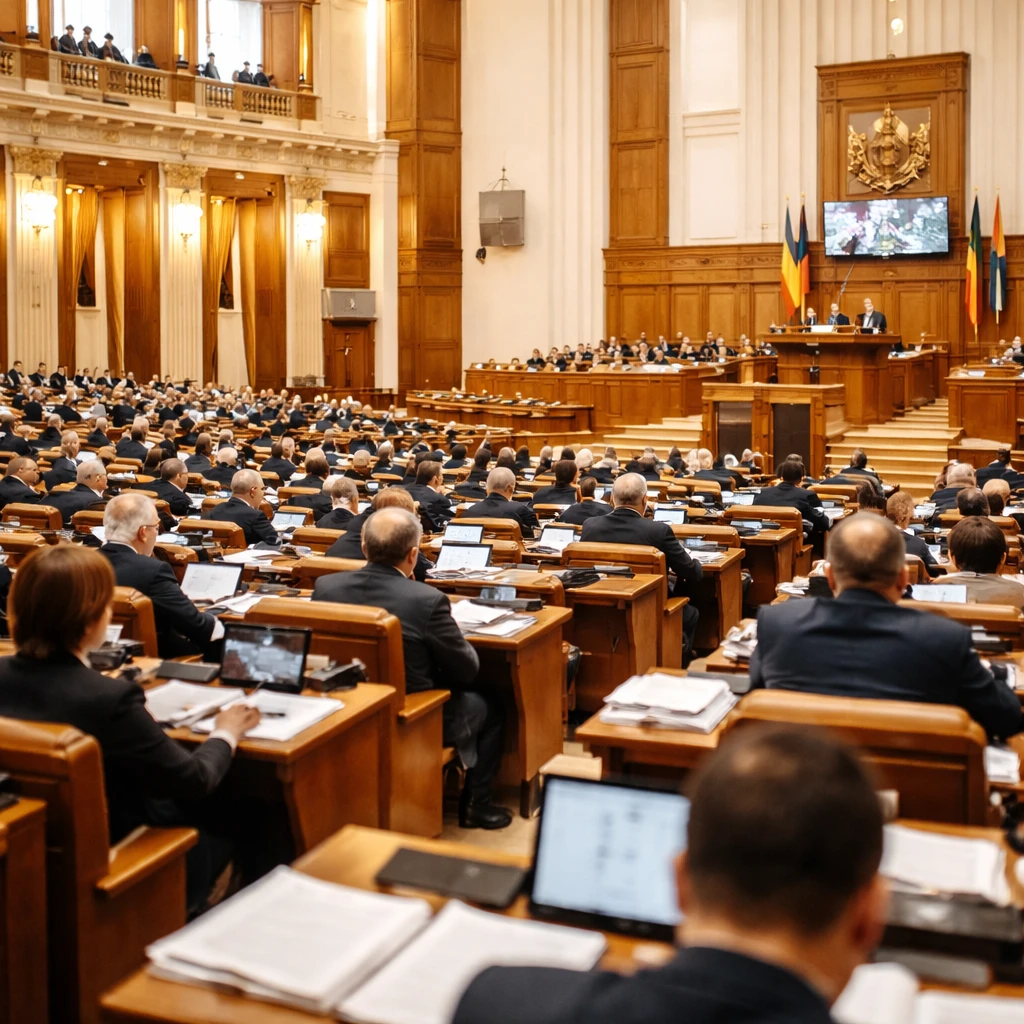
Romania's parliament approved multiple bills during an extraordinary session on Wednesday designed to unlock roughly €3 billion ($3.4 billion) in European Union recovery funds required to help meet this year’s budget deficit target. The measures include administrative code amendments, a performance-based incentive scheme for tax and customs staff, and temporary fuel sector rules that reduce diesel excise, limit exports under specific conditions, and extend a windfall tax on exceptional profits.

Romanian Parliament Clears Laws to Release €3 Billion in EU Recovery Aid
Summarize with
ChatGPT Perplexity Claude Grok Gemini

Key Points

  • Parliament approved measures to unlock about €3 billion ($3.4 billion) in EU recovery funding, aiming to help meet this year’s budget deficit target - impacts public finances and sovereign funding.
  • New laws include administrative code amendments and a performance-based incentive system for tax and customs workers to improve revenue collection - impacts tax administration and public sector payroll structures.
  • A temporary state of crisis for the fuel sector was enacted, cutting diesel excise, limiting exports under certain conditions, and extending a windfall tax on exceptional profits - impacts fuel markets, energy sector profitability, and trade flows.

Romania's legislature moved on Wednesday to pass a set of measures intended to free about €3 billion ($3.4 billion) in EU recovery financing that authorities say is needed to hit this year’s budget deficit objective.

Lawmakers convened an extraordinary session in Bucharest to approve the package before a statutory deadline at the end of August. The session produced several approvals that the government and its backers consider necessary steps for the release of the funds.

Among the measures adopted were amendments to the administrative code and enactment of a law establishing a performance-based incentive system for tax and customs personnel - a change aimed at strengthening revenue collection. The incentive scheme is intended to tie rewards to measurable performance in tax and customs administration.

Some of the bills obtained cross-party backing during the session, with support reported from across the political spectrum, including votes from far-right deputies.

Lawmakers also approved a statute that declares a temporary state of crisis in the fuel sector. That law reduces excise duties on diesel, imposes limits on exports under certain conditions, and prolongs a windfall tax on so-called exceptional profits in the sector.

Parliamentarians and government officials framed the package as necessary to satisfy conditions tied to EU recovery funding disbursements and to shore up public finances for the year.

Despite these approvals, the country remains in a period of political uncertainty. Romania has been unable to install a new government and has experienced months of political deadlock. The passage of the recent measures does not end the broader political impasse.

Officials will still need to secure parliamentary approval for at least two other key reforms by the end of next month to meet remaining conditions. The need to pass further legislation underlines ongoing political and policy risks as the country seeks to secure EU funds and stabilize its budget outlook.

Risks

  • Political deadlock and the failure to form a new government could impede implementation of the approved measures and delay access to EU funds - risk to public finance stability and investor confidence.
  • At least two additional key reforms must be approved by the end of next month; failure to secure these approvals could jeopardize further disbursements of recovery funding - risk to fiscal planning and budget deficit management.
  • Temporary fuel sector measures - including export limits and extended windfall taxation - introduce uncertainty for the energy and transport sectors and for companies exposed to fuel price and tax changes.

More from World

U.N. Rights Office Raises Alarm Over Escalating Settler Violence in West Bank Jul 29, 2026 New Jewish-Arab Party Seeks Young Voters as Arabs Weigh Political Strategy Ahead of October Vote Jul 29, 2026 Top U.S. Central Command Warns Troops That Shared Phone Footage Aids Iranian Targeting Jul 29, 2026 Commercial Sea Drone Records Chinese Destroyer Inside Philippine Exclusive Economic Zone Jul 29, 2026 France and Spain Brace as Fourth Heatwave Fuels Widespread Wildfires Jul 29, 2026