
The recent resumption of combat between Iran and the United States has intensified scrutiny on civilian losses after Iranian officials reported that 18 people were killed and 108 wounded in U.S. strikes on Tuesday night. Iranian emergency services said the attacks included an incident at a wedding ceremony near the coast of the Strait of Hormuz in which four people were killed and dozens injured.
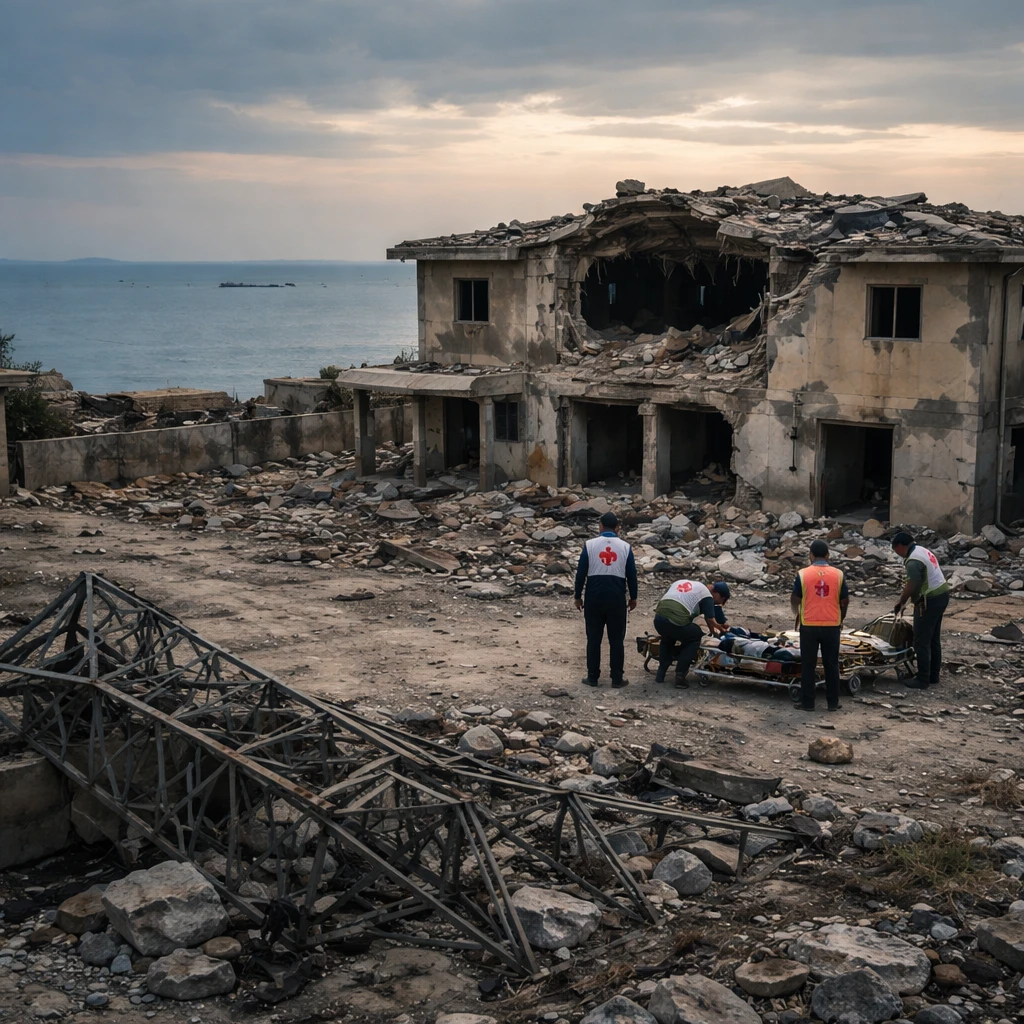
Iran's health minister provided the overall casualty figures for Tuesday night’s strikes, while the Iranian Red Crescent Society gave specific figures for the wedding incident, saying four people were killed and 67 wounded at the ceremony. Video and still images released by the Red Crescent show debris strewn near a building with a large hole in its roof, responders in Red Crescent vests near a damaged structure, and a utility tower collapsed on the ground.
Satellite imagery analysis verified the location and showed the fallen tower lying roughly 136 metres (149 yards) from the damaged building, consistent with the imagery released by the humanitarian agency.
The fighting drew swift regional attention as Iran launched missile and drone strikes it said targeted U.S. assets in Bahrain, Jordan, Kuwait and Iraq. The spike in hostilities marked a return to active exchanges after a generally quieter interval following previous clashes in July, a period during which diplomatic efforts failed to produce progress.
In response to the renewed military activity, United Nations Secretary-General Antonio Guterres expressed deep concern. His spokesperson, Stephane Dujarric, said that the secretary-general was "deeply alarmed by reports of civilian casualties, including a strike that reportedly hit a wedding ceremony in Iran," and called for an immediate cessation of hostilities. Dujarric added that "the Secretary General condemns all attacks against civilians. He recalls that all parties must respect their obligations under international humanitarian law, including the principles of distinction, proportionality, and precaution."
The recent deaths would add to a running tally of fatalities documented earlier in the conflict. An independent Iranian rights group, the Human Rights Activists News Agency (HRANA), had recorded 3,636 people killed in Iran as of April 7, a figure that included 1,701 civilians. Separately, HRANA has put the death toll from domestic unrest late last year and into early this year at more than 7,000, a figure cited by defenders of the U.S. campaign as part of the broader context of civilian harm within Iran. Iranian exile groups contend the number could be higher.
The United States has also reported its own military losses in the conflict, reporting 18 military personnel killed and more than 750 wounded. A U.S. Navy captain serving as a spokesperson for the U.S. military’s Central Command, Tim Hawkins, said in an email: "We are aware of reports, which originated from Iranian state media. The U.S. military never targets civilians, unlike the IRGC."
The wedding incident evoked memories of a larger civilian tragedy earlier in the war: a blast at a girls’ school in Minab that killed 160 people on the first day of hostilities. The Pentagon has not yet released an official determination on that strike. Two sources familiar with the matter have said the Minab strike may have resulted from the use of outdated targeting data. Democratic members of the U.S. Congress have sought the administration's investigative findings on that incident, but a report has not been provided to lawmakers.
Supporters of the U.S. campaign have pointed to Iranian actions that caused large numbers of deaths during attempts to suppress street protests in December and January, which preceded the U.S. and Israeli attacks on February 28. HRANA and other monitoring organizations have provided differing tallies of those fatalities.
U.S. political leaders have described goals for the campaign that include applying pressure on the Iranian government and motivating internal opposition. President Donald Trump has cited an incentive for Iranians to overthrow their government among the rationales for the conflict, in addition to objectives such as halting Iran's nuclear program and ending its support for militant groups abroad, named by U.S. officials as Hamas, Hezbollah and the Houthis.
Iran has remained defiant in the face of both military and economic setbacks and has issued warnings affecting commercial shipping. Iranian authorities threatened oil tankers that transit the Strait of Hormuz without Iran's authorization, prompting a severe curtailment of traffic in the waterway. Prior to the war, that passage carried about 20% of the world’s oil supply. The conflict has contributed to higher fuel costs, and the war remains politically unpopular in the United States even as the president has threatened additional military measures.
International officials and humanitarian groups continue to monitor reports of civilian harm as investigations and assessments proceed. The mixture of military strikes, retaliatory attacks, and the contested accounting of casualties underscore the uncertainties faced by diplomats, militaries, and markets watching developments in the region.
Summary: A recent escalation in fighting between Iran and the United States resulted in reported civilian deaths and injuries, including a wedding blast near the Strait of Hormuz. Iranian officials reported 18 killed and 108 wounded in U.S. strikes; Iran launched missile and drone attacks against U.S. assets in multiple countries. The United Nations called for an immediate end to hostilities, and satellite imagery corroborated damage at the wedding site. Previous incidents, ongoing investigations, and competing casualty tallies add to uncertainty over the human cost and wider regional effects.