
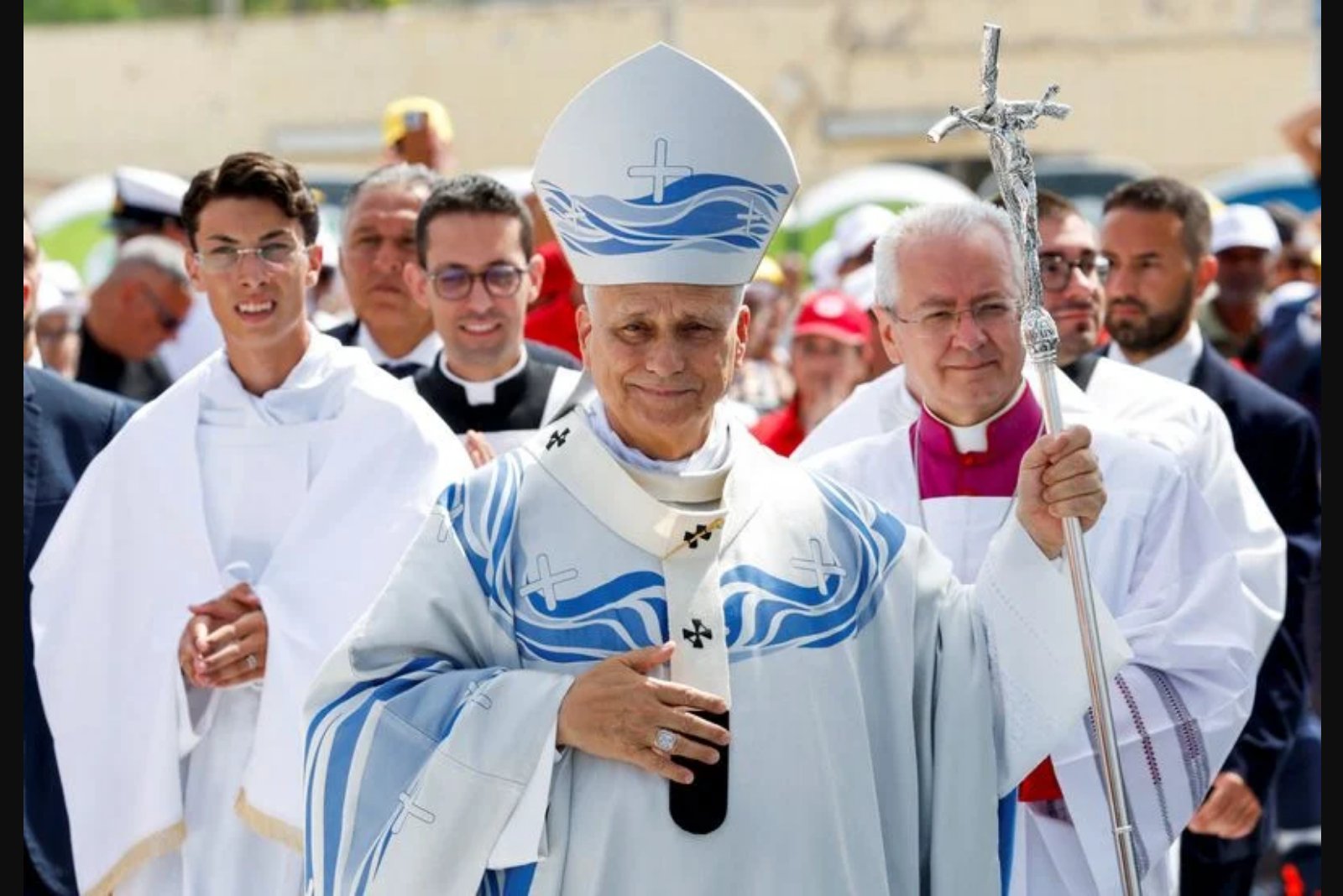
Pope Leo made a sombre pilgrimage to the Italian island of Lampedusa on July 4, using his visit to press European leaders to expand help for migrants who risk perilous Mediterranean crossings. The pope's remarks came as arrivals to the frontline island have exceeded 7,000 so far this year.
Speaking on a day when his native United States observed its 250th anniversary, the first U.S.-born pope urged the international community to become "more human" and to extend assistance to those escaping war and poverty. He said: "Those who have lost their lives in this sea are victims both of decisions that were made and of decisions that were not made."
During a programme timed to coincide with July 4, Vatican officials said the pope deliberately sought to underline his message of support for migrants by visiting Lampedusa, which sits between Tunisia, Malta and Sicily on one of the world's deadliest migration routes.
Arriving shortly before 9 a.m. (0700 GMT), Pope Leo laid flowers at a local cemetery where migrants who perished attempting the Mediterranean crossing are buried. He also walked through the "Door of Europe" art installation on the island's southernmost beach, moving through the structure toward the sea amid strong winds.
Among those gathered near the southern port to see the pontiff were newly arrived migrants, Italian Coast Guard search-and-rescue personnel and workers from aid organisations. The pope told the assembled crowd he had come to demonstrate that he "continues to accompany you, support you and encourage you." He also urged European governments to tackle migration "in a comprehensive manner, integrating immediate relief efforts into a longterm strategic plan capable of receiving, protecting, supporting and integrating migrants."
The visit echoed the symbolism of a prior papal trip to the island, and it underscored the humanitarian strains felt by Lampedusa. A total of 14,464 migrants have arrived in Italy by sea so far this year, according to data provided to the United Nations Refugee Agency, with more than half of those landings occurring on Lampedusa. That number exceeds the island's resident population, which is about 6,000.
Human cost remains acute. The United Nations' International Organization for Migration reports that more than 1,400 people have died or gone missing while attempting Mediterranean crossings this year, including 28 children. Those figures were cited during the pope's visit as part of the broader appeal to European policymakers and the public.
The pontiff's public stance on migrants has been prominent since the start of his papacy in May 2025. In recent weeks he warned that history will judge leaders who mistreat immigrants, and in his first major address to the United States on Friday he praised America's history of welcoming immigrants and urged citizens to uphold the ideals set out in the Declaration of Independence.
Pope Leo's Lampedusa itinerary combined acts of remembrance with public appeals. Alongside the cemetery and the art installation, the pope spoke about improving conditions in migrants' countries of origin so that fewer people feel compelled to leave their homes. He framed the problem as one that requires both immediate compassion at sea and long-term strategic responses on land.
Personal testimony at the event underscored the human dimension of the crisis. Kandeh Abdourahman, who arrived in Lampedusa in 2015 after travelling across five African countries, the Sahara Desert and the Mediterranean, described the pope's visit as recognition that migrants' stories are noticed. Abdourahman, who now works as a cultural mediator with the International Rescue Committee, said it was "a reminder that our stories are seen, that welcome is not just a word but an act of humanity."
Anna Leer, an official with the U.N. Refugee Agency, commented on the political resonance of the pope's presence, saying: "Pope Leo XIV's presence sends a clear message at a time when the global political debate on migration is often framed around borders and deterrence rather than protection and shared responsibility." She added that "every act of witness to the humanity of those who flee violence, persecution and conflict carries moral and political weight."
The visit also recalled recent tensions between the Vatican and political leaders over migration rhetoric. Last year the pope drew the ire of Donald Trump after describing the U.S. president's hardline anti-immigration policies as "inhuman." The Lampedusa trip, timed to the July 4 holiday and to follow the pope's address to the United States, continued to spotlight migration as a central issue of his papacy.
On the ground in Lampedusa, aid groups and coast guard crews continue to respond to arrivals, providing search-and-rescue operations and immediate assistance. The pope's appeal for a coordinated, long-term European response seeks to link that urgent operational work to broader plans for reception, protection and integration. How policymakers and societies respond to that call will shape the island's position on the migration frontline in the months ahead.
Contextual note - The pope's remarks and activities were delivered in the setting described above and reflect positions and figures cited at the time of the visit.