
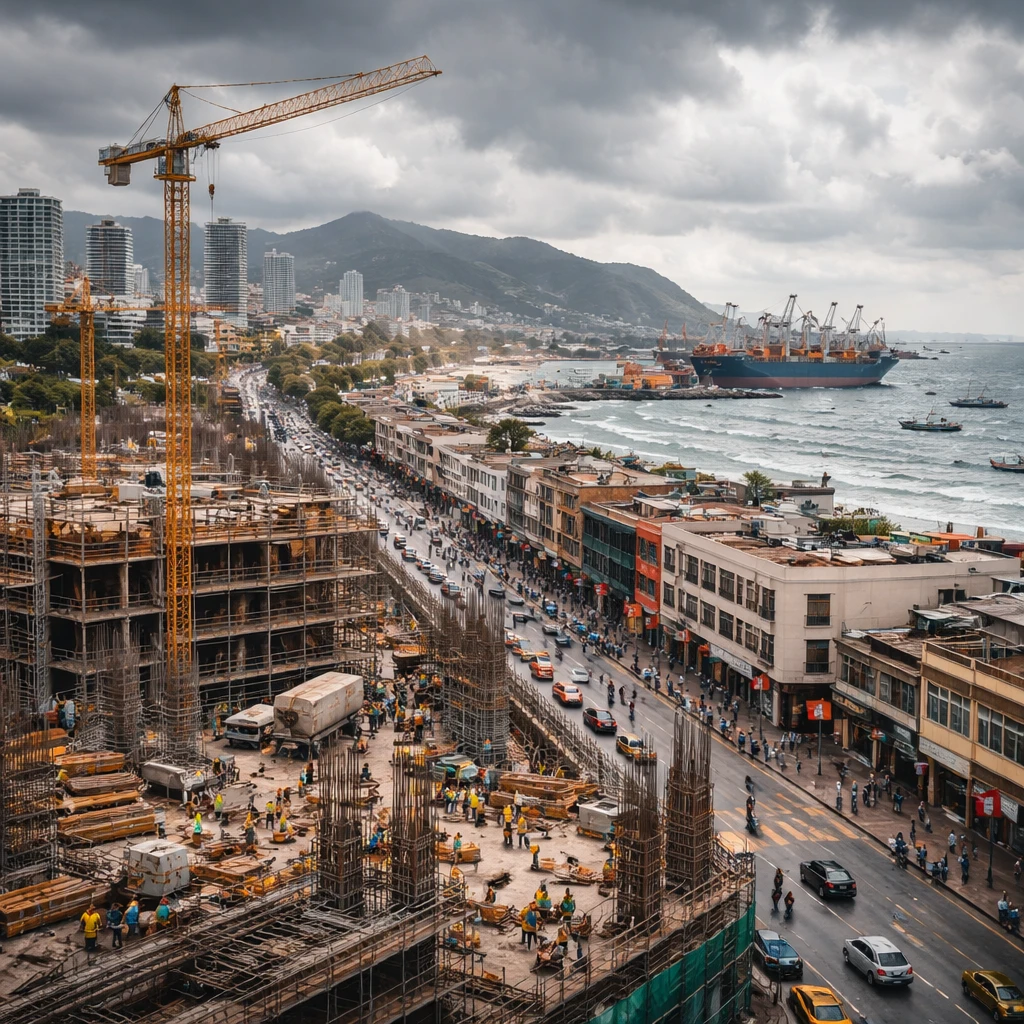
Peru's economy grew 3.1% year-on-year in the third quarter of 2026, up from a 2.8% expansion in the previous quarter and matching economist consensus estimates. The National Institute of Statistics and Informatics (INEI) released the data on Monday, highlighting stronger domestic demand and a sizable increase in capital spending - developments that provide early macroeconomic momentum for President Keiko Fujimori's pro-business administration.
Investment gains underpinned activity
Gross fixed investment rose 10.8% during the three months through September. Private investment was a principal driver, climbing 12.4% across residential, commercial, and civil engineering projects. Nominal investment in the mining sector recorded a robust 32.4% increase over the period. Public investment also contributed, advancing 4.7% on the back of higher capital outlays at the regional and local levels.
Consumption and government spending supported demand
Household spending strengthened, with private final consumption up 3.5%, representing 57.3% of nominal gross domestic product. INEI head Dr. Gaspar Morán Flores attributed the pickup in consumer demand to improvements in employment and labor income. Government consumption rose 3.3%, driven by greater spending on public health, administration, and education.
Sectoral dynamics
Growth was concentrated in domestic-facing industries. Construction output expanded 9.7%, while commerce increased 6.7%. Utilities production rose 7.0%, and business and financial services grew 3.8% and 3.5%, respectively. These sectors collectively helped offset weakness elsewhere in the economy.
Conversely, several primary, export-oriented sectors detracted from headline growth amid severe weather linked to El Niño. Fishing and aquaculture plunged 15.2% on steep declines in marine and inland catches. Extraction of oil, gas, and minerals fell 3.9%, and agriculture edged down 0.1%.
Trade flows and nine-month performance
External trade data showed diverging demand patterns. Imports rose 11.5%, driven by stronger purchases of industrial machinery, vehicles, and diesel, and outpaced export growth of 2.2%. While shipments of natural gas, silver ore, and refined copper recorded gains, reductions in exports of zinc ore, copper ore, and processed coffee moderated overall outbound growth.
Across the first nine months of 2026, Peru's economy expanded 3.2%, a pace consistent with the central bank's full-year projection but slightly below the government's 3.4% annual target. Market participants are watching whether ongoing private capital inflows and deregulation measures from the Fujimori administration will be sufficient to counteract the headwinds facing primary-sector exporters through the fourth quarter.
Data published by INEI show a clear split between domestic demand-led expansion and weather-related setbacks in resource-intensive activities, leaving the near-term trajectory dependent on investment momentum and external sector developments.