
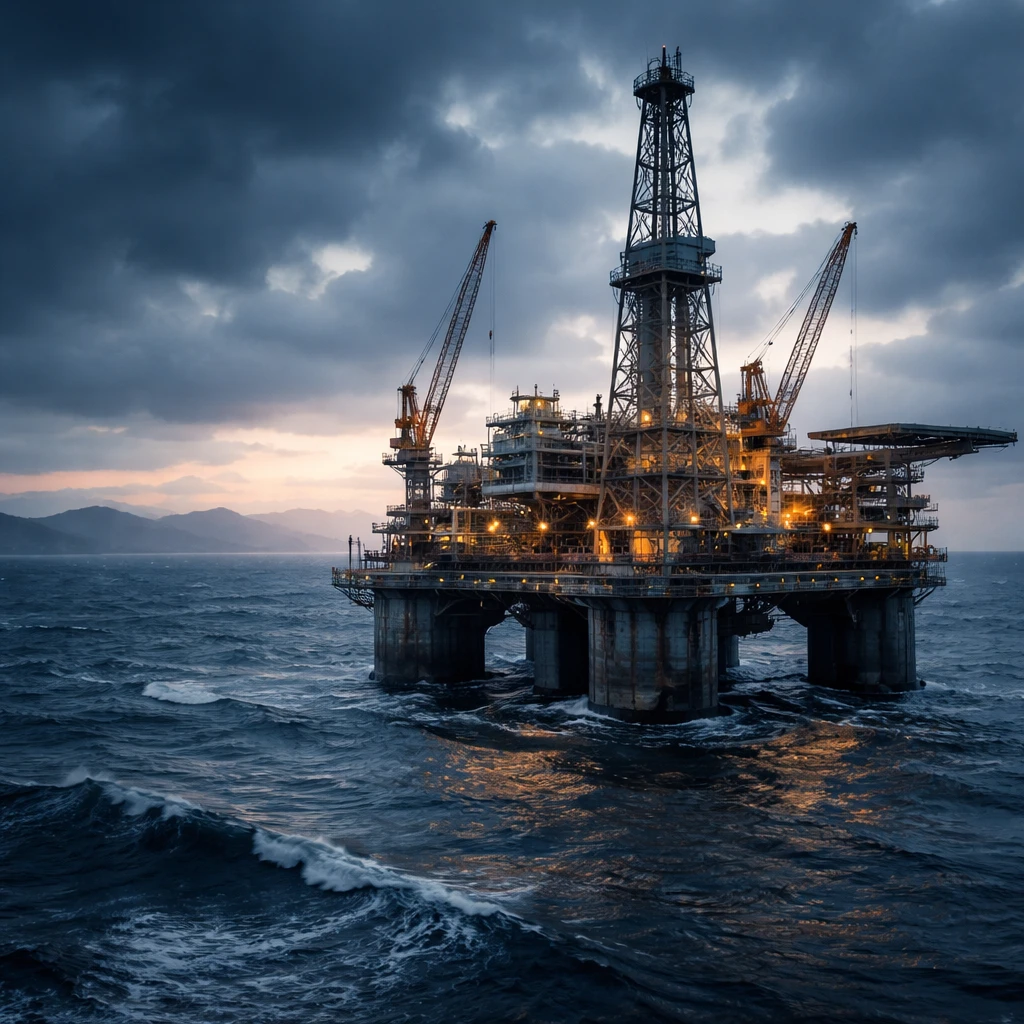
Argentine President Javier Milei said he will move to penalize oil companies undertaking exploration and drilling around the Falkland Islands - the remote South Atlantic territory Britain administers but which Argentina claims as Las Malvinas. The declaration, delivered during a televised national address, signals a tougher posture from Buenos Aires and could increase diplomatic strain with London.
Milei framed the prospect of exploration by two companies in waters adjacent to the islands as an urgent affront to Argentine national interests. He noted the historical sensitivity of the issue, occurring 44 years after Argentina's 1982 military attempt to recover the islands from British control.
In the address, Milei said he would forward to Congress a bill designed to strengthen Argentina's legal response to what he described as violations of its sovereignty. The proposed legislation, described by Milei as an urgent "national sovereignty defence" bill, would raise penalties for unauthorized activity in the maritime zone, extend sanctions to suppliers, and broaden the legal framework to cover other activities that affect Argentina's natural resources.
British response and political context
Britain, which has administered the Falkland Islands since 1833, says the islanders themselves should determine their political future. British defence minister Wes Streeting responded on Friday, saying the islanders had chosen to identify as British and criticizing Milei's remarks as driven more by domestic politics than by issues relating to the islands. Streeting's statement was posted on X and reiterated London's stated commitment to the territory as "absolute and unshakeable."
Milei has in the past favored diplomacy as the preferred path for pursuing Argentina's claim to the islands. Observers in Buenos Aires and abroad said the president's firmer tone may reflect political calculations at home and the fact that his ally in the United States, Donald Trump, has recently raised questions about Washington's long-standing neutrality on the issue.
Trump told GB News earlier in the week that he was reassessing whether the United States should remain neutral and expressed uncertainty about Britain's willingness or capacity to defend the islands again. "I just don’t know if you (Britain) have the capacity to do that," he said. Trump added that the United Kingdom "is not the same country it was 20 years ago, 25 years ago."
Energy project at the center of the dispute
Milei singled out the Sea Lion hydrocarbon project - located roughly 140 miles north of the Falkland Islands - as a focal point for Argentina's objections. Sea Lion is operated by Tel Aviv-listed Navitas Petroleum and counts London-listed Rockhopper Exploration among its shareholders with a 35% stake. Milei said the government would intensify efforts to levy penalties not only against the operating companies but against the shareholders, directors and suppliers associated with any unauthorized operations.
Rockhopper has indicated the Sea Lion project holds a substantial resource base, estimating about 1.7 billion barrels of oil. The company has noted that this volume would be sufficient to meet global oil demand for approximately 17 days. Rockhopper's shares reacted negatively to the heightened tensions, trading about 8% lower on Friday morning.
Development work on Sea Lion could begin in the coming months, according to public statements from the firms involved. Both companies did not immediately reply to requests for comment following Milei's televised address.
Broader diplomatic and defence implications
Milei's announcement comes after reports that a potential shift in the U.S. position on the Falklands was discussed among Pentagon options earlier in the year as part of pressure tactics against NATO allies over support for U.S. military actions in the war with Iran. Those internal deliberations were cited as part of the context for Trump's remarks.
While the immediate impact centers on legal and commercial measures directed at firms linked to Sea Lion, the announcement also raises questions about bilateral relations and regional stability. Milei's move to submit legislation to Congress signals a willingness to translate political rhetoric into concrete policy aimed at sanctioning and legally constraining companies and individuals involved in activities Argentina regards as infringing its sovereign rights.
For now, details on how proposed penalties would be implemented, and which specific entities beyond the operating companies might be targeted, remain matters for the legislative process and future executive action in Argentina.