
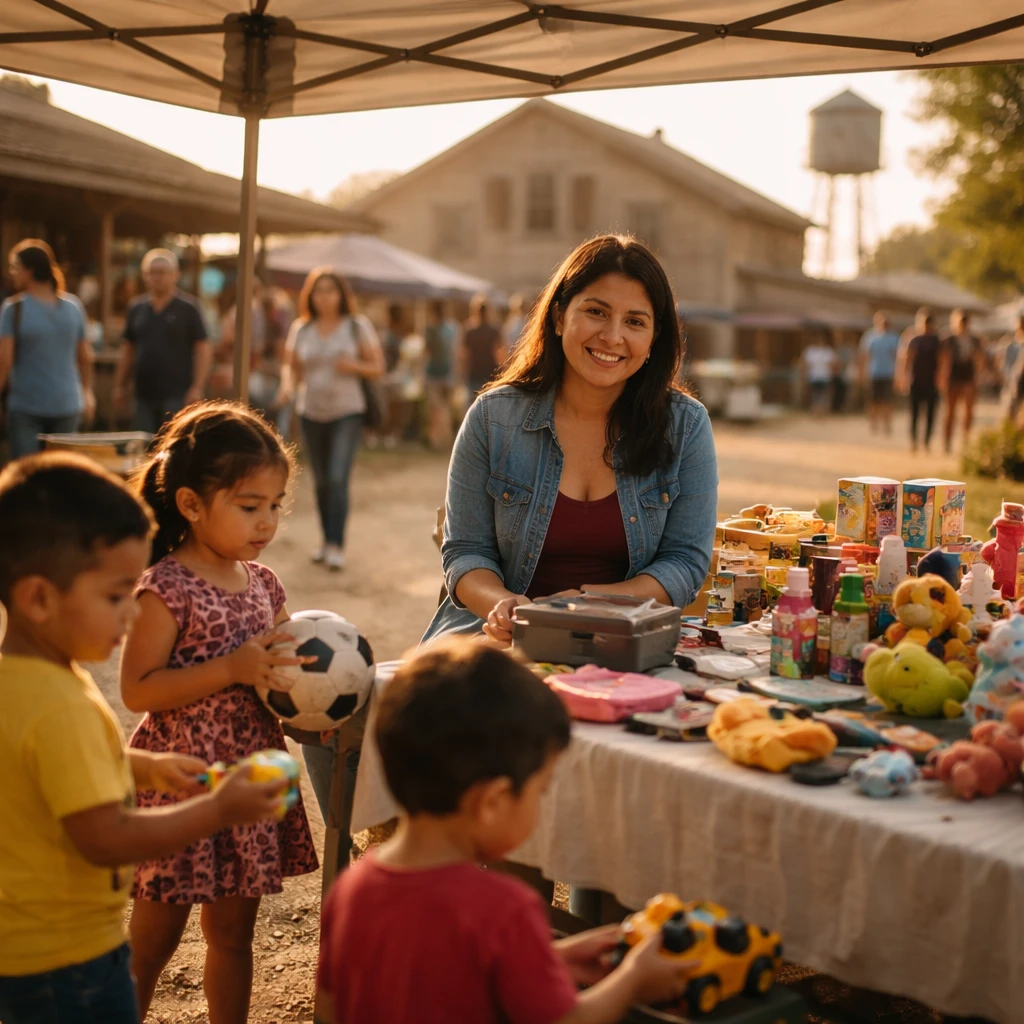
BEEVILLE, Texas, Sept 4 - On a stifling summer afternoon in South Texas, Valencia Macias spread small plastic toys and a few household items across a table in an outdoor market, selling impulse buys to raise money for gas, groceries and student loans.
The 26-year-old, a medical assistant who attends nursing classes in the evenings and cares for three young children, had little interest in politics until state officials pulled funding for the only after-school program available in the nearby rural town of George West. The loss of that service made the political personal.
Then a TikTok clip changed her browsing into political engagement. The video featured Gina Hinojosa, a Mexican American state representative, speaking about the rising costs of living and urgent needs for investment in Texas public schools. Macias stopped scrolling. She said she identified with Hinojosa as a mother and a woman who looks like her and decided: "100%, she has my vote."
Hinojosa is mounting a bid to end a Democratic drought in statewide offices that has persisted since 1994. Her campaign centers on persuading Latino voters that everyday economic pressures and underfunded schools matter more than the cultural and immigration themes that have swayed many Hispanic voters toward Republicans in recent cycles. To reach those voters, her team emphasizes pocketbook issues and delivers the message in Spanish.
"We are as Texan and American as anyone," Hinojosa said in an interview in Austin. "Latinos are feeling the economic strain just like families all across this country and in Texas in a big way."
The effort is in part a test of whether a focus on housing costs, school funding and household expenses can recover Democratic ground among Hispanic voters and translate that into a competitive statewide campaign. It is also a trial against the political apparatus Governor Greg Abbott has built during his 12 years in office.
Abbott enters the contest with substantial advantages. He has national name recognition, an endorsement from President Donald Trump, and a broad support network that extends beyond Texas. Fundraising figures released in campaign finance reports show he raised roughly $25.5 million between February and July, while Hinojosa raised about $6 million in the same period. Abbott also holds a sizable cash-on-hand lead - $67.2 million to Hinojosa's $3 million - giving him resources to sustain a statewide campaign.
Abbott has long worked to cultivate ties in South Texas, frequently visiting heavily Latino border communities and establishing an extensive field operation in the Rio Grande Valley. Border security has been a focal point of his outreach, and Republican gains among Hispanic voters followed a sustained effort to compete on issues including immigration, public safety and the economy.
Hinojosa is betting that a decline in support for Trump and his party in some Hispanic communities will create an opening for her campaign. State-level polls have kept her within reach of Abbott for much of the year.
Still, the incumbent remains the favorite in this Republican-leaning state. Abbott has adopted a traditional Republican playbook in the contest, portraying Hinojosa as at odds with his law-and-order priorities while devoting time and resources to winning votes across communities.
"Governor Abbott is not taking the support of any voter - including Latino voters - for granted, which is why he is investing significant time and resources to earn votes in every community," Abbott's campaign press secretary Eduardo Leal said in a statement.
Recent public-opinion data indicate that Latino voters may tilt toward Hinojosa. An August 2026 Emerson College Polling/Nexstar survey found Hispanic voters favored Hinojosa over Abbott by 17 percentage points and reported that 57% disapproved of Abbott's job performance. That statewide poll, which surveyed 1,000 likely voters, showed Abbott leading Hinojosa 49% to 45% overall, with a margin of error of 3 percentage points.
To shore up his standing on cost-of-living concerns, Abbott unveiled an "affordability agenda" that includes property tax cuts, housing reforms, lower electricity costs, expanded low-cost health insurance, a $25-a-month cap on certain prescription drugs, and other measures his campaign says would help Texans cope with rising expenses.
Leal framed Abbott's outreach as aligned with issues Latinos prioritize. "Latino voters care about the same issues that are important to all Texans - overhauling the property tax system, securing the border, putting dangerous criminals behind bars, and keeping Texas affordable," he said.
The campaign trail has produced voters who are open to changing their past preferences. Samuel Aguero, 28, a Navy veteran who voted for Donald Trump in 2024, said education is his top issue as a single father of two daughters. He told reporters that Beeville's public schools need greater state resources and that if Hinojosa provides clear plans to improve them, he might support her. "We have to have higher standards in school," he said. "Teachers should be paid a lot more, like, a heck of a lot more."
Hinojosa may be benefiting from electoral conditions that eluded some earlier statewide Democratic hopefuls, such as Beto O'Rourke. Demographic shifts have long encouraged Democrats' belief that a growing Hispanic electorate could change statewide outcomes.
Texas now has about 6.5 million Latino eligible voters, roughly 1 million more than in the years leading up to Abbott's last reelection campaign. How many of those eligible voters actually cast ballots will be critical for Hinojosa's chances. Nearly 4.5 million Texans voted in the Democratic and Republican primary elections in March, setting a recent midterm record. That turnout was driven in part by highly watched Senate primary battles involving Attorney General Ken Paxton and State Representative James Talarico, and it could signal momentum for Democrats in a state where turnout has historically trailed the national average.
But not all Latino voters are moving toward Democrats. At a monthly outdoor market in Beeville, Dawn Barraza, a 54-year-old eighth-grade teacher from Victoria, said her family manages financially, yet she senses frustration among Latinos in South Texas that Republicans are not adequately representing their concerns. "They need to be standing up for our people here; it's high time everybody realizes that we're not going anywhere," Barraza said.
This race will test whether economic anxieties and education concerns can outweigh the incumbent's advantages in name recognition, fundraising and organizational reach. The dynamics in South Texas, where the contest is being actively contested by both campaigns, will likely serve as an early indicator of whether Democrats can close a decades-long gap in statewide offices.