
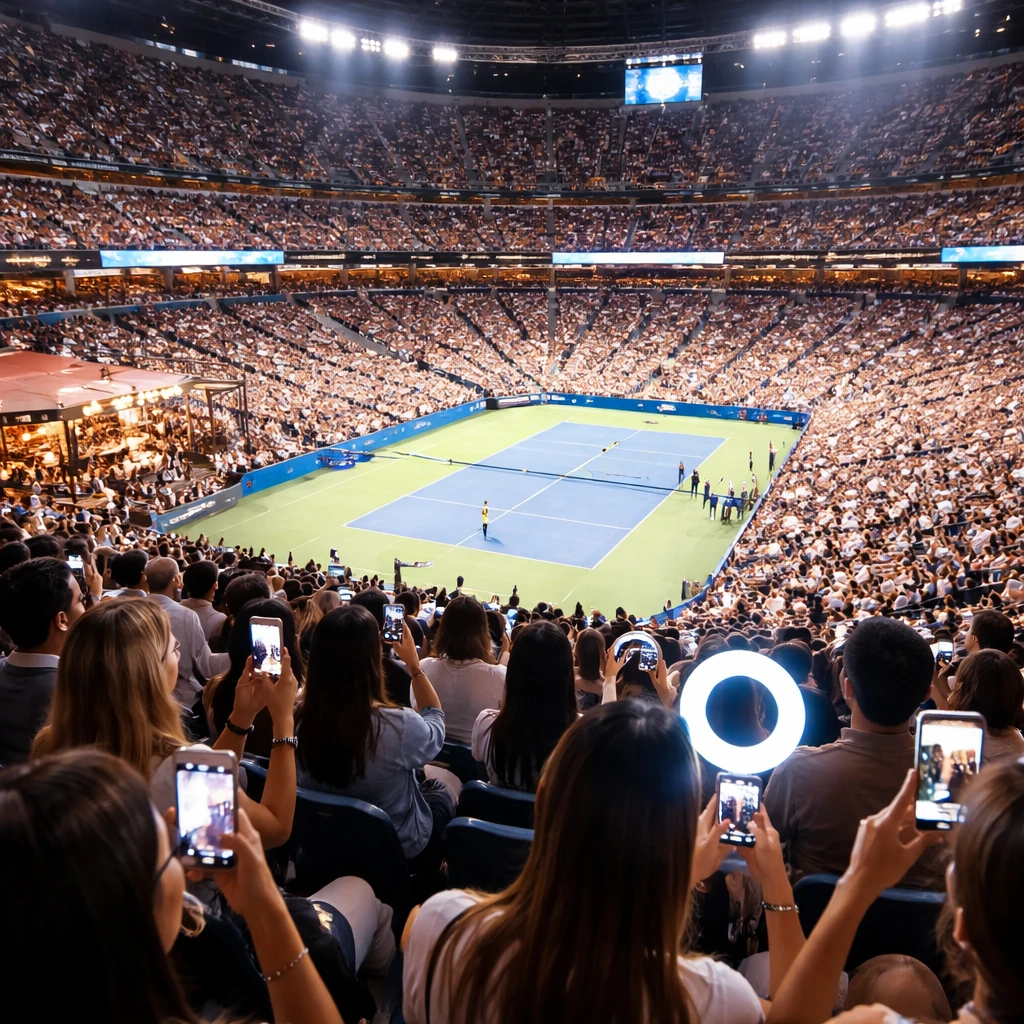
NEW YORK - The presence of influencers and content creators at this year’s U.S. Open has moved from background color to foreground spectacle, prompting debate about appropriate behavior in tennis venues and how the sport should manage an evolving audience.
Organizers said roughly 100 content creators received credentials for the tournament, including about 20 individuals assigned exclusively to document food and beverage offerings. Those culinary-focused creators have highlighted eye-catching items such as caviar-topped chicken nuggets and the famed "Honey Deuce" cocktail, which can draw social-media attention as quickly as a dramatic rally.
Beyond credentialed accounts, thousands more amateur social media seekers are present throughout the plaza and in the stands, having purchased their own tickets to the event. The influx of camera-toting spectators has coincided with the U.S. Open’s growing size and profile.
Players and officials voice concern
Some players and officials say the increased focus on content creation has created friction with the traditional expectation of quiet, focused viewing during points. The 2017 finalist Madison Keys said: 'I feel like every slam kind of has their own identity and the U.S. Open has kind of always been the 'big-show Grand Slam'.'
Incidents this tournament have underscored those tensions. A chair umpire reprimanded a group of patrons for staging what was characterized as a disruptive photo shoot while Naomi Osaka was serving in her first-round win against Anastasia Zakharova on Monday. Osaka addressed the issue after advancing with a second-round victory over Katerina Siniakova on Thursday, saying: 'Obviously if you come to a sporting event, you have to respect the sport. It could be a good thing for people to make the sport of tennis popular to their specific audience, but I think it has to be managed a lot better, especially in the situation like first-round match.'
Another social media user drew criticism after posting a series of photos taken inside Arthur Ashe Stadium while Madison Keys was in the middle of playing a point against Alina Korneeva, an action that breached what many consider basic tennis etiquette.
2024 runner-up Jessica Pegula acknowledged the U.S. Open’s appeal to creators: 'I can appreciate the influencers coming and kind of showcasing the U.S. Open experience,' she said. She added a caution: 'But I do think that it’s tough when you see videos like that when they’re taking pictures and using the selfie lights. People are down there trying to perform, and it’s their career and their job. It seems like a bit disrespectful. I think it’s gotten a little maybe too much.'
Organizational changes and broader context
Officials have expanded the tournament in recent seasons to meet rising demand. Main-draw action now spans 15 days, and mixed doubles has been scheduled as a standalone event the week before singles competition begins. These changes reflect the event’s increased attendance and the desire to create more content and viewing opportunities.
The men’s ATP tour expanded its partnership with TikTok earlier this year, citing a more than 25% increase in posts under #tennis during 2025. Players offered mixed assessments of such exposure. 2021 champion Daniil Medvedev said: 'The more we try to raise awareness about tennis, the better it is, the more popular the sport is. For sure, if it disturbs during the play, like if you see the light or something, well, you always say to the referee, can be sometimes challenging, like if during the point this happens.'
Looking ahead
The U.S. Open’s blend of high attendance, commercial activation and social-media visibility has widened the event’s audience while creating new pressure points around matchday conduct. Players, officials and organizers face the task of reconciling promotional opportunities with the need to protect on-court focus and preserve established etiquette, particularly during early-round matches when disruption has been most visible.