
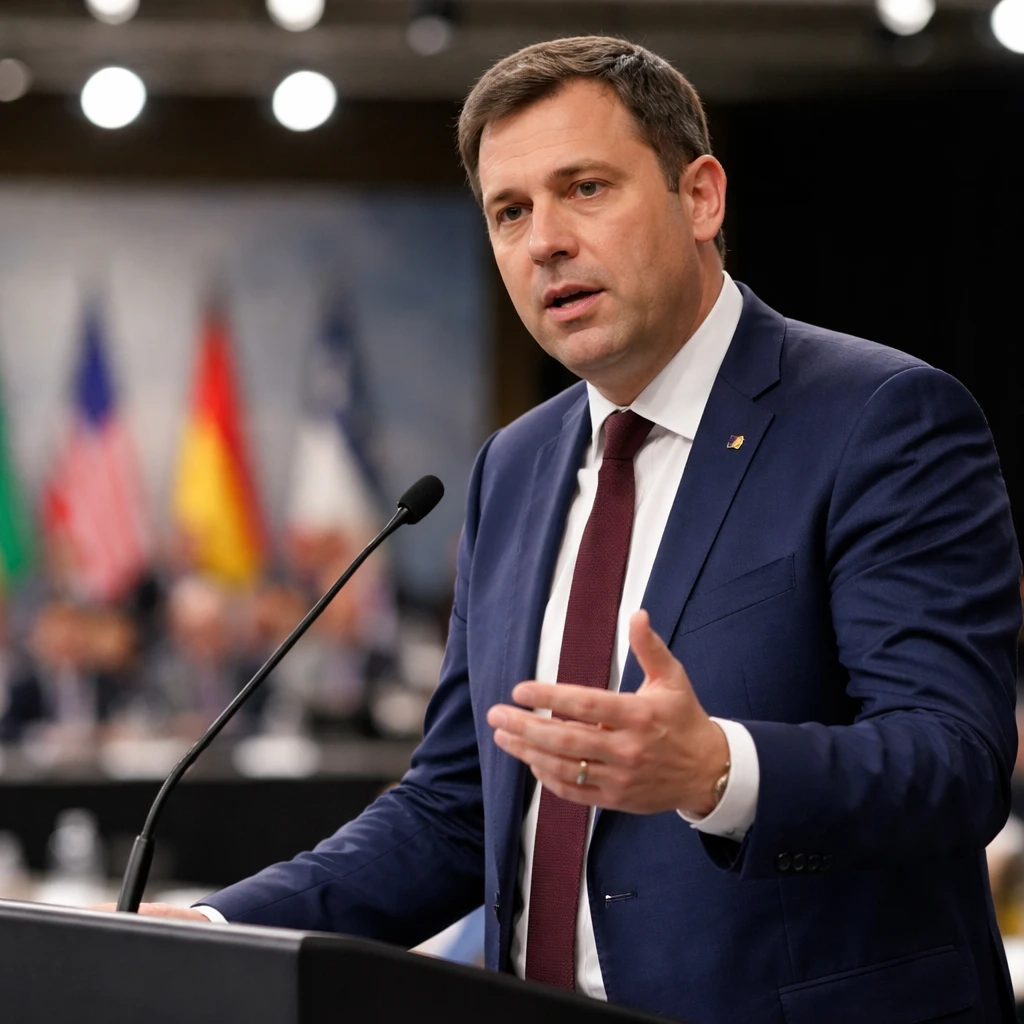
At the G20 meeting of finance ministers and central bank governors in Asheville, North Carolina, German Finance Minister Lars Klingbeil delivered a pointed appeal that uncertainty is a drag on global growth and called on G20 members to address the underlying geopolitical drivers.
Klingbeil identified several specific sources of instability he said are weighing on the world economy: the war in Iran, tariff disputes with the United States, and competition distortions emanating from China. He framed these challenges as broader threats to prosperity and called for greater stability and predictability among major economies.
"The world suffers under these conflicts, and they reduce prosperity everywhere," Klingbeil said, urging partners to prioritize reliability in international economic relations. He argued that reducing geopolitical uncertainty should be a collective task for all members of the G20.
Emphasizing principles as much as policy, the finance minister said Germany stands behind a system governed by law rather than by the power of the strongest actors. He affirmed that his country supports an international rules-based order, international law, and multilateralism as guiding frameworks for global cooperation.
At the same time, Klingbeil cautioned against passivity when others fail to comply with agreed rules. "When others do not follow the rules, we must not be naive and simply stand by," he said, adding that defensive measures are necessary to shield national economic interests.
He made clear what those defensive priorities entail: "We must protect our domestic industry, our economy, and our jobs." That formulation linked the call for a rules-based order directly to tangible domestic objectives such as industrial protection and employment.
The current G20 meeting of finance ministers and central bank governors is being hosted by the United States in Asheville. Klingbeil's remarks framed Germany's position as both principled - defending international law and multilateral cooperation - and pragmatic - prepared to safeguard domestic economic interests where rules are not observed.
Key takeaways
- Germany urged G20 members to reduce geopolitical uncertainty to support economic growth.
- Specific instability sources named were the war in Iran, U.S. tariff disputes, and China-related competition distortions.
- Germany reaffirmed support for a rules-based international order while stressing the need to protect domestic industry, the economy and jobs.