
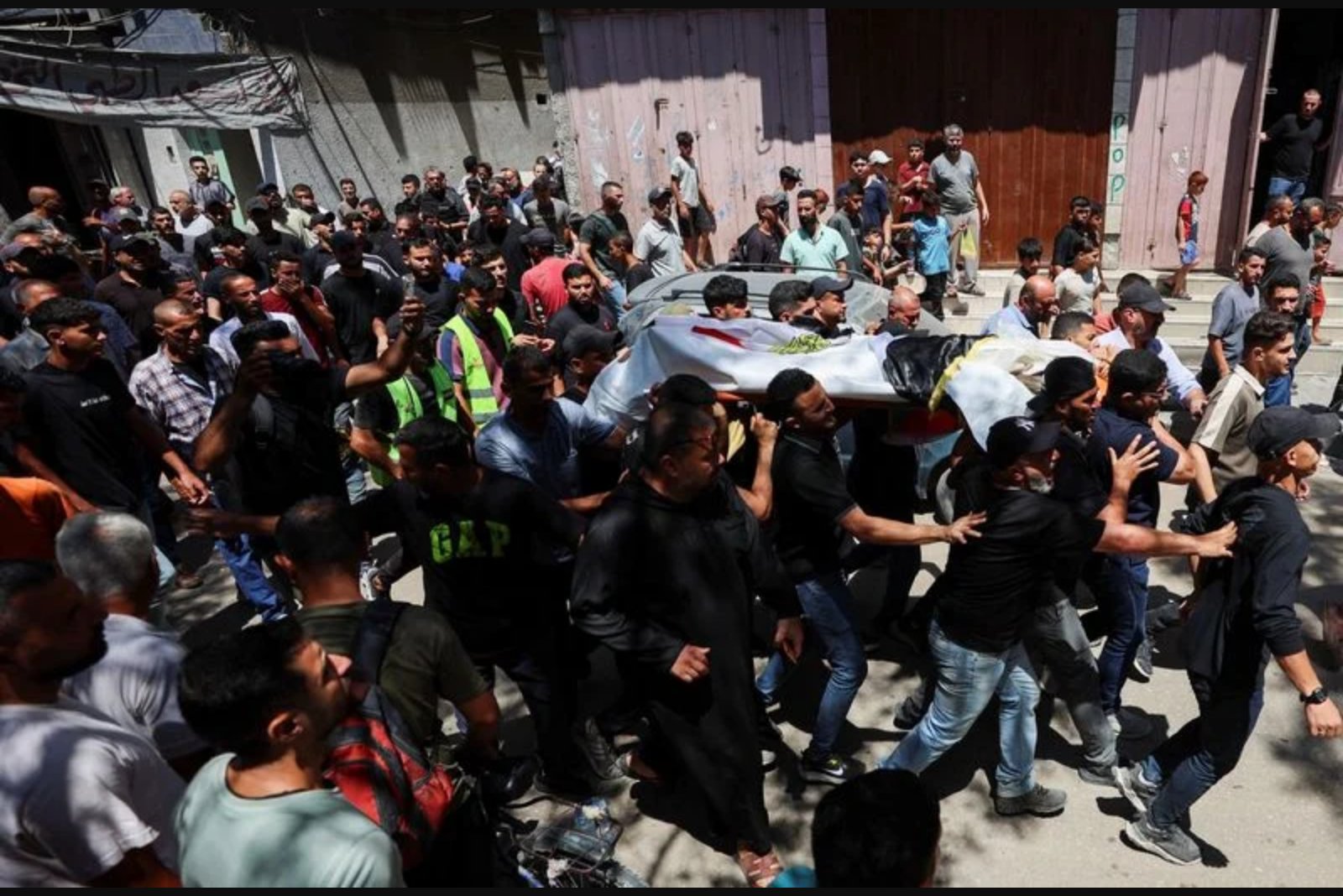
Hundreds of people in Gaza turned out to mourn a humanitarian worker who had brought World Cup screenings to displaced residents and neighborhood crowds, after he was killed in an Israeli air strike while riding in a taxi this week.
Mohammad al-Waheidi, identified as a senior Palestinian member of Egypt's principal aid organisation in the Gaza Strip, died when the taxi was struck in the Sabra area of Gaza City on the eve of the Egypt-Argentina match on Tuesday. Medics reported that three other people in the vehicle were killed, including two young siblings, aged 10 and 8.
Al-Waheidi had organised large public viewings of World Cup games on giant screens that drew thousands of football fans in the densely populated and war-damaged enclave. Those screenings provided moments of relief and joy to many civilians living amid prolonged conflict and displacement.
"My father worked hard to bring some entertainment to the people, to the displaced, to us and everyone who suffers in Gaza, he tried to bring them the matches close to their tents and wrecked shelters," his son Fawaz said by phone.
The Israeli military, when asked about the strike, said it had targeted a Hamas militant and acknowledged receiving claims that uninvolved civilians had been killed. The military did not respond to a request to identify the alleged militant.
The Palestinian Centre for Human Rights named the fourth person killed in the strike as 30-year-old Ahmed Jehad Rajab Doghmosh, who was also inside the vehicle. It was not clear from available information whether he was driving the taxi or was another passenger. No Palestinian militant group has publicly claimed the individuals killed that day as members.
Two Egyptian security sources said that al-Waheidi had responsibilities for logistics at the aid agency, which acts as the relief arm of the Egyptian government in Gaza. Those sources said a senior Egyptian official raised the matter of al-Waheidi's death with Israeli counterparts, voicing opposition to what they described as a policy of targeted killings and to any interference with the committee's work.
On Wednesday, al-Waheidi's body was draped in Palestinian and Egyptian flags during a funeral where hundreds rallied before burial. Neighbours and friends visited his home throughout the day to pay their respects. Fawaz described his father's job as exhausting but said al-Waheidi was motivated by a desire to help people displaced by the fighting.
Nearly the entire population of Gaza - around 2 million people - now live in a narrow coastal strip, most having been displaced multiple times. The majority shelter in makeshift tents or damaged structures under Hamas control.
Palestinians commonly view Egypt as the principal Arab state advocating their political aspirations. Egypt has been involved in brokering ceasefire agreements over recent decades and helped negotiate the pause in major fighting reached in October of last year, in coordination with other actors named by negotiators. That ceasefire halted large-scale combat but has not prevented continuing Israeli strikes that, according to available reports, have killed more than 1,000 Palestinians since it took effect. Separately, militants in Gaza have since killed four Israeli soldiers.
Hamas's chief negotiator, Khalil Al-Hayya, leading a delegation from the group, arrived in Cairo on Thursday to continue ceasefire negotiations. Israel and Hamas remain at an impasse in indirect talks over carrying out the second phase of a ceasefire agreement, which includes provisions on the group's disarmament and the withdrawal of Israeli forces.
The killing of a relief worker active in delivering aid and organising community events highlights the fraught operating environment for humanitarian staff in Gaza, and the tensions such incidents can generate between Egypt and Israel as diplomatic contacts continue over the terms and implementation of the ceasefire arrangements.