
Overview
Over the past weeks, multiple unmanned aerial vehicles launched by Ukraine have wandered into the airspace of Lithuania, Latvia and Estonia, generating confusion on NATO’s eastern flank and intensifying tensions with Russia. The incursions have occurred in the context of Ukraine’s campaign to strike Russian Baltic ports that handle nearly 40% of Russian oil and gas exports, using explosive drones as part of its effort to press advantages four years after Russia’s full-scale invasion.
What has happened
Authorities in Kyiv and the affected Baltic capitals have in many instances identified the drones as Ukrainian, while attributing their deviation to electronic countermeasures - jamming or spoofing - allegedly employed by Russia. Such systems, used by both sides in the conflict, interfere with the navigation of drones and missiles. Baltic governments and Ukraine say Russia is responsible for forcing drones off course; Moscow has suggested the Baltic states are complicit by allowing Ukrainian drones to use their airspace to reach Russian targets, an accusation the Baltic states and Kyiv deny.
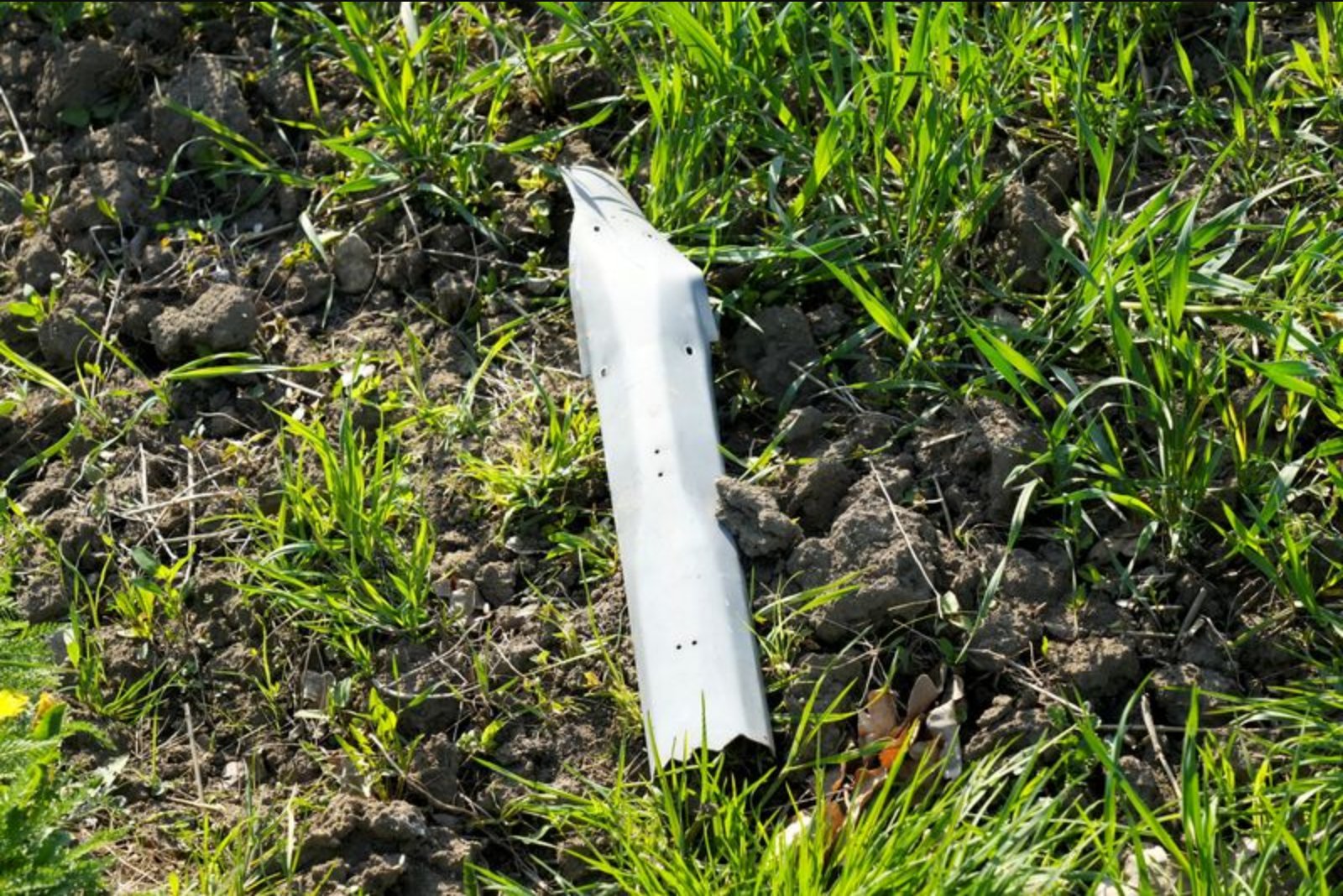
Most of the stray drones have not caused material damage, falling in open fields or leaving Baltic airspace. Still, the pattern of incursions has nevertheless created alarm. A NATO military jet shot down a suspected Ukrainian drone over Estonia on May 19 - an action NATO described as the first time its Baltic air-policing jets had "fired a missile in defence of the Alliance" since Lithuania, Latvia and Estonia joined NATO in 2004. Subsequent days saw a near-miss at Lithuania's parliament when lawmakers sheltered below ground after a drone approached Vilnius, and an air alert issued in northern Lithuania the day after.
"The threat level is growing. Drones are flying in. They are Ukrainian, but some are loaded with explosives and can hit civilian objects. We must protect people," Lithuanian Defence Minister Robertas Kaunas said, underscoring the immediate public safety concerns driving defensive measures.
A foreign policy adviser to Lithuania’s president, Asta Skaisgiryte, described the current phase as particularly intense because of Ukrainian gains in drone warfare, which have extended Kyiv’s long-range strike capability. She added that it was plausible Russia might be intentionally redirecting drones toward neighbouring states.
Political and military reactions
Baltic officials, while unwavering in their support for Ukraine, have privately told Kyiv that uncontrolled airspace incursions are counterproductive and that better drone control is expected. Kyiv says it is investigating. A Ukrainian military source said a "serious" probe is under way to determine how Russian systems might be causing Ukrainian drones to veer into Baltic airspace.
A senior Swedish military source suggested Ukraine has flown drones deliberately close to the Baltic border with Russia, using proximity to NATO territory as a protective buffer under the assumption Russia would be reluctant to fire into alliance airspace and risk direct confrontation; Ukraine’s foreign ministry rejected that characterisation. Heorhii Tykhyi, a spokesperson for Ukraine’s Foreign Ministry, said Kyiv has intelligence indicating Russia deliberately interferes with drone navigation to push them toward the Baltics, and that Ukraine chooses flight paths intended to minimise any threat to its Baltic partners. "We have intelligence about Russia deliberately doing this, these are not just abstract claims on our side," he said.
Several incursions went undetected until they were underway, drawing attention to potential shortfalls in air defences along NATO’s border with Russia and Belarus. In Latvia, political fallout included the forced resignation of Prime Minister Evika Silina after she dismissed her defence minister; she blamed the lack of adequate air defences for the move that preceded her departure.
Russian statements and accusations
Moscow has leveled strong accusations, including claims presented to a U.N. Security Council meeting that Ukraine planned to launch drones from inside Latvia and other Baltic states, accompanied by warnings that Russia would respond. Latvia’s envoy to the United Nations dismissed such claims as "pure fiction." Russia’s foreign intelligence service, the SVR, nonetheless asserted Riga had agreed to allow launches despite concerns it could become the target of Russian retaliation. Russia’s embassies in Vilnius and Stockholm did not respond to requests for comment about these incidents.
Estonian officials interpret the tone of Russian statements as intimidation, aimed at pressuring the Baltic capitals to persuade Ukraine to stop its strikes. Estonian Foreign Minister Margus Tsahkna said in a phone interview that Russia was "desperately now using any kind of opportunity to divide the Western part of the world and ... to put more pressure on Ukraine not to launch these attacks."
Risk of miscalculation
Security analysts and Baltic officials warn that the combination of provocative rhetoric and close encounters raises the prospect of unintended escalation. Linas Kojala, head of the Geopolitics and Security Studies Center in Vilnius, said the current environment creates a notable risk of accidental miscalculation driven by what he called "provocative" Russian actions. A Baltic security official, speaking on condition of anonymity, described Russian public statements as primarily aimed at domestic audiences to shift blame for Moscow’s difficulties in countering Ukrainian drone attacks. "From our perspective, the security situation in the region has not changed," the official said.
Wider strategic backdrop
The incidents are unfolding against a political backdrop in which some European leaders regard Russia as a major security threat, while the United States - NATO’s largest military power and the country with tens of thousands of troops in Europe - has recently sent mixed signals about its commitments. The article notes that President Donald Trump has suggested the U.S. could even leave NATO, and that Washington delayed a troop deployment to Poland before later announcing an additional 5,000 personnel will be sent. Those contradictory signals have contributed to questions about the steadiness of U.S. support on the continent.
Ongoing investigations and next steps
Ukrainian and Baltic officials say investigations are ongoing to establish how the drones drifted into NATO airspace and whether Russian electronic measures were responsible. Estonian authorities have told Kyiv that incursions undermine allied security and are not helpful to shared goals. Kyiv has replied that it takes precautions to avoid endangering Baltic states and that it has evidence pointing to deliberate Russian interference that caused the navigational failures.
For now, most of the incidents have not produced direct damage or casualties, but they have exposed potential vulnerabilities in air surveillance and defence along the alliance’s eastern border, inflamed diplomatic relations in the region and increased concerns about how a local incident could escalate into a broader confrontation.
Key Points
- Multiple Ukrainian drones have entered Baltic airspace, with many officials attributing deviations to Russian electronic jamming or spoofing of navigation systems.
- Incidents have revealed gaps in regional air defences and prompted NATO defensive action, including the shooting down of a suspected Ukrainian drone over Estonia.
- These events have diplomatic, defence and energy implications - notably as Ukraine targets Russian Baltic ports that handle nearly 40% of Russia's oil and gas exports.
Risks and Uncertainties
- Risk of accidental escalation: Close encounters, misdirected drones and sharp rhetoric increase the chance of unintended confrontation between NATO and Russia.
- Defensive vulnerabilities: Several drones entered Baltic airspace undetected, pointing to possible shortfalls in air surveillance and defence that could affect military readiness and regional security spending.
- Political uncertainty over external support: Mixed signals about U.S. commitment to NATO create uncertainty for alliance deterrence posture and defense procurement decisions.
Conclusion
The stray drone incidents along NATO’s eastern frontier have highlighted an intersection of kinetic operations, electronic warfare and geopolitics. While most of the incursions have ended without physical damage, the diplomatic strain, probing of air-defence gaps, and the presence of explosive payloads on some drones underscore a volatile mix that officials warn could produce miscalculation. Investigations are ongoing, and Baltic states are urging improved control over Ukraine’s drone operations even as Kyiv insists it is being targeted by deliberate Russian interference.